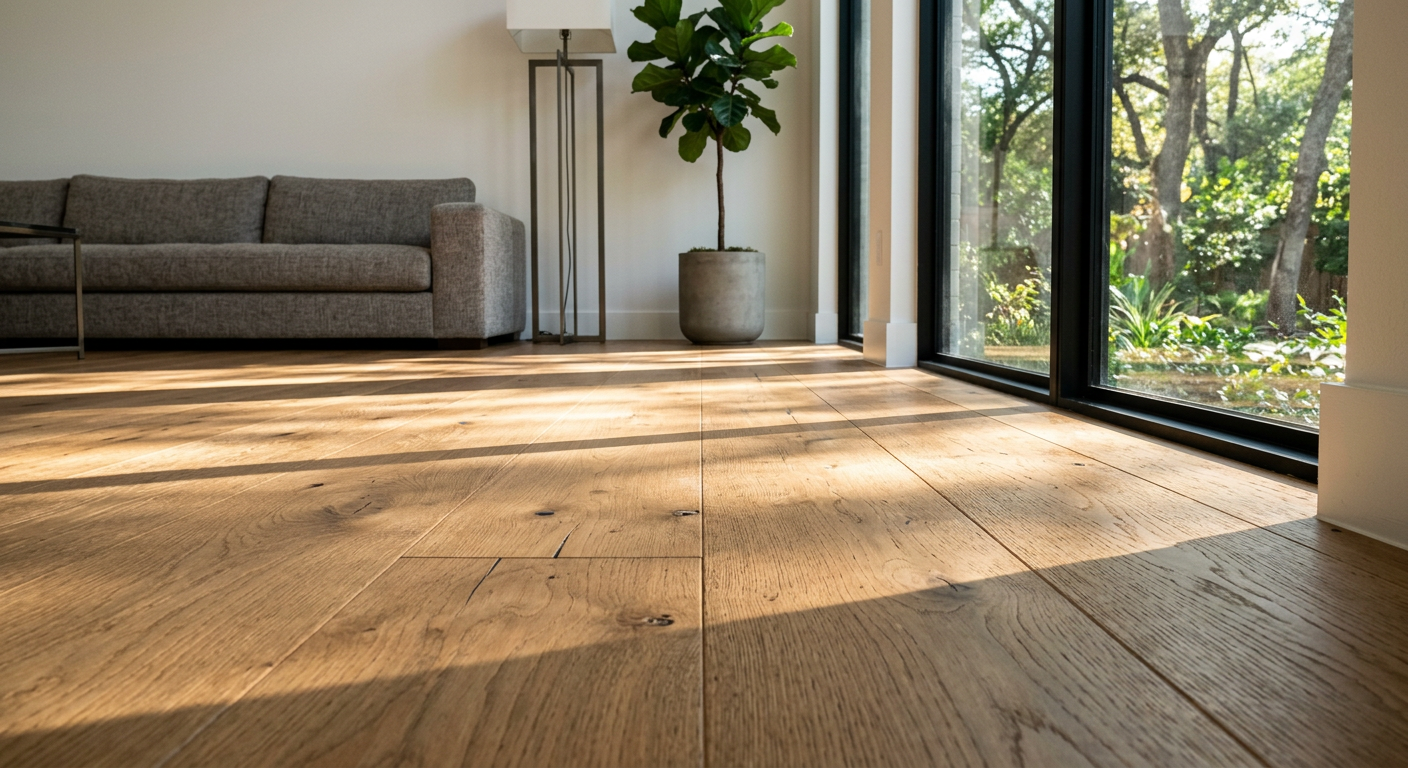
The difference between a flooring project that lasts and one that becomes a callback is almost always in the details that don't show up in a low bid.
These are the specs and design decisions our team insists on for every Houston home — the ones that quietly separate a real professional install from a cheap one.
1. Moisture test the slab
Houston slabs release moisture year-round. A calcium chloride or RH probe test before install prevents cupping and adhesive failure.
2. Proper underlayment for the product
Engineered wood, LVP, and laminate each demand a specific underlayment. Skipping the right one voids warranties.
3. Acclimation time before install
Real wood needs 5–7 days on site before install. Rushing this is why board gaps show up in month two.
4. Level the slab to spec
Manufacturers require 3/16" over 10 ft for most products. Self-leveling compound is often required and rarely quoted.
5. Expansion gaps at every wall and transition
Floating floors need a ½" gap covered by trim. Tight installs buckle in Houston humidity.
6. Quality transitions and thresholds
Cheap plastic transitions ruin a nice floor. Solid-wood or metal transitions matched to the floor are worth the upgrade.
7. Sound underlayment upstairs
Second-floor hard flooring is loud. Cork or rubber underlayment saves your ceiling drywall from complaints.
8. Vapor barrier under wood on slab
Even engineered wood on a slab needs a 6-mil poly or trowel-applied vapor barrier.
9. Match the product to the room
Real wood in a wet area is a callback waiting to happen. Use waterproof LVP or tile in baths, laundries, and mudrooms.
10. Full removal of existing floor and prep
Floating new floor over old is how you get squeaks, uneven wear, and premature failure.
The bottom line
Any of these can be skipped to hit a lower price — and every one of them will show up as a problem within a few years. Ask any contractor bidding your flooring project which of these are included, in writing. The honest ones welcome the question.
If you'd like to walk through what these look like on your specific home, our team is happy to do a no-pressure consultation.