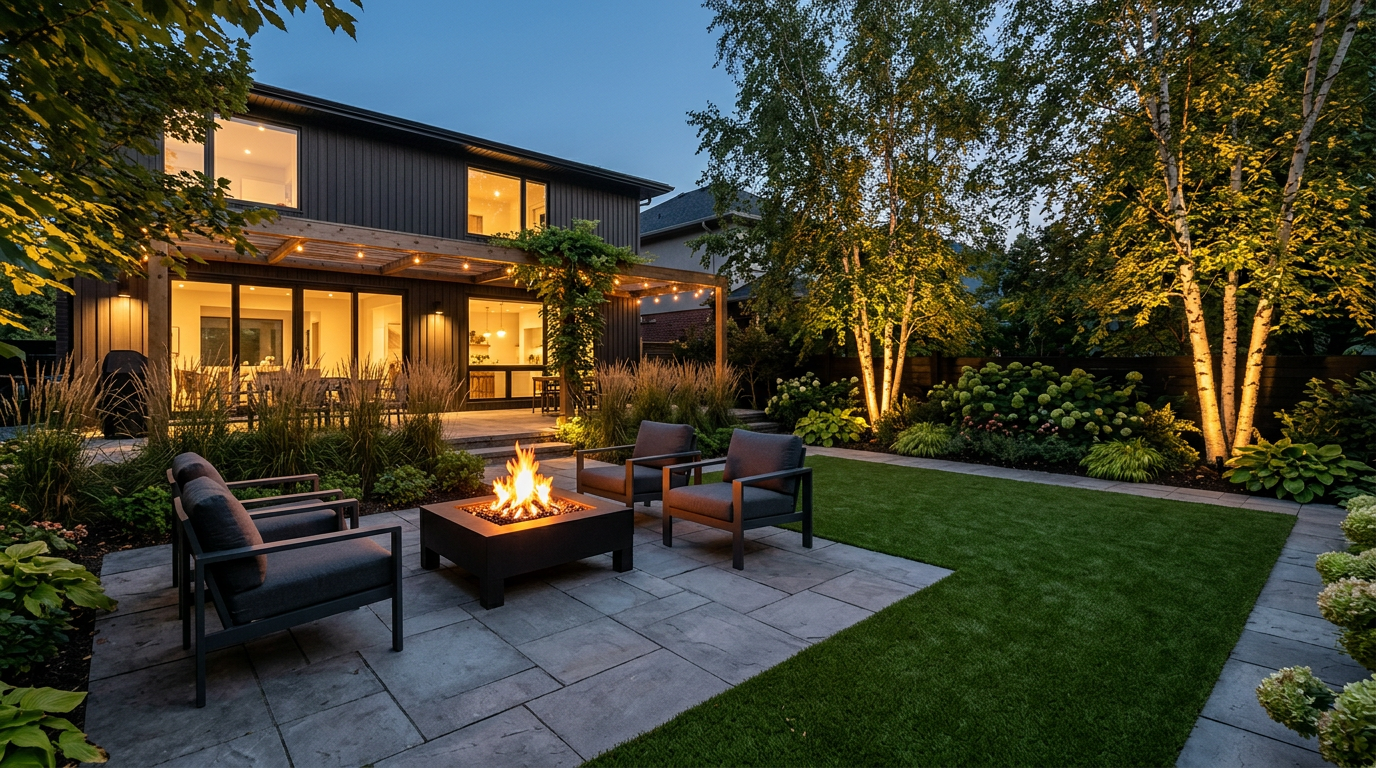
A beautiful yard shouldn't require a second job to maintain. Across the country, homeowners are trading their high-maintenance, water-thirsty lawns for smart, modern landscapes that emphasize structural beauty, year-round usability, and minimal upkeep. By combining durable hardscapes, high-performance artificial turf, strategic lighting, and drought-tolerant plantings, you can create an outdoor living space that serves as a seamless extension of your home.
Hardscaping: The Foundation of Low-Maintenance Design
The first step in reducing yard work is simple: reduce the amount of lawn that needs to be mowed, watered, and weeded. Hardscaping replaces high-maintenance turf with functional, durable surfaces that define your yard's layout and create distinct outdoor "rooms."
When you anchor your yard with hardscape elements, you establish permanent high-traffic zones that never go muddy or brown. Here are the primary materials used in modern low-maintenance designs:
- Interlocking Concrete Pavers: Highly durable and available in dozens of colors, textures, and shapes. Pavers are set on a bed of compacted gravel and sand, allowing them to flex with soil movement without cracking. If one gets stained or damaged, you can replace a single unit rather than pouring a new slab.
- Natural Flagstone: Perfect for a more organic, rustic aesthetic. Placed over a concrete base or dry-laid in a bed of gravel, flagstone offers a timeless look.
- Poured concrete: A sleek, minimalist option. Modern concrete can be broom-finished, stamped, acid-stained, or sandblasted to match the architectural style of your home.
- Decomposed Granite (DG): An excellent, budget-friendly option for secondary pathways, fire pit areas, or transition zones. DG is permeable, looks natural, and packs down to create a stable walking surface that prevents weed growth when paired with a commercial-grade weed barrier underneath.
By laying down a patio for dining, a separate zone for a fire pit, and pathways to connect them, you naturally shrink the footprint of your planted areas. This structural framework makes the remaining landscape much easier—and less expensive—to manage.
Material Comparison at a Glance
| Material | Primary Aesthetic | Durability | Maintenance Level | Best Used For |
|---|---|---|---|---|
| Concrete Pavers | Modern, clean, organized | High (easy individual repair) | Very Low (occasional sweep/seal) | Patios, driveways, main walkways |
| Natural Flagstone | Organic, rustic, premium | High (heavy stone) | Low (weed control in joints) | Casual paths, accent patios |
| Poured Concrete | Minimalist, contemporary | High (prone to hairline cracks) | Low (requires sealing) | Large entertaining zones |
| Decomposed Granite | Casual, natural, soft | Medium (needs occasional raking) | Low (replenish every few years) | Fire pit areas, side paths |
The New Era of Artificial Turf
For many homeowners, a patch of green grass is still a desirable design element, especially if you have children or pets. However, maintaining a pristine natural lawn requires constant mowing, fertilizing, aerating, and watering. Modern artificial turf offers the perfect compromise, delivering the look and feel of a manicured lawn without any of the weekend chore list.
Today’s synthetic turf is a far cry from the plastic green carpet of the past. High-quality modern turf uses multi-tonal blades—mixing forest green, field green, and warm tan thatch layers—to mimic the natural variations of real grass. The blades are textured to feel soft underfoot and are engineered to resist flattening under heavy foot traffic.
[Backing Layer] ---> [Drainage Membrane] ---> [Compacted Road Base] ---> [Subgrade Soil]
Lifespan and Drainage Engineering
A professionally installed artificial lawn typically has a lifespan of 15 to 20 years. The secret to its longevity lies beneath the surface. True performance depends on a properly prepared base of compacted crushed rock and a high-flow drainage system. Quality turf backings are perforated or fully permeable, allowing rainwater and pet urine to drain directly into the ground at a rate of more than 30 inches per hour, preventing standing water and mold.
Pet-Friendly Solutions
If you have dogs, synthetic turf is a game-changer. There are no muddy paws, no yellow urine burn patches, and no holes dug in the dirt. To keep the lawn fresh, installers use specialized antimicrobial acrylic-coated sand infill. This infill prevents pet odors from absorbing into the turf fibers and keeps the blades standing upright. A quick hose down every week or two is all that is required to keep a pet lawn clean and fresh.
Evening Ambiance: The Magic of Landscape Lighting
A great landscape should not disappear when the sun goes down. In fact, professional landscape lighting often doubles the perceived value of your property at night, turning a dark yard into a dramatic, welcoming oasis. Beyond aesthetics, smart lighting also improves safety along steps and walkways and adds an extra layer of home security.
To achieve a balanced, high-end look, avoid the "runway effect" of placing too many bright path lights in a straight line. Instead, a successful lighting plan layers different techniques:
- Scenic Path Lighting: Using low-profile fixtures that cast a gentle, downward glow directly onto walking paths and steps, keeping the light source hidden from your direct line of sight.
- Specimen Tree Uplighting: Placing fixtures at the base of architectural trees—such as Japanese maples, olive trees, or mature oaks—and aiming the light upward to highlight trunk structure, bark texture, and canopy volume.
- Eave Downlighting (The Moonlight Effect): Mounting soft floodlights high up in the eaves of your home or in the upper branches of tall trees. Angled straight down through leaves, this technique casts natural, dappled shadows across lawns and patios, replicating the look of a bright full moon.
The Efficiency of Low-Voltage LED Systems
Modern landscape lighting systems utilize highly efficient low-voltage LED transformers. These fixtures draw a fraction of the electricity used by older halogen systems, meaning you can illuminate your entire yard for pennies a night. The transformers can be paired with smart controllers, allowing you to program lighting zones, dimming levels, and schedules directly from your smartphone.
Drought-Tolerant Planting and Precision Drip Irrigation
To round out your low-maintenance sanctuary, fill your garden beds with a curated palette of drought-tolerant plants. This does not mean your yard has to look like a barren desert. Depending on your local climate, you can build a lush, textured garden using native shrubs, ornamental grasses, and flowering perennials that thrive with minimal water.
Group plants with similar water needs together—a practice known as hydrozoning. This ensures that no plants are overwatered or underwatered, while optimizing your irrigation run times.
The Role of Drip Irrigation
Drip irrigation is the gold standard for water-efficient landscapes. Unlike traditional spray sprinkler heads that lose a massive amount of water to wind drift and evaporation, drip systems deliver water directly to the root zones of individual plants via flexible tubing hidden under a thick layer of mulch.
By applying water slowly and precisely, drip irrigation prevents weed growth in surrounding soil and encourages deep root systems, making your plants more resilient to heatwaves. Cover the drip lines with three to four inches of organic wood mulch to lock in soil moisture, suppress weeds, and give the garden beds a clean, cohesive look.
Doing the Math: The True Cost Savings of Low-Maintenance Landscaping
Moving away from a traditional lawn-and-sprinkler backyard represents a significant upfront investment, but the long-term return on investment is substantial. When you calculate the running costs of maintaining a traditional yard, the savings add up quickly.
- The Water Bill: In dry regions and during hot summer months, outdoor watering can account for over 60% of a homeowner’s total water usage. Transitioning to hardscape, artificial turf, and drip-irrigated native plants typically slashes outdoor water bills by 50% to 70%.
- Professional Maintenance: Hiring a professional lawn service generally runs between $150 and $400 per month in many markets, depending on the size of your yard. Eliminating weekly mowing, edging, and blowing can save you thousands of dollars annually.
- Fertilizers, Pesticides, and Equipment: Traditional lawns require seasonal applications of fertilizers, weed killers, and insecticides, alongside the ongoing maintenance of lawnmowers, trimmers, and sprinkler systems. A low-maintenance yard practically eliminates these recurring expenses.
Beyond the clear financial savings, there is the invaluable return on your personal time. Instead of spending your weekends pushing a lawnmower, fixing broken sprinkler heads, and pulling weeds, you can actually sit back and enjoy your outdoor space.
Ready to reclaim your weekends and transform your backyard into an elegant, low-maintenance retreat? Our team at Modern Builders of America is here to guide you through every choice, from selecting the perfect pavers to designing a custom lighting plan. We invite you to reach out to us today to schedule your free in-home estimate and take the first step toward a beautiful, hassle-free outdoor living experience.