Sharing a home with pets brings incredible joy, but it also introduces unique challenges to your living space. From muddy paws and shedding coats to scratched baseboards and cluttered entryways, our furry family members can put a home's materials and layout to the test.
Fortunately, thoughtful remodeling can bridge the gap between high-end design and pet-friendly durability. By choosing the right materials and integrating dedicated pet zones into your floor plan, you can create a beautiful, highly functional home that makes life easier for both you and your pets.
Here are the ten highest-impact upgrades for homes with dogs, cats, or both.
1. High-Performance Flooring: Luxury Vinyl Plank or Tile
Traditional hardwood floors are beautiful, but claws can easily gouge the soft grain of oak, pine, or cherry. Carpet is another common pain point, acting as a magnet for pet hair, dander, and inevitable accidents.
For a pet-friendly home, we recommend upgrading to luxury vinyl plank (LVP) or porcelain tile.
- Luxury Vinyl Plank (LVP): Modern LVP mimics the texture and look of natural wood incredibly well, but it features a thick wear layer that resists scratches from large dog claws. It is also completely waterproof, meaning a puddle of water from a bowl or an accident won't warp the subfloor if it isn't cleaned up immediately.
- Porcelain Tile: For ultimate durability, porcelain tile is virtually indestructible. It resists scratches, stains, and moisture. When installing tile in a pet-friendly home, specify a dark, stain-resistant grout sealed with a penetrating sealer to prevent discoloration.
| Flooring Type | Scratch Resistance | Moisture Resistance | Comfort for Pets |
|---|---|---|---|
| Traditional Hardwood | Low | Low | Medium |
| Carpet | High (no scratches) | Very Low (absorbs odors) | High |
| Luxury Vinyl Plank (LVP) | High | High | Medium-High |
| Porcelain Tile | Excellent | Excellent | Low (cool and hard) |
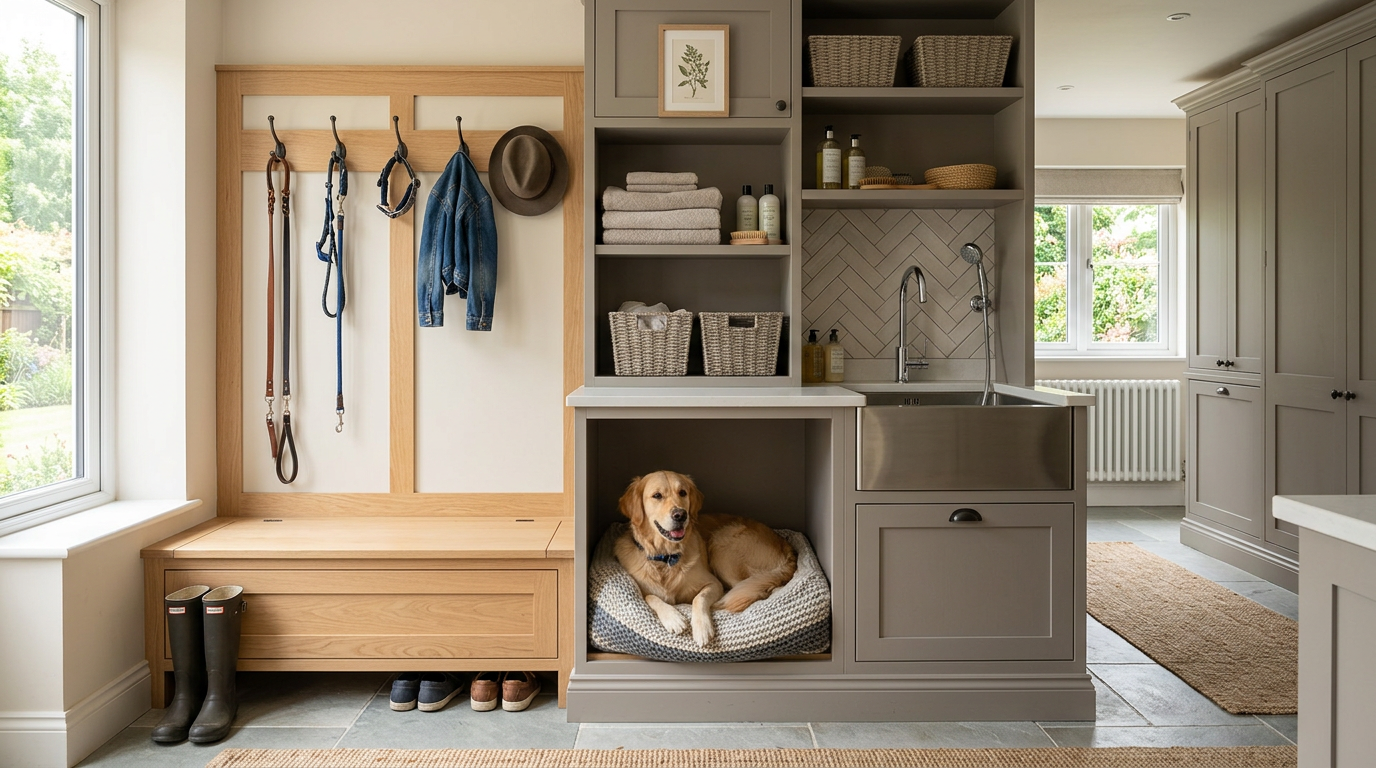
2. A Dedicated Mudroom Dog Wash
If you have a dog that loves the outdoors, a dedicated puppy shower or dog wash station is a game-changer. Usually located in a mudroom, laundry room, or transition space off the garage, these elevated stations save your back and keep dirt from ever entering your main living areas.
An effective dog wash station should feature:
- An elevated basin: Raising the tub 24 to 30 inches off the floor prevents you from having to bend over.
- A hand-held sprayer: A commercial-grade spray wand with an easy-to-use trigger makes rinsing paws and underbellies simple.
- Thermostatic mixing valves: This ensures the water temperature stays warm and comfortable, never scalding hot or freezing cold.
- Tile surrounds: Backsplashes should extend up the walls to protect your drywall from water when your dog inevitably shakes dry.
3. The Entryway "Drop Zone"
Leashes, harnesses, muddy towels, treats, and waste bags can easily clutter your entryway. A custom-built drop zone near your main entry point organizes this daily gear.
When designing a drop zone, think about incorporating:
- Heavy-duty hooks: Positioned at adult height for jackets and keys, and lower hooks for leashes and harnesses.
- A sturdy bench: A place to sit comfortably while putting on your shoes or wiping down muddy paws. Choose a bench top made of a durable material like quartz or sealed hardwood.
- Integrated cubbies and drawers: Use pull-out baskets or soft-close drawers to tuck away winter dog coats, boots, grooming brushes, and extra bags of treats.
4. Smarter Pet Doors
Traditional plastic flap pet doors are drafty, insecure, and prone to letting in unwanted pests. Modern pet doors offer sophisticated solutions that integrate seamlessly into your home’s envelope.
Consider these two architectural options:
- Sliding-Panel Glass Doors: If you have a patio door, your contractor can install a high-efficiency sliding unit featuring dual-pane, low-E glass. These doors feature integrated pet panels with heavy-duty weather stripping and secure locking mechanisms.
- Electronic Wall-Installed Doors: For a cleaner look, a pet door can be cut directly through an exterior wall. Electronic models read a microchip in your pet's collar (or their veterinary microchip). The door remains securely locked until your specific pet approaches, preventing raccoons, stray cats, or security threats from entering.
5. A Managed Outdoor Dog Run
Maintaining a pristine green lawn can be difficult with dogs. A dedicated exterior dog run keeps your main yard looking great while giving your dog a safe, mud-free area to do their business.
The key to a successful dog run is drainage and surface material. Two excellent options include:
- Specialized Pet Turf: Unlike standard artificial grass, pet turf features a highly permeable backing system that allows liquid to drain directly into the ground. It also uses antimicrobial infills to control odors.
- Decomposed Granite (DG): This natural, packed-stone material is highly permeable, easy to shovel, and doesn't get muddy in the rain. It provides a clean, stable surface that keeps paws grit-free.
6. Under-Cabinet or In-Island Food Bowls
Tripping over water bowls or watching food bowls slide across the kitchen floor can be frustrating. Integrating pet bowls directly into your kitchen cabinetry or island keeps your walkways clear and your kitchen looking polished.
A popular remodeling solution is a toe-kick drawer or a low pull-out cabinet drawer designed specifically for pet bowls. During mealtime, you simply slide the drawer out; when guests arrive or after your pet finishes eating, the drawer glides back flush with the cabinetry.
If you prefer to leave water out all day, a recessed niche built into the side of a kitchen island or pantry cabinet keeps the bowl out of foot traffic while protecting your flooring from splashes with a waterproof, tiled base.
7. Integrated Built-In Crates
Wire crates are essential training tools, but they are often bulky and visually disruptive in a beautifully designed living room or bedroom. Building a custom crate directly into your cabinetry or built-in millwork solves this problem.
Your contractor can design a custom media console, laundry room counter, or hallway bench that features an integrated kennel space beneath it. By using sturdy metal spindles or custom metal mesh for the door and side panels, your pet gets a cozy, secure den that matches the rest of your home’s cabinetry, hardware, and architectural style.
8. A Ventilated Litter Closet
For households with cats, managing the litter box is often the biggest design hurdle. Placing the box in a dark corner or a guest bathroom is rarely ideal. Instead, consider a custom litter closet built into a laundry room, hallway closet, or mudroom.
An effective design includes a small, cat-sized opening in a cabinet door or wall so your cat can access the box privately. Inside, the cabinet can be lined with moisture-resistant laminate for easy cleaning. Most importantly, we recommend installing a quiet, low-voltage exhaust fan wired to run continuously or on a timer. This draws air from the cabinet and vents it directly to the outdoors, permanently removing litter box odors from your home's air supply.
9. Structural Cat Shelves and Window Perches
Cats thrive on vertical space. Providing high vantage points makes them feel secure and helps prevent behavioral issues in multi-pet households. Instead of buying carpet-covered cat trees, you can work with a builder to integrate vertical elements directly into your walls.
Custom-built floating shelves, wrapped in durable sisal rope or topped with comfortable, washable fabrics, can be anchored directly to wall studs. These can lead to a wider window perch or a high, recessed ledge near the ceiling. By painting or staining these elements to match your interior trim, they blend seamlessly into your home’s design while keeping your cats active and happy.
10. Whole-Home HEPA Filtration
Pet dander, fur, and outdoor dust can quickly overwhelm standard HVAC filters, leading to poor indoor air quality and more frequent dusting.
Upgrading to a whole-home HEPA (High-Efficiency Particulate Air) filtration system, installed directly into your existing ductwork, captures up to 99.97% of airborne particles. Unlike point-source room purifiers, a whole-home system quietly cleans the air in every room simultaneously. Additionally, upgrading to an electronic air cleaner or integrating an ultraviolet (UV) germicidal light system within the HVAC unit can neutralize odors and airborne bacteria, keeping your home smelling remarkably fresh.
Designing for the Whole Family
When planning your next remodel, keeping your pets in mind doesn't mean sacrificing your personal style. By choosing durable materials and incorporating clever architectural features early in the planning process, you can create a home that looks stunning and functions beautifully for every member of your household.
If you are ready to explore how integrated pet features can elevate your upcoming home remodel, we are here to help. Reach out to the team at Modern Builders of America to schedule a free in-home estimate at /contact, and let's start designing a space you and your pets will love.