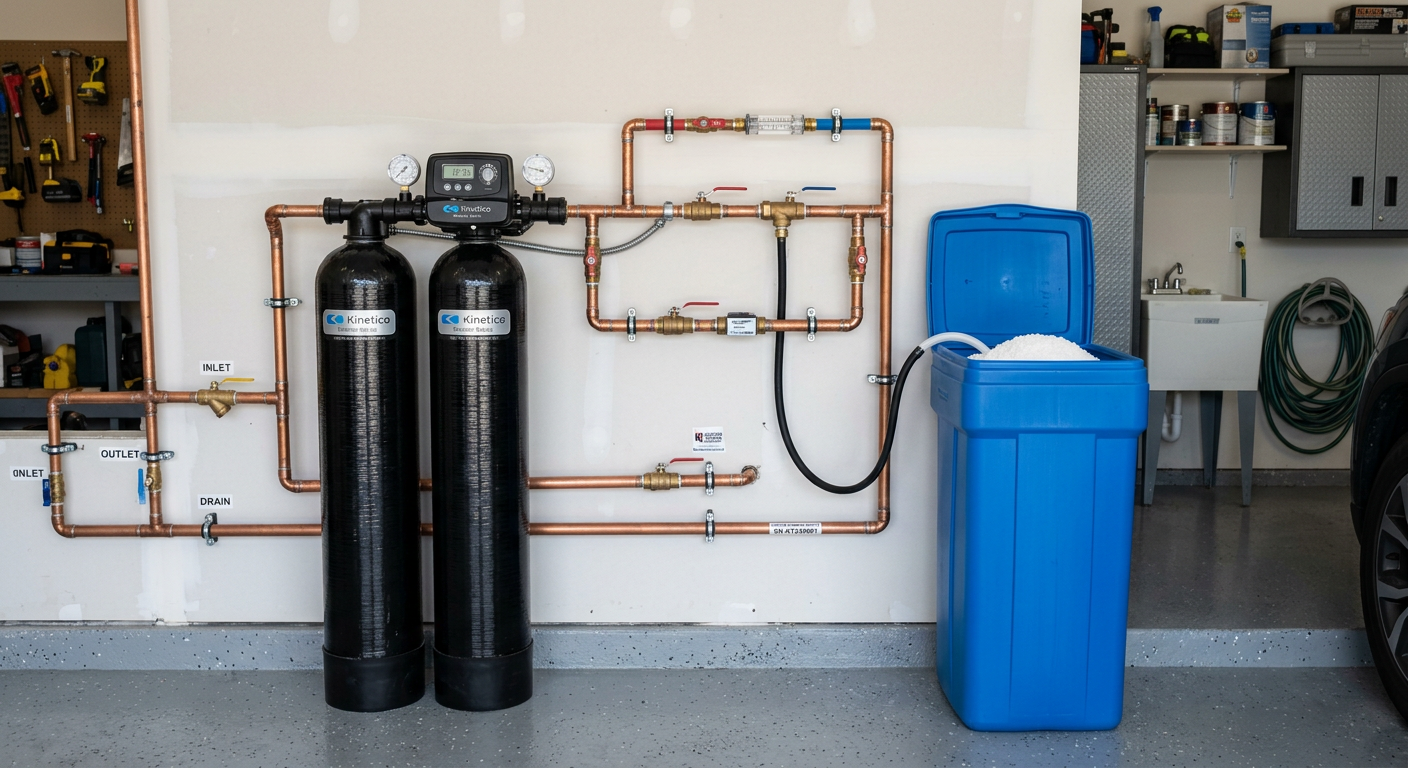
The difference between a water softener project that lasts and one that becomes a callback is almost always in the details that don't show up in a low bid.
These are the specs and design decisions our team insists on for every Houston home — the ones that quietly separate a real professional install from a cheap one.
1. Test water first, then spec the softener
Actual grain hardness, iron, and TDS drive the design. Guessing wastes money on the wrong resin bed.
2. Metered regeneration, not timer
Metered units regenerate on actual use — saving 30–50% on salt and water versus timer-only units.
3. Bypass valve for outside spigots
Softened water on your lawn is a waste. A proper bypass routes outdoor lines around the softener.
4. Salt-safe drain with air gap
Regen brine down a random drain violates code. An air-gapped, salt-tolerant drain is required.
5. High-quality resin (10% crosslink for city water)
8% crosslink resin fails fast on chlorinated Houston water. 10% is the correct spec.
The bottom line
Any of these can be skipped to hit a lower price — and every one of them will show up as a problem within a few years. Ask any contractor bidding your water softener project which of these are included, in writing. The honest ones welcome the question.
If you'd like to walk through what these look like on your specific home, our team is happy to do a no-pressure consultation.