When you start shopping for a new roof, the first thing you will encounter is a series of decades-long promises: 20-year, 30-year, and even 40- or 50-year shingles. It is easy to assume these numbers represent a literal guarantee of how long your roof will last before it leaks. However, in the roofing industry, these classifications are more about marketing and warranty tiers than actual calendar years.
Understanding what these numbers really mean—and what physical characteristics actually drive durability—will help you make the right investment for your home. Let’s break down the physical differences between these shingle classes, what those long warranties actually cover, and the real-world factors that dictate how long your shingles will last on your roof.
The Three Tiers of Shingles: What You Are Buying
Most residential asphalt shingles fall into one of three categories. Each has a distinct physical profile, aesthetic aesthetic, and performance threshold.
1. The 20-Year Shingle (Three-Tab)
These are the traditional, flat shingles that have been the industry standard for decades. They are called "three-tab" because each shingle strip is cut to look like three individual pieces.
- The Profile: Completely flat, uniform, and thin.
- The Reality: While rated for 20 years, these shingles are highly vulnerable to wind uplift because they are lightweight and have a single layer of material. In most climates, you can expect a three-tab roof to look worn and require replacement in 12 to 15 years. Many contractors now view these as entry-level products best suited for budget outbuildings or rental properties rather than primary homes.
2. The 30-Year Shingle (Architectural / Dimensional)
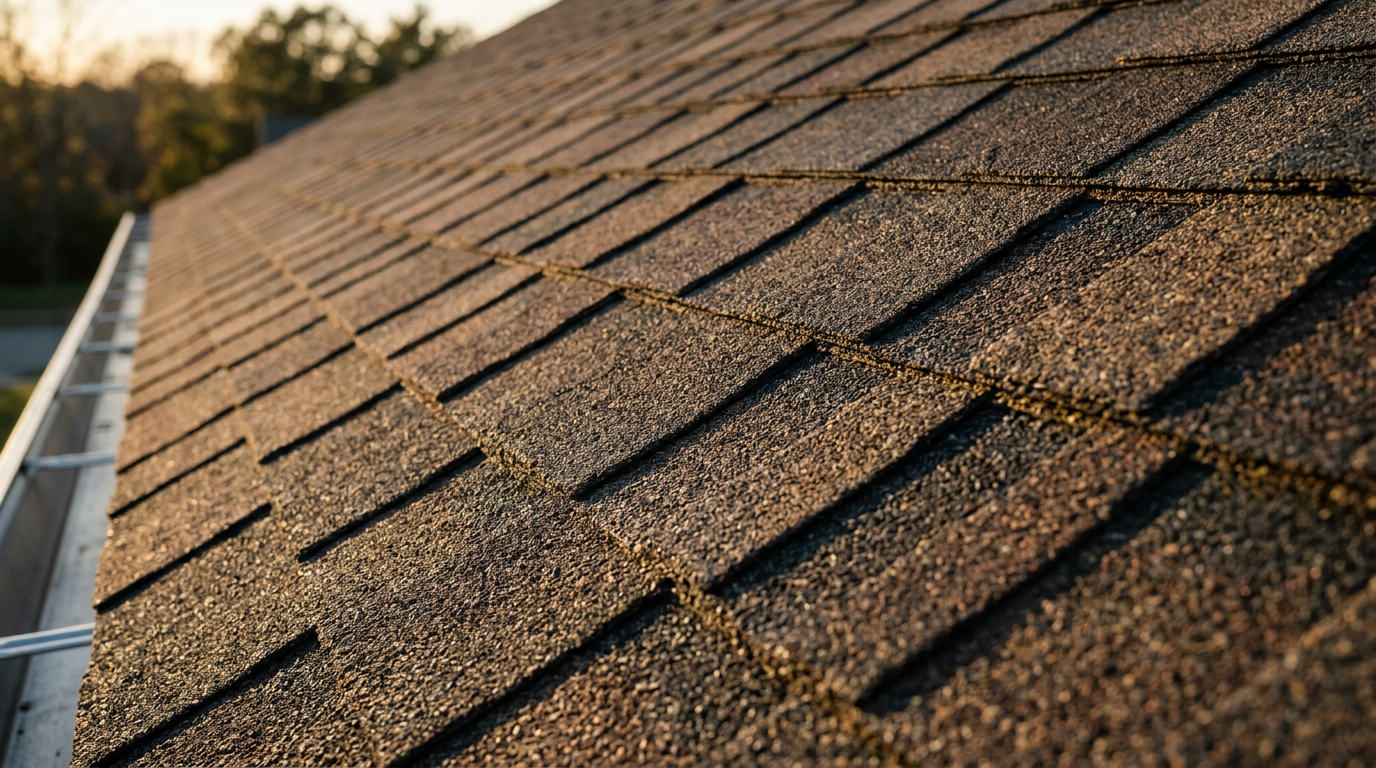
This is currently the most popular choice for residential homes. Instead of a flat cutout, architectural shingles are made of two layers of asphalt laminated together, creating a dimensional, wood-shake look.
- The Profile: Thicker, heavier, and textured with varied shadow lines.
- The Reality: The extra layer of material adds significant wind resistance and rigidity. While labeled as "30-year," these shingles typically deliver a reliable service life of 20 to 22 years in most temperate climates before the granules wear thin and the fiberglass backing begins to show.
3. The 40- to 50-Year Shingle (Luxury / Designer)
Luxury shingles are thick, heavyweight products designed to mimic the appearance of natural slate or thick cedar shakes. They are often twice as heavy as standard architectural shingles.
- The Profile: Thick, heavy, multi-layered, and deeply textured.
- The Reality: These are premium products engineered for maximum curb appeal and severe weather resistance. While they are often backed by a "lifetime" or 50-year warranty, you can realistically expect 30 to 35 years of high-performance protection from a luxury shingle, assuming the roof is properly maintained.
| Shingle Class | Average Weight (Per Square) | Common Wind Rating | General Lifespan Expectancy |
|---|---|---|---|
| 20-Year (3-Tab) | 190 – 215 lbs | 60 mph | 12 to 15 Years |
| 30-Year (Architectural) | 230 – 250 lbs | 110 – 130 mph | 18 to 25 Years |
| 40 to 50-Year (Luxury) | 350 – 450 lbs | 110 – 130 mph+ | 30 to 35 Years |
The Fine Print: What Those Warranties Actually Cover
Homeowners are often surprised to learn that a "30-year warranty" does not mean the manufacturer will install a brand-new roof for free if it fails in year 25. To understand how these warranties work, you have to look at the fine print regarding proration and labor.
Prorated Coverage
Almost all shingle warranties are split into two periods: an initial non-prorated period (usually the first 10 years) and a prorated period for the remaining lifespan. During the non-prorated window, if the shingles fail due to a manufacturing defect, the manufacturer covers the cost of replacement materials.
However, once you enter the prorated phase, the value of the warranty drops every year. By year 20 of a 30-year warranty, the manufacturer may only pay a small fraction of the replacement cost, calculated based on the remaining "useful life" of the product.
Material vs. Labor
A standard manufacturer's warranty typically only covers the cost of the physical shingles. It does not cover the cost of tearing off the old roof, disposing of the waste, or the labor required to install the new shingles. Because labor and disposal make up a significant portion of a roofing invoice, a manufacturer's warranty will only cover a portion of your total out-of-pocket costs if a failure occurs late in the warranty cycle.
What Actually Matters: The Real Metrics of Durability
If the years on the wrapper do not tell the whole story, how do you compare shingles? You have to look at the physical specifications of the product. When comparing different options, focus on these five critical metrics:
1. Shingle Weight Per Square
In the roofing world, weight equals protection. A "square" is a roofing term for 100 square feet. If you compare a standard 30-year shingle to a 40-year luxury shingle, the primary difference is the mass. Heavyweight shingles contain more asphalt, a thicker fiberglass mat, and more protective stone granules. This extra mass makes them much harder for wind to lift and more resistant to tearing.
2. Tab Thickness and Lamination
Thicker shingles have a stiffer profile. When strong winds blow across a roof, thin shingles can flutter, which breaks the adhesive seal holding them down. Once the seal is broken, the shingle is highly vulnerable to blowing off. Thicker architectural and luxury shingles resist this bending force, keeping the adhesive strip securely bonded.
3. Wind Rating
Look for the wind speed rating on the product data sheet. Most 3-tab shingles are only rated up to 60 mph. Standard architectural shingles generally carry a wind rating of 110 mph, which can often be upgraded to 130 mph if installed with a specific high-wind nailing pattern and matching starter shingles. Luxury shingles often carry a standard 130 mph wind rating right out of the bundle.
4. Impact Rating (Hail Protection)
If you live in an area prone to severe storms or hail, the impact rating is crucial. Shingles are rated from Class 1 to Class 4 based on their resistance to impact.
- Class 3 and Class 4 shingles are modified with rubber-like polymers (SBS or modified asphalt) that allow the shingle to flex and absorb the impact of hail without fracturing the fiberglass mat underneath. Investing in a Class 4 shingle can often earn you a significant discount on your homeowner’s insurance premiums.
5. Algae Resistance (Copper Granules)
Do you see black streaks on the roofs in your neighborhood? That is Gloeocapsa magma, a photosynthetic blue-green algae that thrives in humid, shady areas. It does not immediately cause leaks, but it ruins your curb appeal and absorbs heat.
To combat this, manufacturers blend copper-coated granules into the shingle mix. When it rains, minute amounts of copper are released, killing the algae. If you live in a humid climate, look for shingles with a 10 to 15-year algae-resistance warranty, which indicates a higher concentration of copper granules.
Why Climate and Microclimates Change the Lifespan Math
The exact same shingle can have a vastly different lifespan depending on where your home is located, and even where it sits on your street.
[Hot, Dry Southern Exposure] ----> High UV Exposure ----> Asphalt Dries Out / Granules Shed
[Shady, Humid Northern Exposure] -> Moisture Retention --> Algae & Moss Growth / Wood Rot Risk
In dry, sunny, moderate climates, a high-quality 30-year architectural shingle can easily last 25 to 28 years. The primary enemy here is UV radiation, which slowly bakes the volatile oils out of the asphalt, making it brittle.
In contrast, if your home is nestled in a damp, heavily wooded area, that same 30-year shingle might look tired, stained, and moss-covered in just 12 to 15 years. Constant shade prevents the roof from drying out, while falling leaves and pine needles trap moisture against the shingles, accelerating the breakdown of the asphalt backing.
Proper Installation: The Ultimate Lifespan Factor
You can buy the most expensive, heavy-duty 50-year luxury shingle on the market, but if it is installed poorly, it will fail just as quickly as a cheap three-tab shingle. The longevity of your roof depends entirely on the craftsmanship of the installation crew. Four areas require meticulous attention:
- Starter Strips: Installers must use dedicated starter shingles along the eaves and rakes. These shingles have a pre-applied strip of adhesive that bonds directly to the first course of shingles, preventing wind from getting underneath and peeling the roof back.
- Nail Placement and Depth: Every manufacturer specifies a "nailing zone"—a narrow band on the shingle where the nails must go to secure both the top shingle and the one underneath it. If nails are placed too high, they miss the lower shingle entirely. If they are over-driven (sunk too deep) or driven at an angle, the nail head will cut through the shingle, leaving it loose.
- Ice-and-Water Shield: In cold climates, snow melt can freeze at the cold edge of your roof, creating an ice dam that backs water up under the shingles. High-quality installations require a self-adhering polymer-modified bitumen membrane (ice-and-water shield) along the eaves, valleys, and around chimneys to prevent this backed-up water from reaching the sheathing.
- Attic Ventilation: An attic that cannot breathe will destroy a roof from the inside out. In the summer, trapped heat can push attic temperatures past 150 degrees, baking the underside of your shingles. In the winter, warm, humid air from your home escapes into the attic, condenses on the cold roof decking, and causes mold, mildew, and rot. Proper intake (soffit vents) and exhaust (ridge or box vents) are mandatory to keep your roof cool and dry.
Making the Right Choice for Your Home
When you are choosing between a 20, 30, or 40-year specification, look past the big numbers on the brochure. Think about how long you plan to live in your home, the typical weather patterns in your area, and your budget. For most homeowners, a high-quality 30-year architectural shingle provides the best balance of wind resistance, aesthetic appeal, and value, while luxury shingles are an excellent long-term investment for forever homes or high-wind coastal environments.
If you are trying to figure out which shingle class and material specifications make the most sense for your home’s unique architecture and local climate, we can help you evaluate your options. Reach out to the team at Modern Builders of America to schedule a detailed, free in-home estimate and get a professional assessment of your roof's needs.