For decades, the American backyard was reserved for manicured lawns, swing sets, and the occasional tool shed. Today, those spaces are being transformed. Accessory dwelling units (ADUs)—also known as granny flats, backyard cottages, or garage apartments—have emerged as one of the smartest ways for homeowners to build wealth, secure their retirement, or create flexible living arrangements for multi-generational families.
Whether you want to generate reliable monthly rental income or build a private suite for aging parents, an ADU is a high-yield investment hiding in plain sight on your own property. Here is what you need to know about designing, financing, and building an ADU for the long haul.
Understanding the Three Main ADU Types
Every property is unique, and the right ADU configuration depends on your budget, lot size, and local zoning laws. Generally, ADUs fall into three main categories.
1. Detached ADU (Dadus)
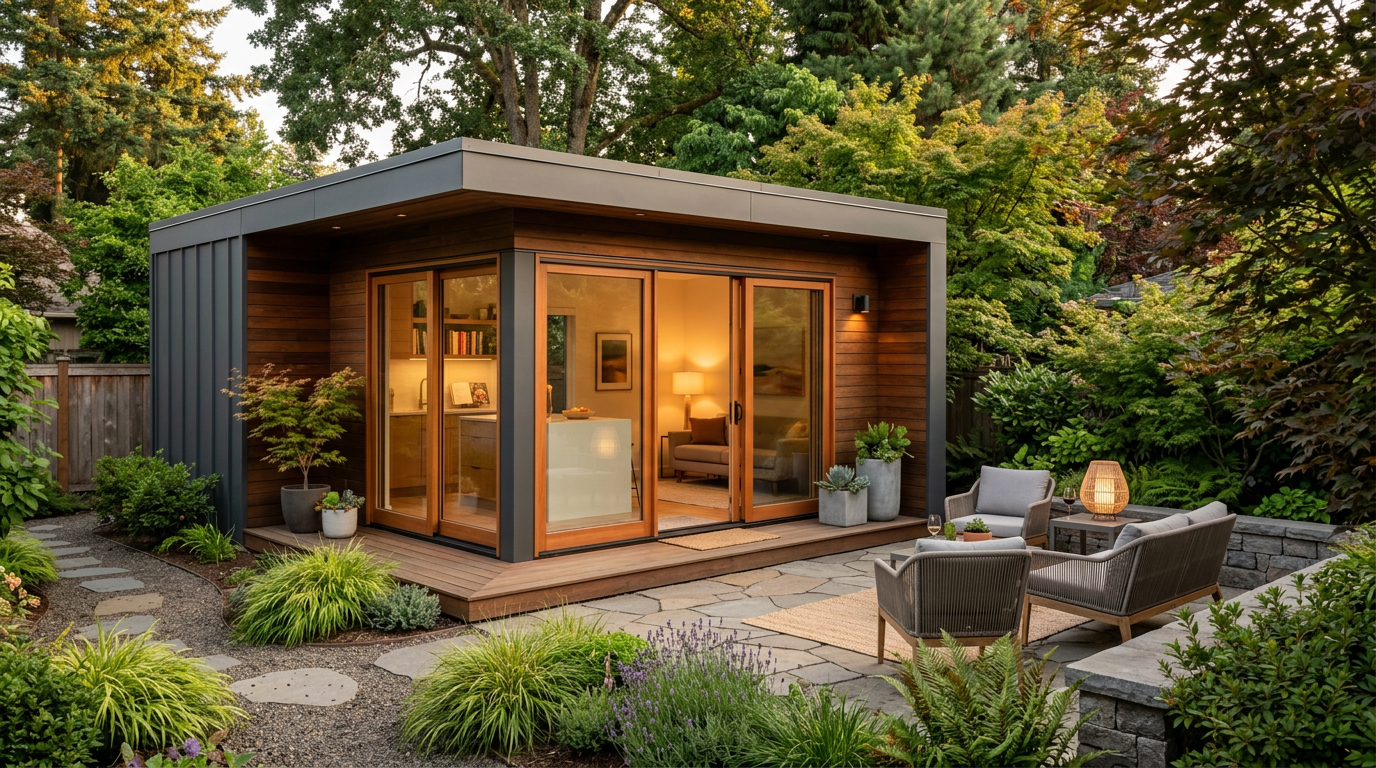
This is a standalone structure built from the ground up in your backyard.
- The Pros: Maximum privacy for both you and the occupant; highest potential rental value; complete design flexibility.
- The Cons: Most expensive to build; requires trenching new utility lines (water, sewer, electric) from the main house or the street.
2. Attached ADU
An attached unit shares at least one wall with the primary residence. This includes adding a physical "bump-out" addition to the side or back of the house, or converting an attached garage.
- The Pros: Lower utility hookup costs than a detached unit; utilizes existing rooflines or foundation footprints in some cases; easier to access.
- The Cons: Loss of existing living or garage space; potential for sound transfer between units; strict design constraints to match the main home.
3. Interior Conversion
This involves converting existing, underutilized space entirely within the footprint of your home, such as a basement or an attic.
- The Pros: Typically the fastest path to completion; preserves your backyard footprint; often requires less exterior structural work.
- The Cons: Headroom issues can complicate attic conversions; basements may require expensive excavation for ceiling height or egress windows; less privacy than a detached unit.
Costs, Timelines, and the Reality of Construction
Building an ADU is not a simple weekend DIY project. It is the construction of a fully functioning, miniature house, requiring structural engineering, permits, and skilled trades.
| ADU Type | Typical Project Timeline | Relative Cost Scale |
|---|---|---|
| Interior Conversion | 3 to 6 months | $ (Most cost-effective) |
| Attached / Garage Conversion | 4 to 8 months | $$ |
| Detached New Build | 6 to 12 months | $$$ (Highest investment) |
Timelines vary by jurisdiction, often dictated by how quickly your local building department reviews and approves plans. The physical construction of a detached unit typically takes four to six months, but permitting and design can add another three to six months to the front end of the project.
The Financial Case: How an ADU Pays for Itself
The initial investment for an ADU can feel significant, but the numbers quickly reveal a strong long-term financial case. In most major metropolitan markets, the monthly rental income generated by a modern ADU easily exceeds the monthly debt service on the loan used to build it.
Consider a hypothetical scenario in a mid-to-high-cost market. If you take out a construction loan to build a detached ADU, your monthly loan payment might be around $1,500. However, a brand-new, one-bedroom backyard cottage in that same market might easily command $2,200 to $2,500 per month in rent.
From day one, the ADU is cash-flow positive. The tenant effectively pays off your construction loan. Once the loan term is complete, that rental income becomes pure profit, serving as a robust supplement to your retirement or savings.
Long-Term Value and Tax Angles
Beyond the monthly cash flow, an ADU increases your property’s overall resale value. While appraisers historically struggled to value these units, the market has caught up. In walkable, high-demand neighborhoods, homes with permitted ADUs sell faster and at a premium.
On the tax side, operating an ADU as a rental property unlocks several benefits. You can write off a portion of your property taxes, insurance, and maintenance costs as business expenses. Furthermore, you can depreciate the cost of the ADU structure over 27.5 years, shielding a significant portion of your rental income from federal income taxes. We always recommend consulting with a certified public accountant (CPA) to tailor these strategies to your specific situation.
How to Finance Your ADU
Few homeowners have the liquid cash reserves to fund an ADU outright, but several financing routes can make the project viable.
- Home Equity Line of Credit (HELOC) or Cash-Out Refinance: If you have owned your home for several years, you likely have significant equity. A HELOC allows you to borrow against that equity as needed, while a cash-out refinance replaces your existing mortgage with a new, larger loan, giving you the difference in cash. Note that a cash-out refinance may not make sense if your current primary mortgage interest rate is exceptionally low.
- Renovation Loans (Fannie Mae HomeStyle & FHA 203k): These loans are unique because they allow you to borrow based on the as-completed value of your home, rather than its current value. Appraisers estimate what your home will be worth once the ADU is built, giving you access to a larger pool of capital.
- Dedicated Construction Loans: These are short-term loans used to cover the cost of building, which are then converted into a traditional mortgage once the certificate of occupancy is issued.
- Specialized ADU Loan Programs: Because of the housing shortage, several state housing finance agencies and local credit unions now offer specialized ADU loan products, some of which feature lower interest rates or grant programs to offset pre-development costs.
The Regulatory Landscape: Zoning Wins Across the Country
Historically, the biggest barrier to building an ADU was zoning. Local municipalities used strict single-family zoning laws, lot coverage limits, and mandatory parking minimums to make ADUs practically illegal.
That has changed dramatically. States like California, Oregon, and Washington have passed sweeping statewide legislation that overrides restrictive local zoning.
- California: Senate Bill 9 and subsequent cleanup bills effectively eliminated single-family-only zoning, making ADUs a "by-right" development. This means cities must approve your ADU if it meets basic health and safety codes, without requiring discretionary public hearings.
- Oregon: Senate Bill 2001 required cities with populations over 10,000 to allow ADUs on all lots zoned for single-family homes.
- Washington: Recent legislative victories have prohibited cities from requiring extra off-street parking for ADUs, capped permit fees, and streamlined the approval process.
Similar pushes are happening in Colorado, New York, and Montana, as well as in major cities like Austin, Boston, and Minneapolis. If you have researched ADUs in the past and were told "no," it is time to look again—the laws are shifting rapidly in favor of homeowners.
Addressing Your Concerns: Privacy, Tenants, and Management
It is natural to worry about how adding a second unit will change the dynamics of your home. However, thoughtful planning can mitigate almost every common pain point.
Privacy and Layout Design
A good designer can orient an ADU so that its windows and doors face away from your main living areas. You can use strategic landscaping, such as cedar fencing, bamboo, or arborvitae bluffs, to establish distinct outdoor zones. Many detached ADUs use a "reversed" floor plan, placing bedrooms on the side facing the main house and living areas facing toward the back yard or alleyway.
Parking
With relaxed parking minimums, you are rarely forced to build a new driveway or carport. If street parking is tight, you can designate your existing driveway for the tenant, or design the ADU specifically for car-free renters by highlighting nearby public transit, bike paths, or walkable amenities in your listing.
Tenant Screening and Management
If you do not want to manage late-night toilet clogs or rent collection, you do not have to. Hiring a local property management company typically costs between 8% and 12% of the monthly rent. They will handle tenant screening, background checks, lease agreements, and maintenance requests, turning your ADU into a truly passive source of income.
If you choose to manage it yourself, take the time to run credit checks, verify employment, and check references. Living close to your tenant requires clear communication and a professional, lease-backed relationship from day one.
Building Your Future, One Yard at a Time
An ADU is more than just extra square footage; it is an adaptable asset that evolves with your lifestyle. It can start as a home office, pivot into a rental property that pays your mortgage, transition into a suite for your college-aged children, and eventually become your own downsized retirement cottage while your kids take over the main house.
If you are ready to explore what is possible on your property, the team at Modern Builders of America is here to help. We can assess your lot, navigate local zoning rules, and walk you through design and financing options. Reach out to schedule a free in-home estimate today, and let us help you unlock the full value of your home.