Bathroom remodels are the second-most-common remodeling project in America, and the single most-common source of expensive callbacks. The reason is almost always the same: waterproofing was skipped or done wrong. This guide walks through what a properly waterproofed bathroom actually looks like, the tile substrates and membranes that hold up, the plumbing and fixture details that separate a bathroom that lasts 30 years from one that leaks in three.
Tile is not waterproof
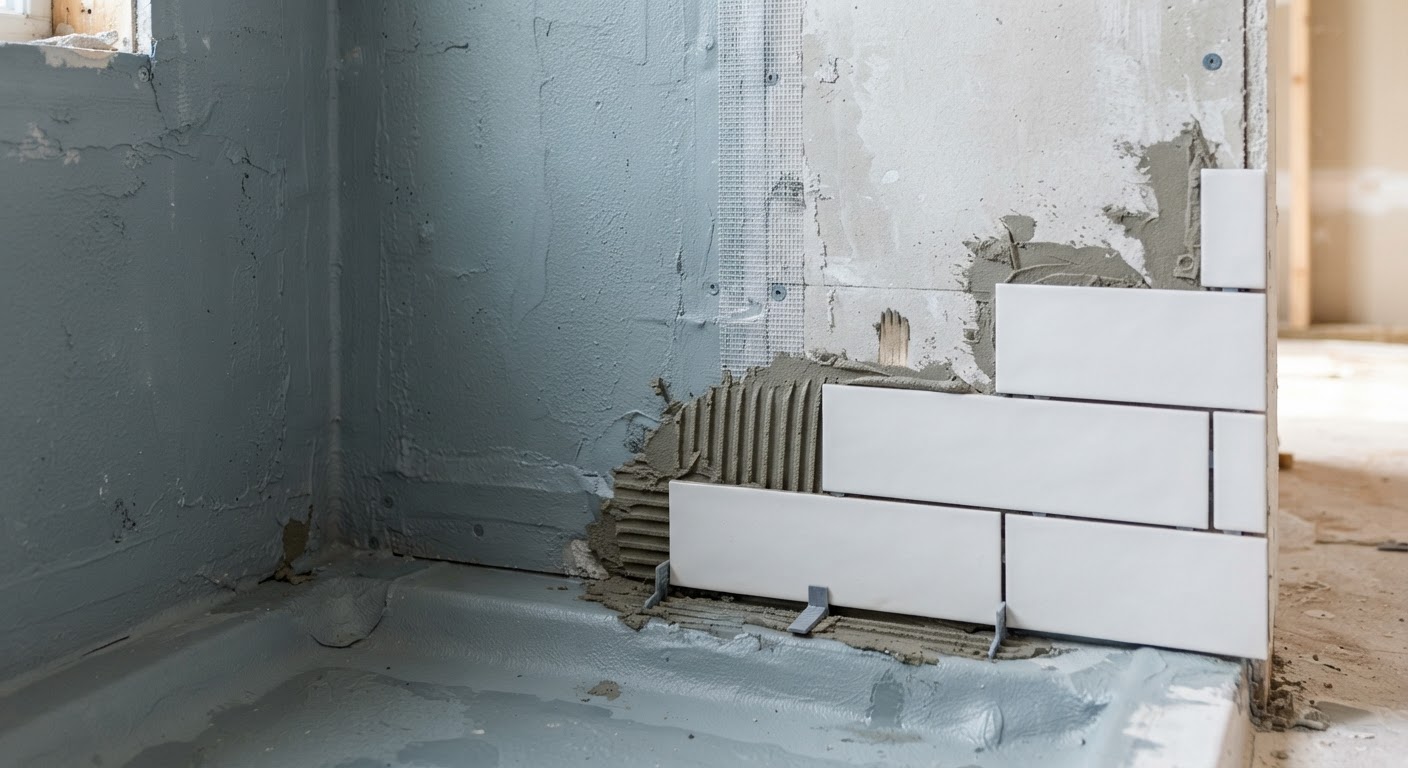
The single most important thing to understand about bathroom construction is that tile and grout are not waterproof. Water passes through grout joints continuously. The waterproofing lives behind the tile — and if it isn't there, your framing rots.
What proper shower waterproofing looks like
- A sloped pre-slope beneath the shower pan (1/4" per foot toward the drain)
- A bonded waterproofing membrane on all walls: Schluter Kerdi, Wedi, RedGard, Hydro Ban, or Laticrete 9235
- Waterproofed curb, niches, benches, and corners with proper inside/outside corner pieces
- A clamping drain compatible with the membrane system
- A tested pan (24-hour flood test) before tile goes down
Traditional hot-mop mud pans are still valid when installed by an experienced pan setter, but sheet-membrane systems are more forgiving and faster to inspect.
Substrates matter
Green board and standard drywall do not belong in wet areas. Cement backer board (HardieBacker, Durock, WonderBoard), foam tile backer (Kerdi-Board, Wedi), or a properly membrane-covered substrate are the only correct choices for shower walls. Behind the vanity and around the toilet, moisture-resistant drywall is fine.
Plumbing fixtures worth paying for
- Pressure-balancing or thermostatic shower valves from Delta, Moen, Grohe, Hansgrohe, Kohler, or Brizo
- Solid-brass rough valves, not zinc
- Recessed valve bodies rated for the wall thickness
- Toilets with a 3" flush valve (American Standard Champion, Toto Drake, Kohler Cimarron)
- Undermount sinks bonded and clipped, not just siliconed
Ventilation
Every bathroom needs a fan ducted to the exterior — not into the attic, not into a soffit that just recirculates. Sizing is 1 CFM per square foot minimum, and humidity-sensing switches (Panasonic WhisperGreen, Broan) are worth the small upgrade.
Floor heating and other worthwhile upgrades
Electric radiant floor heat (Schluter Ditra-Heat, Warmup) adds $8 – $15 per square foot and is one of the most-loved bathroom upgrades. Curbless walk-in showers, linear drains, and full-height tile all require careful waterproofing planning up front.
Where cheap bathrooms cut corners
Skipping the membrane, using drywall in the wet area, gluing the pan liner instead of hot-mopping or membrane-installing it, installing a valve rated for a 1/2" wall on a 3/4" wall, venting the fan into the attic, and caulking gaps that should have been cut clean.
If you're planning a bathroom remodel and want a walkthrough of what a proper waterproofing package looks like — before you sign a bid — we're happy to meet on site.