When you start planning a kitchen remodel, cabinet configurations are usually the first major decision on the table. Choosing between traditional doors and deep drawers isn't just about looks; it dictates how your kitchen will function for the next twenty years. Understanding how modern storage engineering works will help you make layout choices that prevent daily frustration and keep your workspace effortlessly organized.
The Shift to Deep Base Drawers
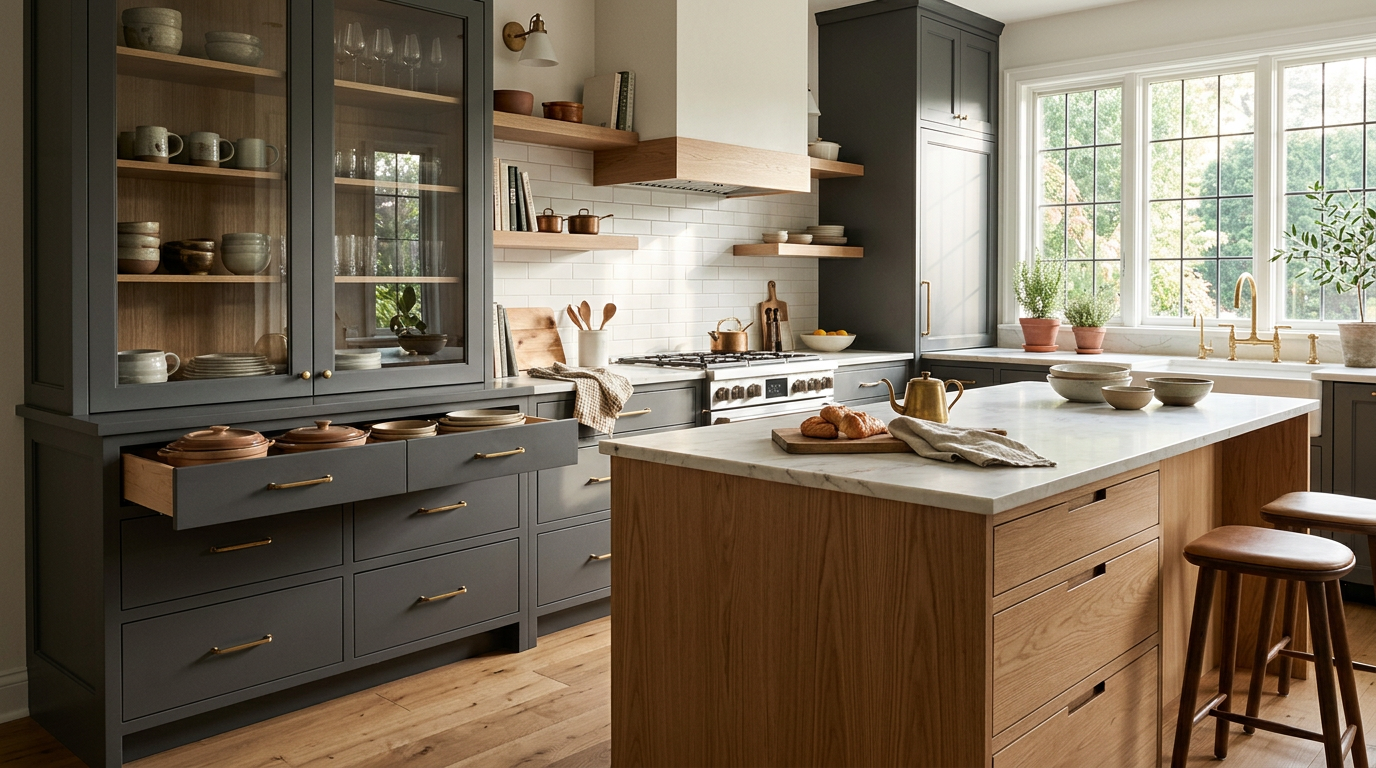
If you look at kitchens built thirty or forty years ago, you will find almost nothing but standard base cabinets with doors and a single shallow drawer at the top. Today, kitchen design has shifted dramatically toward deep base drawers.
+-----------------------------------+-----------------------------------+
| Feature                           | Base Drawers                      | Standard Cabinets with Shelves    |
+-----------------------------------+-----------------------------------+
| Ergonomics                        | Zero crouching; everything        | Requires kneeling and reaching    |
|                                   | rolls out to waist height         | into dark corners                 |
+-----------------------------------+-----------------------------------+
| Space Utilization                 | 100% visible and accessible       | Back 30% of shelf often becomes   |
|                                   | from above                        | a "dead zone"                     |
+-----------------------------------+-----------------------------------+
| Structural Strength               | Heavy-duty undermount slides      | Fixed or adjustable shelves;      |
|                                   | support up to 75–100+ lbs         | prone to sagging over time        |
+-----------------------------------+-----------------------------------+
The primary driver behind this shift is ergonomics. To get a pot out of a standard base cabinet, you have to bend down, reach into a dark cavern, and move three other items out of the way first. With a deep drawer, you pull the handle, the entire contents of the cabinet roll out into the light, and you lift the item straight up.
Because modern drawers utilize full-extension slides, you never lose items in the back. Drawers also maximize physical storage volume. Instead of leaving empty air space above your pots on a fixed shelf, stacked drawers allow you to segment your storage vertically, customized to the exact height of your cookware.
Where Traditional Cabinets Still Rule
While drawers are incredibly efficient, they are not a universal solution. Traditional doors, shelves, and specialized vertical cabinets still have critical roles to play in a highly functional kitchen.
- The Sink Base: Plumber’s pipes, garbage disposals, filtration systems, and pull-out spray hoses require open, flexible space. A standard double-door cabinet is still the best way to house these utilities while allowing easy access for maintenance.
- Trash and Recycling Pullouts: While this functions like a drawer on heavy-duty slides, it features a tall door front attached to a deep pull-out frame holding two waste bins. Placing this next to your sink or primary prep zone keeps mess off your floors.
- Tall Pantry Cabinets: A floor-to-ceiling pantry cabinet with adjustable shelves remains the most efficient way to store dry goods of varying heights, from tall cereal boxes to small cans of soup.
- Appliance Garages: Sitting directly on the countertop, these cabinets use pocket doors or tambour doors to hide heavy appliances like stand mixers, blenders, and coffee makers while keeping them plugged in and ready to use.
Navigating Drawer Types and Specialized Inserts
When planning your base cabinets, you do not have to settle for basic empty boxes. Modern cabinetry offers a wide variety of specialized configurations designed for specific kitchen tools.
Standard Utility Drawers
These are the shallow drawers (typically four to five inches deep) positioned at the top of your base cabinets. They are best reserved for silverware, cooking utensils, knives, and small gadgets.
Deep Pot and Pan Drawers
Usually ten to twelve inches deep, these drawers can easily accommodate large stockpots, cast-iron skillets, and Dutch ovens. Storing these heavy items in drawers saves your back and keeps your heavy cookware from scratching against each other on static shelves.
Roll-Out Trays (Drawers Behind Doors)
If you prefer the streamlined look of traditional cabinet doors on the exterior but still want the convenience of drawers, roll-out trays are a great compromise. You open the doors, then pull out the individual trays. While they require a two-step process to open, they offer excellent flexibility for adjustable interior height.
Specialized Inserts
Integrated organizers take a kitchen from good to exceptional. Popular options include custom cutlery dividers, peg systems that keep plates from sliding around in deep drawers, vertical cookie sheet dividers, and narrow spice pullouts that utilize those extra six inches of space next to the range.
Drawer Construction: Quality Standards to Look For
Not all drawers are built to handle the heavy demands of a busy kitchen. When evaluating cabinetry lines, the materials and joinery methods used inside the box will determine how long your kitchen remains functional.
+-------------------+-----------------------------------+-----------------------------------+
| Component         | High-End Standard                 | Budget/Builder Grade              |
+-------------------+-----------------------------------+-----------------------------------+
| Cabinet Box       | 1/2" to 3/4" Plywood              | Furniture-grade Particleboard     |
| Drawer Joinery    | English Dovetail (solid wood)     | Stapled or pinned MDF             |
| Drawer Slides     | Soft-close, Undermount, Full-Ext  | Side-mount, Epoxy-coated roller   |
+-------------------+-----------------------------------+-----------------------------------+
Plywood vs. Particleboard
High-quality cabinets typically use furniture-grade plywood for the cabinet boxes and drawer structures. Plywood hold screws exceptionally well and resists moisture. Particleboard or medium-density fiberboard (MDF) is common in budget cabinetry; while flat and stable, it is heavier, prone to swelling if exposed to plumbing leaks, and can strip out around screw holes under heavy loads.
Dovetail vs. Stapled Construction
The joint where the drawer front meets the drawer side takes a beating every time you pull the handle. Dovetail joints—interlocking wedge-shaped teeth—are the gold standard because the mechanical strength of the joint itself holds the drawer together, even before glue is applied. Stapled, glued, or pinned butt joints are much cheaper to produce but can fail over time under the weight of heavy pots and pans.
Slide Anatomy: Undermount vs. Side-Mount
The hardware carrying the weight makes all the difference. Modern, high-performance kitchens use undermount slides. They are installed beneath the drawer body, hiding them from view and keeping dust and crumbs out of the grease tracks. Side-mount slides are visible on the sides of the drawer box, reducing the usable width of your drawer by about an inch.
Regardless of mounting style, always specify full-extension slides so you can access the very back of the drawer. Look for slides rated for at least 75 to 100 pounds for standard drawers, and heavy-duty 150-pound rails for wide pot drawers. Finally, integrated soft-close technology is no longer just a luxury; it prevents heavy drawers from slamming, protecting both your cabinetry joints and your quiet mornings.
The Perfect Kitchen Layout Guide
To maximize the efficiency of your new kitchen, you need to match your storage types to your work zones. Here is how a professional designer maps out a residential kitchen:
The Upper Cabinets
Uppers should be reserved for your lighter, everyday items. Use them to store glassware, coffee mugs, salad plates, and dinner bowls. Because these items are used frequently, having them at eye level makes unloading the dishwasher fast and efficient. Keep uppers shallow (usually 12 to 13 inches deep) so you do not bump your head while prepping food on the counter below.
The Prep Zone
Your main food preparation area, usually located between the sink and the range, needs quick access to tools. Plan for a bank of drawers here: a shallow top drawer with a high-end cutlery or knife insert, a middle drawer for mixing bowls, and a deep bottom drawer for small appliances like food processors or hand mixers. This is also the ideal spot to integrate your pull-out trash and recycling center.
Flanking the Range
This is where deep drawers shine brightest. Put two wide, deep drawer banks on either side of your cooktop. One side should hold all your everyday pots, sauté pans, and lids. The other side is perfect for baking dishes, cast iron, and casseroles. Above or immediately adjacent to the range, a narrow base pull-out for cooking oils, vinegars, and spices keeps your essential ingredients within arm's reach while you work.
The Under-Counter Microwave
Instead of taking up valuable counter space or hanging a microwave over your range (which can be a reach hazard for shorter family members or children), consider a microwave drawer installed in your base island or next to the refrigerator. These specialized appliances slide open with the touch of a button, allowing you to stir or check on your food from above without removing the hot container.
Getting the Balance Right
Every kitchen is a puzzle of trade-offs, and your cooking style should dictate the final layout. If you bake constantly, you may want more vertical tray dividers for cookie sheets. If you love hosting large dinner parties, you might prioritize deep drawers with peg systems for storing heavy dinner plates at waist height.
Striking the right balance between the heavy-duty utility of modern drawers and the classic versatility of traditional cabinets is what turns a standard remodel into a custom kitchen that feels intuitive to use. If you are ready to start planning your kitchen remodel and want to see how these storage solutions can work in your own home, we would love to help. You can reach out to Modern Builders of America to schedule a free in-home estimate through our contact page, and our design team will work with you to draft a layout tailored to the way you live.