Low water pressure is more than a minor annoyance when you are trying to rinse dishes or take a shower. It is often the first warning sign of a system-wide plumbing issue that, if left unaddressed, can lead to costly water damage or premature fixture failure.
To resolve the issue, you must first determine whether the drop in pressure is localized to a single faucet, isolated to your property, or stemming from the municipal supply. Understanding how your home's plumbing system regulates and distributes water will help you identify the root cause and choose the right fix.
The Pressure-Reducing Valve (PRV): A Common Culprit
Most modern homes connected to a municipal water supply have a pressure-reducing valve (PRV) installed near the main shut-off valve where the water line enters the house. The PRV is a bell-shaped brass fitting with a screw on top. Its job is to take the high-pressure water delivered by the city—which can be well over 100 pounds per square inch (psi)—and step it down to a safe, usable pressure for your home's appliances and fixtures.
Normal residential water pressure should sit between 40 and 80 psi. If pressure climbs above 80 psi, it can damage washing machine hoses, ruin water heaters, and cause faucets to drip.
Because the PRV contains a spring and a rubber diaphragm that are constantly under tension, these valves wear out over time. A typical PRV has a lifespan of 10 to 15 years. When they fail, they almost always fail "closed," meaning they restrict the flow of water to a trickle to protect your home from high-pressure surges.
If you notice a sudden, house-wide drop in water pressure, the PRV is the first place to look. Replacing a failed PRV is a straightforward job for a professional plumber. Once replaced, the new valve can be adjusted using the top bolt to dial in the water pressure to your preferred level within that safe 40-to-80 psi range.
Localized Clogs: Aerators and Showerheads
If the pressure drop is limited to a single sink or shower, you can rule out the main water line and the PRV. Instead, search for mineral buildup at the point of use.
Municipal water carries dissolved minerals like calcium and magnesium. Over time, these minerals precipitate out of the water and form a hard, white crust—known as scale—inside your fixtures.
- Faucet Aerators: The small mesh screen at the tip of your faucet is designed to mix air with the water stream to prevent splashing. It also acts as a debris trap. Unscrew the aerator by hand or with a pair of pliers (wrap a rag around the metal to prevent scratching). If the tiny screen is packed with sand, grit, or white scale, you have found your problem.
- Showerheads: Mineral scale frequently clogs the tiny rubber nozzles on showerheads, causing some nozzles to shoot water sideways or stop flowing entirely.
The Vinegar Fix
The fastest and cheapest way to restore flow to a clogged fixture is with plain white distilled vinegar. The acetic acid in vinegar dissolves calcium carbonate scale without damaging chrome, brass, or brushed nickel finishes.
- For aerators: Remove the assembly, disassemble the tiny screen and washers, and submerge them in a small bowl of warm vinegar for about an hour. Scrub gently with an old toothbrush, rinse with clean water, and reassemble.
- For showerheads: If you cannot easily unscrew the showerhead, fill a plastic sandwich bag halfway with warm vinegar. Slip the bag over the showerhead until the nozzles are fully submerged, and secure the bag to the shower neck with a rubber band or zip tie. Let it sit for two to three hours, remove the bag, and run hot water to flush out the loosened scale.
Aging Pipes: Corroded Galvanized Steel
If your home was built before the late 1970s and still has its original plumbing, your low water pressure could be caused by corroded galvanized steel pipes. Galvanized pipes are steel pipes coated in a layer of zinc to prevent rust. Over fifty or sixty years, that zinc coating inevitably wears away, exposing the raw steel to water and oxygen.
As galvanized pipes rust, they do not typically leak right away. Instead, they rust from the inside out. The rusting steel expands, creating a rough, uneven surface that catches mineral deposits. This process, called tuberculation, gradually narrows the inside diameter of the pipe.
| Pipe Material | Common Lifespan | Behavior Over Time | Solution for Low Pressure |
|---|---|---|---|
| Galvanized Steel | 40 to 60 years | Rusted interior restricts flow; turns water brown | Full repipe with Copper or PEX |
| Copper | 50 to 70+ years | Highly durable; scale buildup is rare | Spot repairs or localized cleaning |
| PEX (Polyethylene) | 40 to 50+ years | Flexible; does not rust or scale | Adjust pressure regulators or manifolds |
A galvanized pipe that started with a one-inch interior opening can constrict to the width of a pencil over several decades. This choke point severely limits the volume of water that can pass through, resulting in a dramatic drop in pressure when multiple fixtures are used at once.
There is no chemical flush or mechanical snake that can safely clear rust from the inside of galvanized steel pipes. The only permanent solution to this problem is a whole-home repipe, replacing the old steel lines with modern copper or flexible PEX tubing.
Hidden Leaks: Pinhole Fractures and Slab Leaks
A sudden, unexplained drop in water pressure across the entire house can point to a serious leak in your main supply line or under your home's foundation. When water escapes through a break in the pipe, the system cannot maintain the backpressure required to deliver water to your second-floor bathroom or kitchen sink.
Pay close attention to these warning signs of a hidden leak:
- A sudden change in water pressure paired with an unexpectedly high water bill.
- The sound of running or rushing water behind walls or under floors when all faucets are turned off.
- Spongy, warm, or damp spots on your carpets or hardwood flooring.
- A damp, muddy patch in your yard that never dries out, especially along the path where the main water line runs from the street to your home.
If you suspect a leak, locate your water meter. Ensure all faucets and water-using appliances in the house are completely turned off. Look at the low-flow indicator on the meter (often a small red or blue triangle or a star-shaped wheel). If that wheel is spinning—even slowly—water is leaving your system. Pinpointing and repairing these leaks quickly is critical to preventing structural damage and mold growth.
Municipal Supply Issues and Shared Wells
Sometimes, low water pressure has nothing to do with your home's plumbing. Public water systems experience fluctuations in pressure due to high-demand periods, maintenance work, or equipment failures.
- Peak Demand: If your water pressure drops consistently at 7:00 AM on weekdays, you are likely competing with your neighbors as everyone showers and prepares for the day.
- Water Main Breaks: A ruptured municipal main down the street will drop the pressure in the entire neighborhood until city crews can isolate and repair the break.
- Elevation Differences: Homes built on high hills often experience lower baseline water pressure than those built in valleys because the municipal pumps have to work harder to push water uphill.
Private and Shared Well Systems
If your water comes from a private well or a shared community well, low pressure is usually tied to the well pump or the pressure tank.
Inside your basement or utility closet, you will find a blue or grey pressurized tank with a pressure switch mounted nearby. This switch tells the well pump when to turn on (usually at 30 or 40 psi) and when to turn off (usually at 50 or 60 psi). If the pressure tank's bladder fails, or if the pressure switch contacts become corroded, the system will struggle to maintain steady pressure, leading to surging or weak water flow. An undersized pump or a dropping water table can also cause a drop in supply.
A Simple Step-by-Step Diagnostic Sequence
Before you call a plumber, you can run through this simple diagnostic sequence to isolate the cause of your low water pressure:
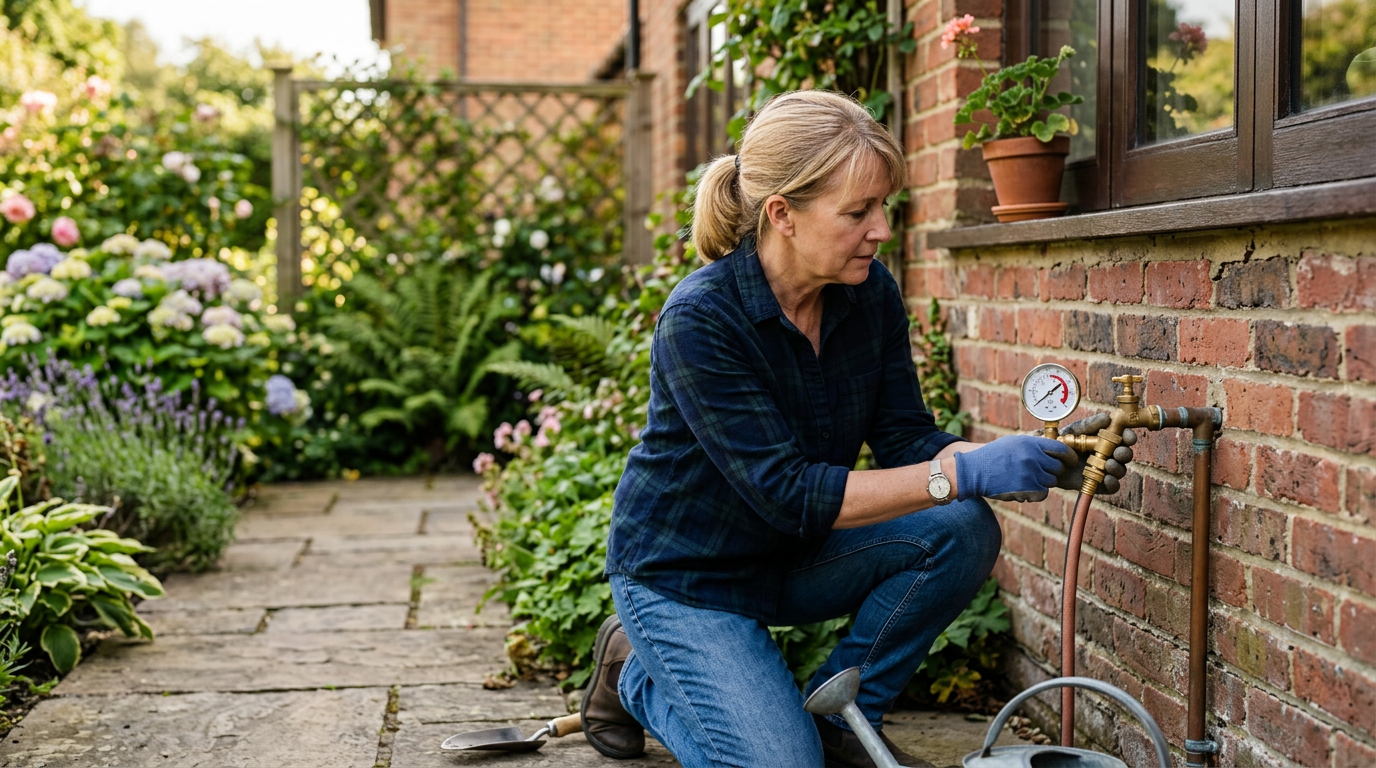
- Test at the Hose Bib: Screw a mechanical pressure gauge (available at any home improvement store) onto your outdoor hose spigot closest to the water main. Turn the faucet on fully. If the gauge reads between 40 and 80 psi, your main supply pressure is healthy, and your issue is localized inside the home.
- Check the PRV: If the hose bib test reads below 40 psi, locate your PRV. Check to see if the locknut on the adjustment screw has slipped, or try loosening the locknut and turning the bolt clockwise to see if the pressure increases. If there is no response, the valve's internal mechanism has likely failed.
- Inspect the Main Shut-off Valve: Make sure your main water shut-off valve (usually a gate valve or ball valve near the water meter) is open all the way. Sometimes, after utility work or seasonal shutdowns, these valves are only partially reopened.
- Isolate the Fixtures: Run water at every faucet. If only the kitchen sink or master shower has weak flow, unscrew the aerator or showerhead and clean out the mineral scale.
- Scan for Physical Clues: Walk your property. Look for damp drywall, listen for hissing behind walls, check the basement floor for moisture, and look for unusually lush, green patches of grass in your yard during dry weather.
Diagnosing water pressure issues early saves you money and protects your home from sudden plumbing failures. If you are dealing with low water pressure, aging pipes, or suspected leaks and want a professional evaluation, we can help. Reach out to Modern Builders of America to schedule a free in-home estimate, and our team will get your home's plumbing system running smoothly again.