A slow-draining sink or shower is one of those household nuisances that is easy to ignore—until it turns into a midnight backup. While it is tempting to reach for a quick fix, slow drains are usually a symptom of a deeper bottleneck somewhere in your home’s waste and vent system. Understanding what is happening inside your pipes can help you solve the immediate problem without causing expensive, accidental damage to your plumbing.
Here is a practical guide to the most common culprits behind slow drains, how to address them safely, and when it is time to call in a professional with a camera.
1. Hair and Soap Scum (Bathroom Sinks, Tubs, and Showers)
In bathrooms, the primary enemy is a combination of hair, soap scum, and grooming products. As hair washes down the drain, it catches on the mechanism of the pop-up stopper or the rough edges of the drain assembly. Over time, sticky soap film binds these strands together, creating a dense, waterproof net.
How to Fix It
- The Hair Snake: For shallow clogs, a cheap plastic hair snake (a flexible strip of plastic with backward-facing barbs) is highly effective. You simply insert it into the drain, twist, and pull the hair obstruction out.
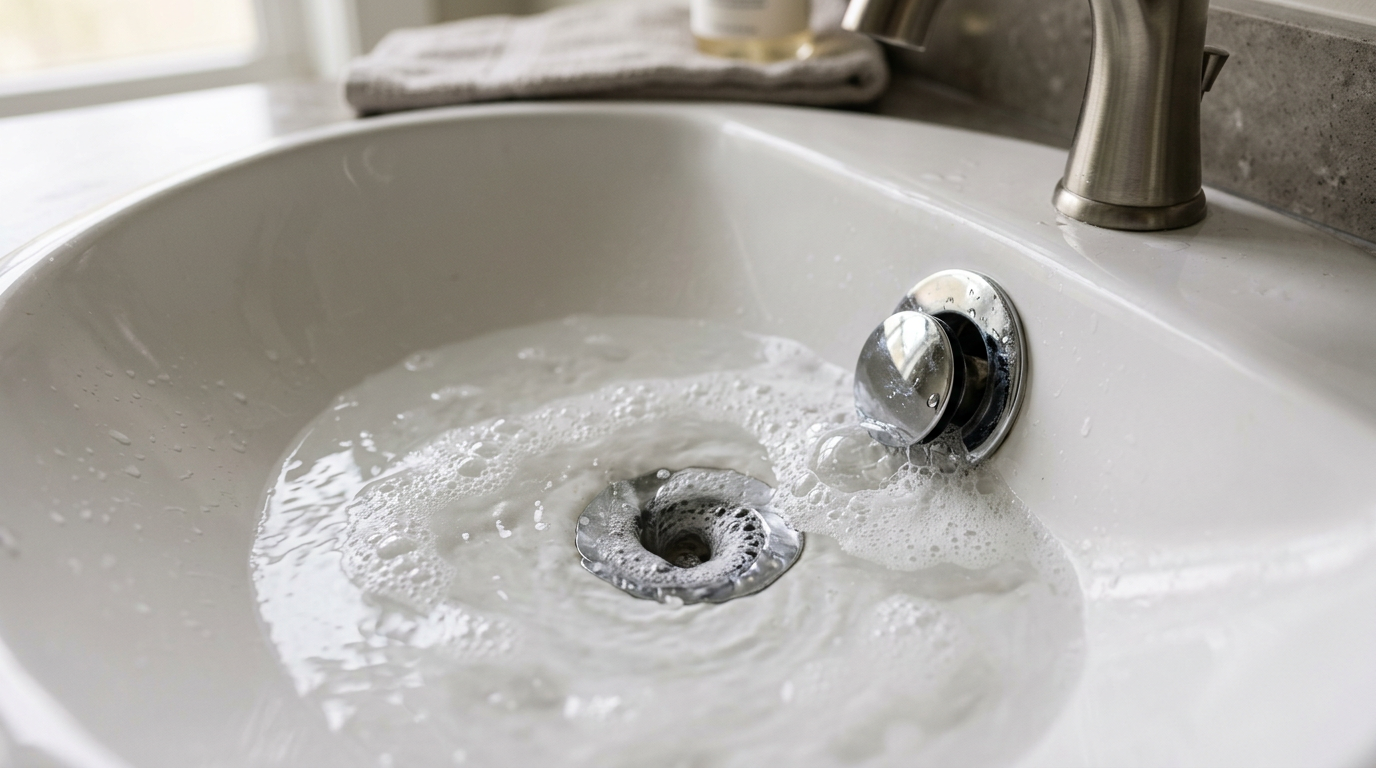
- Cleaning the Stopper: Many bathroom sink slow-downs are solved simply by unscrewing the pivot rod under the sink, pulling out the pop-up stopper, wiping off the accumulated debris, and putting it back together.
- Drum Trap Cleanout: If you live in an older home, your bathtub might have a brass drum trap instead of a modern P-trap. These look like small metal canisters embedded in the floor. Over decades, they fill up with sediment and hair. You can unscrew the cover to clean them out manually, but be cautious with old brass threads, which can strip or crack easily.
2. Kitchen Grease and Food Solidification
Kitchen drains face a completely different set of challenges. Cooking oils, animal fats, and fine food particles from the garbage disposal are the main threats here. Even if you run hot water while scraping a plate, liquid fat eventually cools as it travels deeper into your plumbing, solidifying on the cold pipe walls.
| Action | Status | Why It Matters |
|---|---|---|
| Hot Water & Dish Soap | Safe for Minor Sluggishness | Dissolves light, fresh grease buildup in the trap. |
| Boiling Water down PVC | NEVER Do This | Softens and deforms modern PVC pipes and melts joint glue. |
| Chemical Cleaners | Avoid | Generates high heat that damages pipes and gaskets; rarely clears the whole block. |
| Snaking or Hydro-Jetting | Best for Heavy Clogs | Physically scrapes or blasts grease off the entire interior pipe wall. |
How to Fix It
For a mild slowdown, squirt a generous amount of grease-cutting liquid dish soap down the drain, followed by a gallon of hot tap water (not boiling water, which can melt the wax ring under your toilet or deform PVC pipes).
If the line is completely blocked or severely restricted, a professional drain snake or a hydro-jetting service is necessary. A hydro-jet uses high-pressure water to scrub the grease off the pipe walls, restoring the pipe to its original diameter.
3. The Hidden Culprit: Main Sewer Line Root Intrusion
If multiple fixtures in your home are draining slowly, or if water bubbles up into your basement floor drain or shower when you run the washing machine, the issue is likely in your main sewer lateral—the underground pipe connecting your home to the municipal sewer or septic tank.
In older homes with clay, cast iron, or Orangeburg (tar paper) pipes, tree roots are a constant threat. Tiny root hairs slip through loose pipe joints in search of water and nutrients. Once inside, they thrive, growing into thick, woody masses that catch toilet paper and waste, eventually choking off the flow entirely.
[Tree Roots] ---> (Small Joint Crack) ---> [Root Mass Inside Pipe] ---> [Trapped Waste & Slow Flow]
How to Fix It
Root intrusion cannot be cleared with store-bought liquids or simple hand snakes. It requires a heavy-duty sewer machine equipped with sharp rotating blades to cut the roots out of the pipe.
In some cases, hydro-jetting with a specialty root-cutting nozzle is used. Keep in mind that root cutting is a temporary fix; once roots find a way in, they will grow back. Eventually, the damaged section of the pipe will need to be repaired or replaced.
4. Sags and Bellies in Underground Pipes
Sometimes a slow drain is caused by physics, not a physical blockage. Soil shifts, settling foundations, and poor initial installation can cause underground sewer lines to slump or "belly."
A healthy sewer pipe relies on a steady downward slope (typically a quarter-inch of drop per foot of pipe) to carry solids away using gravity. When a pipe sags, it creates a low spot that permanently holds water.
- As waste enters this standing water, solids lose their momentum and settle to the bottom.
- Over months and years, this sediment builds up, narrowing the passage and causing things to drain at a crawl.
- The only permanent cure for a bellied pipe is excavation and physical repair to re-establish the proper slope.
5. Plumbing Vent Issues (The Gurgling Drain)
Every plumbing system needs air to work. Your home is equipped with a network of vent pipes that run up through the walls and exit through the roof. These vents let air into the plumbing system so waste water can flow smoothly down—very much like putting your thumb over the end of a straw filled with water; when you lift your thumb, the water flows out instantly.
       [Vent Pipe on Roof]  <--- Air enters here
               |
               |
[Sink] --------+--------> [Sewer Main]
  |
[P-Trap] <--- Without air, water siphons out and drains slowly
If a vent becomes clogged by a bird’s nest, fallen leaves, or winter ice, air cannot enter the system. This creates a vacuum. As water struggles to drain, it will pull air from the nearest available source—usually the P-trap of an adjacent sink or shower. This results in a slow drain accompanied by a distinct gurgling or sucking sound.
How to Fix It
Clearing a vent requires climbing onto the roof to inspect the vent stacks. Homeowners can sometimes clear leaves or debris from the top of the stack, or run a garden hose down the pipe to flush out blockages. However, working on a sloped roof carries inherent safety risks, and this task is often best left to a professional.
Why You Should Stop Using Chemical Drain Cleaners
It is incredibly tempting to pour a bottle of chemical drain opener down a slow sink. However, professional contractors consistently advise against this habit for several reasons:
- Pipe Damage: Chemical cleaners rely on strong acids or bases (like sodium hydroxide or sulfuric acid) to generate intense chemical reactions and heat. This heat can soften plastic PVC pipes, melt the glue at joints, or crack old, fragile cast iron.
- Gasket Ruining: The corrosive chemicals sit in your P-trap, eating away at the rubber slip-joint washers and gaskets that keep your under-sink cabinetry dry.
- Safety Hazards: If the chemical fails to clear the clog, you are left with a sink full of highly caustic, toxic water. If you eventually have to call a plumber, they must work with PPE to avoid chemical burns to their skin and eyes, and disposing of that water safely becomes a major challenge.
When Is It Time to Camera the Line?
If you have tried basic plunging or shallow snaking and the drain is still sluggish, or if the slow drain returns every few weeks, it is time to request a sewer camera inspection.
During a camera inspection, a technician feeds a high-definition, waterproof camera attached to a stiff fiber-optic cable down your cleanout. This allows you to see exactly what is causing the issue on a monitor.
                                [Locating Transmitter]
                                         v
[Camera Head] ====> [Tree Root/Crack] ====> [Monitor View]
A camera run is highly recommended if:
- You have recurring backups in the same drain.
- You live in an older home with mature trees on the property.
- You are buying a home and want to avoid inheriting thousands of dollars in buried plumbing repairs.
- You suspect a pipe collapse or a major sag under your yard or concrete slab.
Once you have a clear picture of the inside of your pipes, you can make an informed decision on whether you need a simple cleaning or a targeted pipe repair.
If your home's plumbing is running slow and you are tired of dealing with temporary fixes, we are here to help. Reach out to the team at Modern Builders of America to schedule a free in-home estimate where we can evaluate your system and help you keep your drains running clearly and reliably.