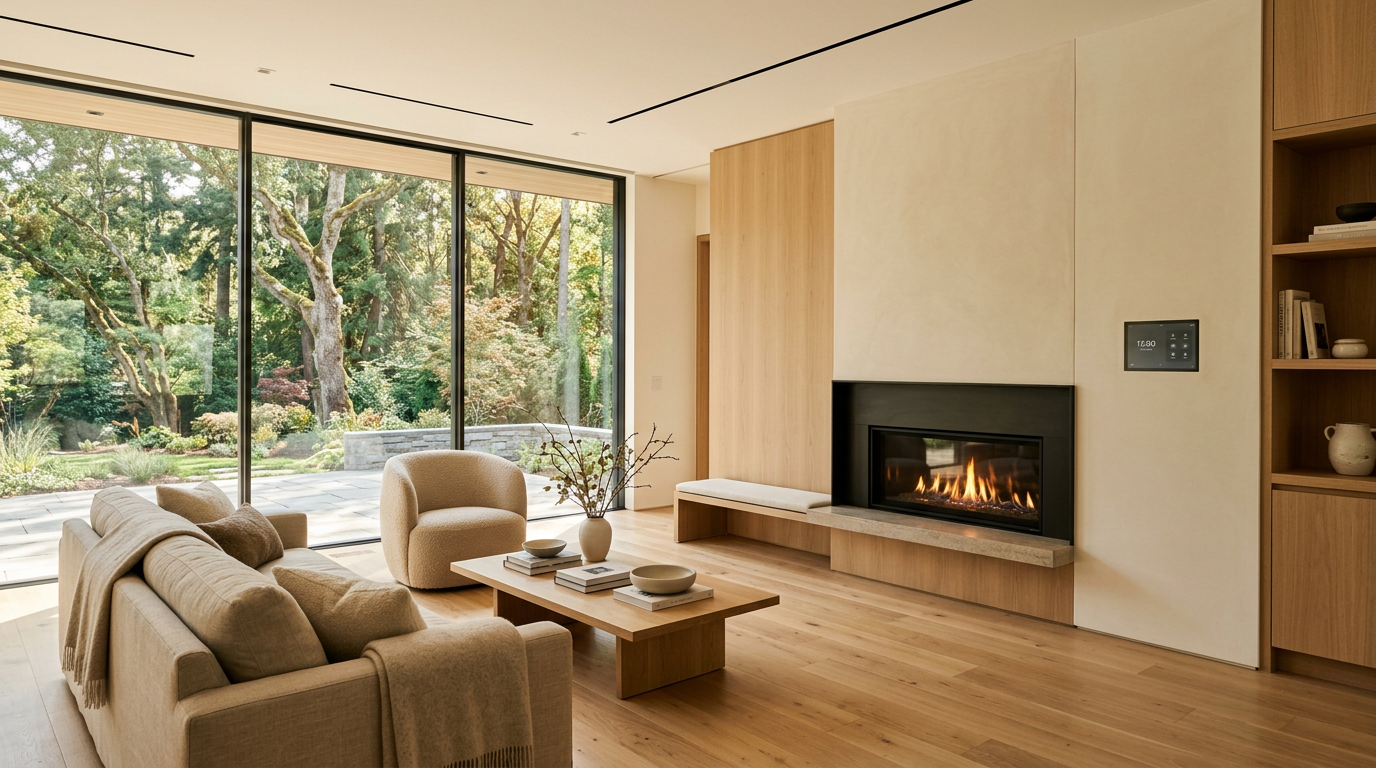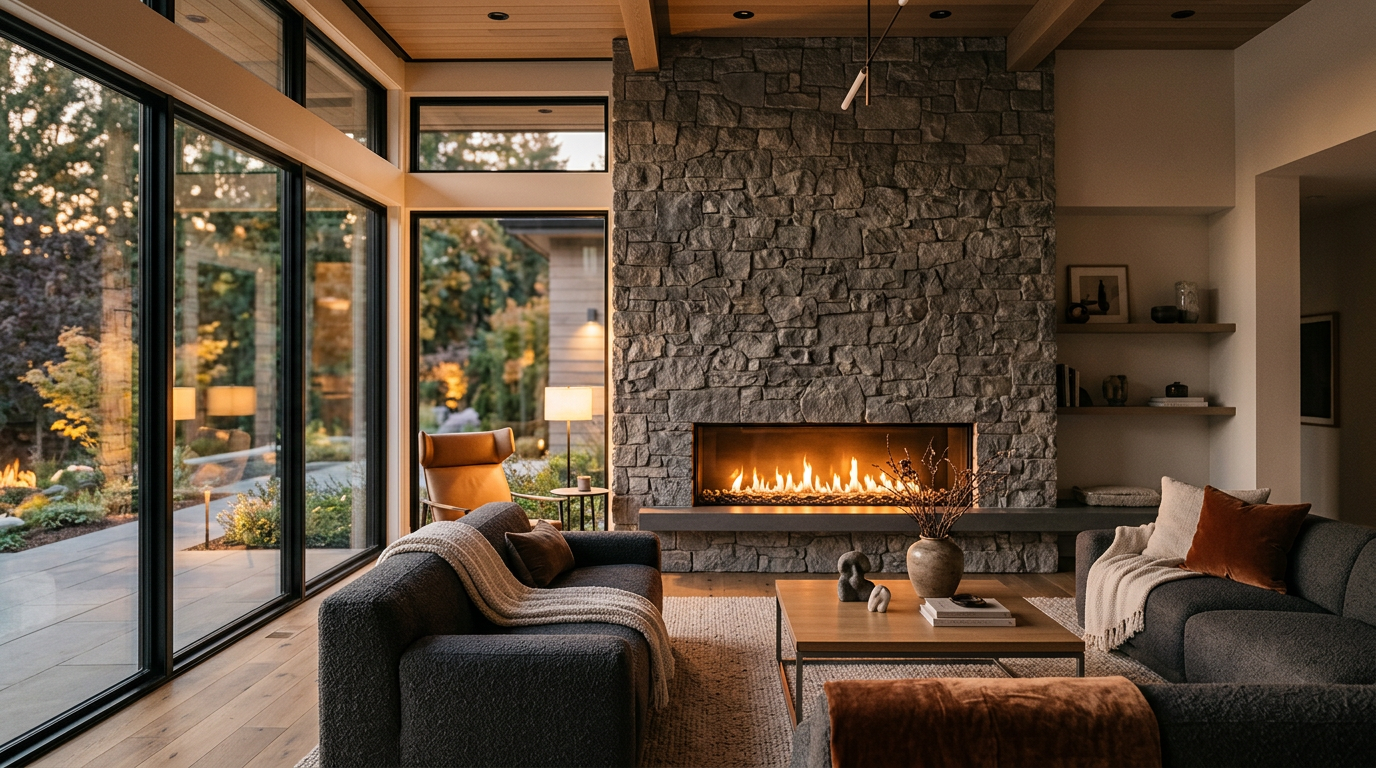
There is nothing quite like the draw of a fireplace when the temperature drops. It serves as the natural anchor of a living room, pulling people together and instantly making a house feel like a home. But if you are remodeling or building new, choosing how to fuel that hearth is one of the most consequential decisions you will make for your budget, your floor plan, and your daily routine.
While traditional wood-burning hearths still hold a romantic appeal, most modern homeowners find themselves choosing between gas and electric systems. Each technology has evolved rapidly over the last decade, offering distinct advantages in terms of heat output, installation flexibility, and overall cost.
The Traditional Baseline: Wood-Burning Fireplaces
To understand the appeal of gas and electric, it helps to look at the traditional option. Wood-burning fireplaces are the undisputed champions of sensory experience—the crackle of dry oak, the smell of woodsmoke, and the mesmerizing dance of a real, unpredictable flame cannot be perfectly replicated by any technology.
However, that ambiance comes with significant responsibilities. A wood fireplace requires a dedicated, structurally sound chimney, strict compliance with local building codes regarding clearances to combustible materials, and a steady supply of seasoned firewood. They also require active management. You must clean out ashes, schedule annual chimney sweepings to prevent creosote buildup, and accept that a large portion of the heat generated actually escapes right up the flue. For these reasons, most modern remodels lean toward the convenience of gas or electric.
Gas Fireplaces: Real Flame, Serious Warmth
If you want actual fire and substantial supplemental heat without the labor of hauling logs, gas is the gold standard. A gas fireplace utilizes natural gas or liquid propane to produce a steady, adjustable flame over ceramic logs, glass media, or stones.
Venting Methods
Unlike electric units, gas fireplaces produce combustion byproducts that must be managed. There are three primary ways to handle this:
- Direct-Vent: The industry standard for safety and efficiency. These units utilize a coaxial pipe that pulls fresh outdoor air for combustion while venting gases back outside through a exterior wall or roof. The system is completely sealed from your indoor air by a glass faceplate.
- B-Vent (Natural Draft): These systems draw room air for combustion and vent the exhaust upward through a traditional chimney or vertical pipe. They offer a highly realistic flame but are less heat-efficient than direct-vent systems.
- Ventless (Unvented): These units burn gas so cleanly that they do not require a chimney or flue, redirecting all heat directly into the room. However, they are subject to strict local building codes, emit moisture into the home, and are not recommended for individuals with respiratory sensitivities.
Operation and Heat Control
Gas fireplaces are highly effective zone heaters, easily warming a large living room or open-concept basement. Most systems operate via an wall switch, a handheld remote control, or even a smart-home automation system. With the press of a button, you can adjust the flame height, control the heat output, and program thermostatic controls to keep the room at a precise temperature.
Electric Fireplaces: Ultimate Flexibility and Convenience
Electric fireplaces have evolved from the plasticky, unconvincing inserts of the past into sophisticated design features. Using advanced LED light projection, refractive mirrors, and sometimes even water mist to reflect light, modern electric units create highly convincing, three-dimensional flame illusions.
Installation Anywhere
Because an electric fireplace does not burn fuel, it produces no combustion byproducts and requires absolutely no venting, chimneys, or gas lines. It can be installed on almost any wall in your home, including interior walls, bedrooms, bathrooms, and high-rise apartments where venting is structurally impossible. Some units simply plug into a standard 120-volt wall outlet, while others can be hardwired into a dedicated 240-volt circuit for higher heat output.
Year-Round Use
One of the greatest design benefits of an electric fireplace is that the flame effect runs independently of the heating element. You can enjoy the visual warmth of a flickering fire on a warm midsummer night without adding a single degree of heat to your home. When you do want heat, a built-in fan-forced heater or infrared element provides modest supplemental warmth, behaving much like an efficient space heater.
Key Comparisons: Gas vs. Electric
Choosing between these two options typically comes down to how you plan to use the space, your local climate, and your renovation budget.
| Feature | Gas Fireplaces | Electric Fireplaces |
|---|---|---|
| Flame Source | Real gas combustion | LED light projection & mirrors |
| Heat Output | High (typically 10,000 to 40,000+ BTUs) | Modest (typically 4,000 to 9,000 BTUs) |
| Venting Required | Yes (except ventless models) | No |
| Placement Restrictions | High (requires gas lines and exterior venting access) | Extremely low (anywhere with electricity) |
| Maintenance | Annual safety inspections, glass cleaning | Minimal (occasional dusting, bulb replacement) |
Installation Cost Differences
The upfront cost of adding a fireplace to your home varies wildly based on your existing infrastructure.
Electric units are incredibly cost-effective. A high-quality wall-mounted or recessed electric fireplace typically costs between $500 and $2,500 installed, depending on whether you need a finish carpenter to build a custom surround or mantle, and whether an electrician needs to run a new dedicated circuit.
Gas units require a much larger investment. Because they require gas pipe installation, specialized exterior venting, framing, drywall work, and non-combustible finishing materials like tile or stone, a professional gas fireplace installation typically ranges from $3,000 to $8,000 or more. If your home does not already have a gas utility line, hookup fees will add to this baseline.
Operating Costs
Operating costs depend heavily on utility rates in your specific region. Generally speaking, natural gas is a highly efficient fuel source. Burning a gas fireplace for an hour typically costs less than a dollar, depending on the BTU rating of the unit.
Electric fireplaces are incredibly cheap to run if you are only utilizing the LED flame effects—often pennies per day. However, if you turn on the built-in heater, the unit will draw around 1,500 watts of power. In regions with high electricity rates, running the heat on an electric fireplace can be more expensive hour-by-hour than burning natural gas, though it produces less total heat.
Safety with Kids and Pets
Safety is a primary concern for families. Direct-vent gas fireplaces feature ceramic glass faces that become hot enough to cause severe burns upon contact. While modern units are sold with safety screens to prevent direct contact with the glass, they still radiate intense heat.
Electric fireplaces are inherently safer for curious hands and paws. Because the flame is an optical illusion, the front glass of an electric fireplace remains cool to the touch even when the unit is running. The heat is blown out of a small grate that, while warm, does not reach dangerous, skin-scalding temperatures.
Home Value and Resale Perception
From a real estate perspective, a real gas fireplace is generally viewed as a premium architectural feature. Buyers value the permanence, structural integration, and high heat output of a gas hearth, which often translates to a stronger return on investment during a home appraisal.
Electric fireplaces are highly valued for their modern aesthetic, especially in contemporary remodels or master bedroom suites. However, because they are often perceived as appliances rather than permanent structural elements, they may not carry the same weight on an appraisal sheet as a fully vented gas system.
Making Your Decision
To narrow down your choice, ask yourself these three practical questions:
- What is the primary goal of the fireplace? If you need an auxiliary heat source to warm a chilly basement or reduce your reliance on your central furnace during cold winters, gas is the superior tool for the job. If you simply want a cozy visual focal point for movie nights, electric is the easier, more versatile choice.
- Where do you want to put it? If you are eyeing an interior wall in a townhome or a cozy corner in a second-floor bedroom, routing gas pipes and vent flues can be prohibitively complex and expensive. An electric unit can be installed in these spaces with zero structural disruption.
- What is your total renovation budget? If you want to keep your project timeline tight and your budget modest, electric allows you to allocate more funds to high-end mantle materials or other areas of your remodel. If you are preparing a major living room overhaul and want a permanent, high-end feature, investing in a gas line and venting is well worth the long-term enjoyment.
Whichever direction you choose, upgrading your hearth is an investment that changes how you experience your home throughout the cooler months of the year. If you are ready to explore the possibilities for your own home, we invite you to reach out to the team at Modern Builders of America for a free in-home estimate by visiting our contact page. We will look at your home's layout, discuss your design vision, and help you choose the perfect fireplace system for your lifestyle.