Choosing the right fence for your home is more than a weekend project; it’s a long-term investment in your property’s security, privacy, and curb appeal. Because a quality fence should last anywhere from fifteen to thirty years, getting the details right during the planning phase prevents costly headaches down the road. This guide breaks down the essential choices you need to make regarding materials, styles, local regulations, and the critical structural engineering that keeps your fence standing straight for decades.
Comparing Fence Materials: Pros, Cons, and Lifespans
The material you choose dictates not only the upfront cost of your fence, but also the amount of weekend maintenance you’ll be doing over the next decade. Every material has its place depending on your climate, budget, and aesthetic preferences.
| Material | Relative Cost | Visual Lifespan | Main Maintenance Task |
|---|---|---|---|
| Pressure-Treated Pine | Budget to Mid-Range | 10 to 15 Years | Sealing/staining every 2-3 years |
| Western Red Cedar | Mid-Range | 15 to 20 Years | Optional staining for color retention |
| Vinyl (PVC) | Mid to Premium | 20 to 30+ Years | Occasional pressure washing |
| Composite | Premium | 25 to 30+ Years | Occasional washing |
| Ornamental Iron/Aluminum | Premium | 30+ Years (Aluminum) | Rust prevention (for iron) |
| Chain Link | Budget | 20 to 30 Years | None (galvanized or vinyl-coated) |
Wood: The Classic Choice
Wood remains the most popular fencing material because of its natural warmth and adaptability. However, not all wood is created equal.
- Pressure-Treated (PT) Pine: Chemically treated to resist rot, fungal decay, and termites. It is highly affordable and widely available. The downside is its tendency to warp, twist, or shrink as it dries out. It requires regular sealing to prevent weather damage.
- Western Red Cedar & Redwood: These species contain natural oils and tannins that resist rot, decay, and insect infestation without chemical treatments. They lie flatter and warp much less than PT pine. Left untreated, they weather to a silver-gray, but they can be stained to preserve their rich, warm tones.
Vinyl (PVC)
Vinyl has evolved from a shiny plastic alternative into a highly durable, premium fencing material. It is completely impervious to rot, termites, and moisture. The primary benefit of vinyl is its virtually zero-maintenance lifecourse—it never needs painting or staining. However, high-quality thick-gauge vinyl has a higher upfront cost than wood, and cheap, thin options can become brittle and crack in extreme cold or fade in intense sunlight.
Composite
Engineered from a blend of recycled wood fibers and plastic resins, composite fencing offers the look of wood with the durability of synthetic materials. It is exceptionally dense, heavy, and resistant to warping, splitting, and rotting. While it sits at the top tier of the pricing spectrum, its long lifespan and minimal maintenance make it a highly cost-effective option over twenty years.
Ornamental Iron and Aluminum
If privacy isn't your primary goal, ornamental metal provides unmatched elegance and security.
- Aluminum is lightweight, rust-proof, and coated with durable powder finishes. It is excellent for wet climates or properties with swimming pools.
- Wrought Iron is incredibly strong and traditional, but it is heavy and requires periodic painting to prevent rust.
Chain Link
Chain link is the utility player of the fencing world. While it offers no privacy unless woven with plastic slats, it is highly durable, inexpensive, and excellent for containing pets or securing large perimeters. To improve its industrial look, many homeowners opt for black or green vinyl-coated chain link, which blends more naturally into landscaping.
Choosing a Style: Balancing Function and Form
The style of your fence should match both the architectural lines of your home and your practical goals. Whether you want to block out the neighbors, keep a dog in, or simply frame your front yard, there is a specific design for the job.
Privacy
A standard privacy fence uses tightly abutted vertical pickets to completely block the line of sight. This is the go-to choice for backyards where you want to create an outdoor living room free from outside eyes.
Semi-Privacy
Semi-privacy fences use boards spaced slightly apart—typically a quarter-inch to a half-inch. This allows air to flow through the fence, reducing wind resistance, and lets in filtered sunlight while still creating a strong sense of enclosure.
Shadow-Box (Board-on-Board)
Also known as a "neighbor-friendly" fence, a shadow-box design alternates pickets on the front and back of the horizontal rails. This creates a three-dimensional pattern that looks identical from both sides. It allows excellent airflow while maintaining privacy when viewed from a direct angle.
Shadow-Box Layout (Top-Down View):
   [Picket]        [Picket]        [Picket]     <-- Yard Side
============= Rail ============= Rail ============
       [Picket]        [Picket]        [Picket] <-- Neighbor Side
Horizontal Slat
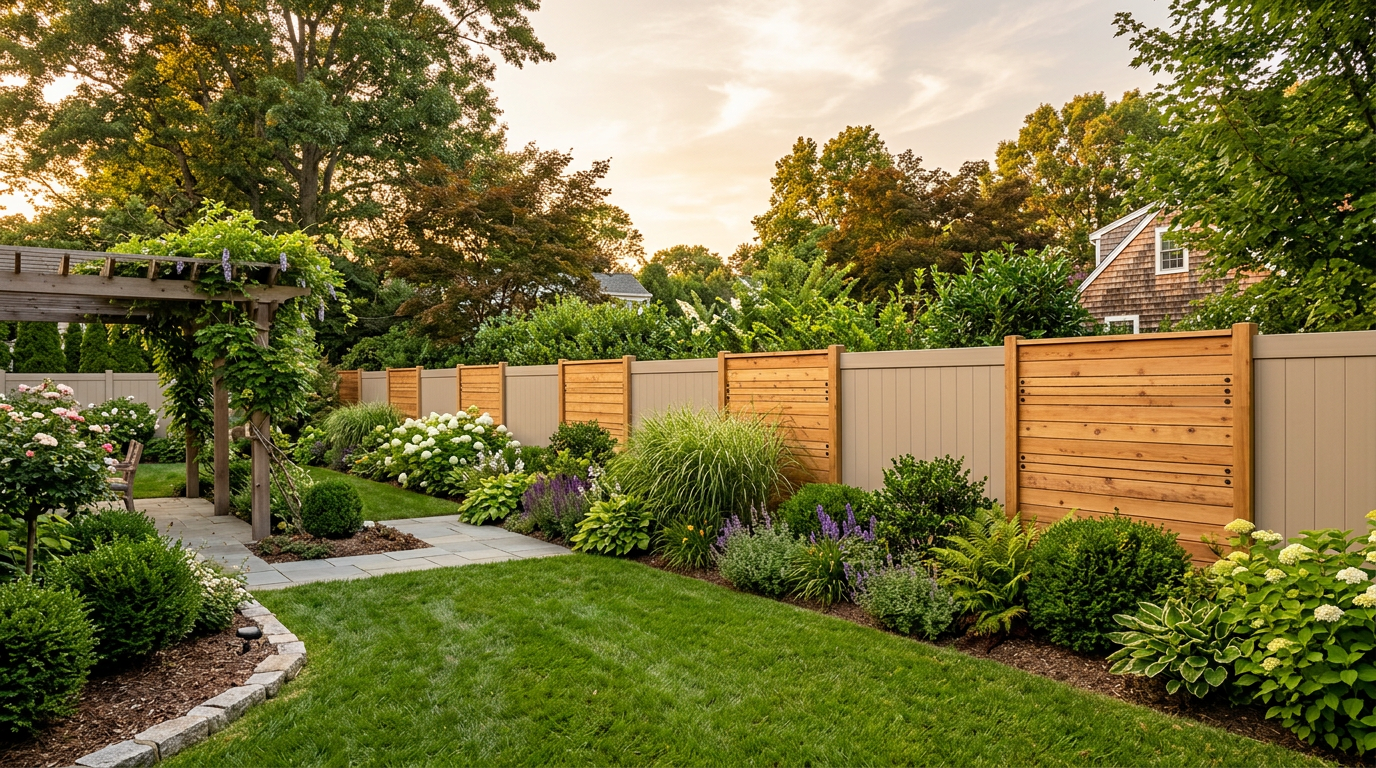
For modern and mid-century modern homes, horizontal fencing has become incredibly popular. Clean, horizontal lines make backyards feel wider and more contemporary. This style requires high-quality, straight boards (like cedar or composite) to prevent sagging or cupping over time.
Picket
The classic American picket fence features spaced vertical boards with decorative tops (gothic, pointed, or rounded). This style is primarily used in front yards to define boundaries without blocking views or looking unfriendly.
Height, Codes, and HOA Rules
Before ordering materials, you must understand the rules of your local municipality and Homeowners Association (HOA). These entities dictate exactly what you can build.
Front Yards vs. Backyards
- Front Yards: Typically capped at 3 to 4 feet in height. Front yard fences are usually required to be ornamental or picket-style (at least 50% open) so they do not block line-of-sight for drivers pulling out of driveways.
- Backyards: Typically capped at 6 feet, though some municipalities allow up to 8 feet with a special permit or neighbor sign-off. This height provides excellent privacy for patios and play areas.
The "Good Side" Rule
In almost every municipality, if you build a fence with only one finished side (like a standard privacy or picket fence where the structural horizontal rails are visible on one side), the finished, "good" side must face outward toward your neighbors and the street.
The Core of the Fence: Why Post Installation Is Everything
You can buy the most expensive wood or composite panels on the market, but if your posts are installed poorly, your fence will begin to sag, lean, or lift out of the ground within a few seasons. The underground portion of your fence is its foundation, and there are no shortcuts here.
The Standard Rule: Depth and Geometry
A fence post acts as a lever against the wind. To resist the constant physical force of wind pushing against the solid sail of a privacy panel, a post must be set deep enough to anchor safely in the earth.
The industry standard of engineering requires that at least 1/3 of the post's total height should be underground.
- For a standard 6-foot fence, you need a minimum post depth of 24 to 32 inches.
- For an 8-foot fence, posts should go down 32 to 36 inches.
To ensure a permanent hold, we use a three-step underground assembly:
[================ POST ===============]
               |       |
               |=======| <--- Grade Level
   Concrete -> | : . : |
     Collar    | . : . |
               | : . : |
               |=======| <--- Bottom of Post
  Gravel Base->| * * * |
               +-------+ <--- 24" to 36" Deep
- The Gravel Base: Before pouring any concrete, we place 3 to 4 inches of crushed gravel at the bottom of the hole. This acts as a drainage well, allowing water to flow down and away from the bottom of the wood post rather than pooling around it and causing rot.
- The Concrete Collar: Concrete is poured around the post, filling the hole to just below grade level. The top of the concrete is sloped slightly away from the post to shed rainwater.
- Frost Depth Considerations: In cold climates, water in the soil freezes and expands, creating an upward force called "frost heave." If your posts are set shallower than your local frost line (which can be anywhere from 12 to 48 inches deep depending on your region), the freezing ground will slowly push the concrete footings out of the earth, ruining your fence line. Your posts must always be anchored well below your local frost depth.
Why You Cannot Reuse Old Fence Posts
When replacing an old fence, it is incredibly tempting to try and save money by keeping the existing wood or metal posts and simply running new rails and pickets between them. This is almost always a critical mistake.
- Undetected Wood Rot: Even if a wooden post looks solid at eye level, it is likely rotting right at the grade line where soil moisture, oxygen, and wood meet.
- Cracked Concrete Footings: Over decades of ground shifts, seasonal freezes, and high winds, old concrete footings become cracked and unstable. They cannot support the weight and wind load of a brand-new, heavy fence panel.
- Out of Plumb: Old posts have almost always shifted slightly. Even a half-inch lean at the base translates to a glaring, ugly tilt at the top of a six-foot fence. Installing straight, square panels onto crooked posts is virtually impossible without huge gaps.
- Incompatible Spacing: New fence panels or layout systems rarely match the exact on-center spacing of your old posts. Forced installations look patched together.
Reusing old posts is a short-term savings that leads to long-term failure. Because of these structural risks, professional contractors cannot offer a workmanship warranty on any fence built utilizing old posts.
Plan Your Fence the Right Way
Building a beautiful, straight, and durable fence requires meticulous planning, precise digging, and an eye for structural integrity. Whether you are looking to secure your backyard for your pets, create a private outdoor oasis, or add classic charm to your front path, the construction details matter.
If you are ready to explore your options and get an expert evaluation of your property’s soil, slope, and local codes, we are here to help. Reach out to the team at Modern Builders of America to schedule your free in-home estimate at /contact, and we will help you design and build a fence that stands the test of time.