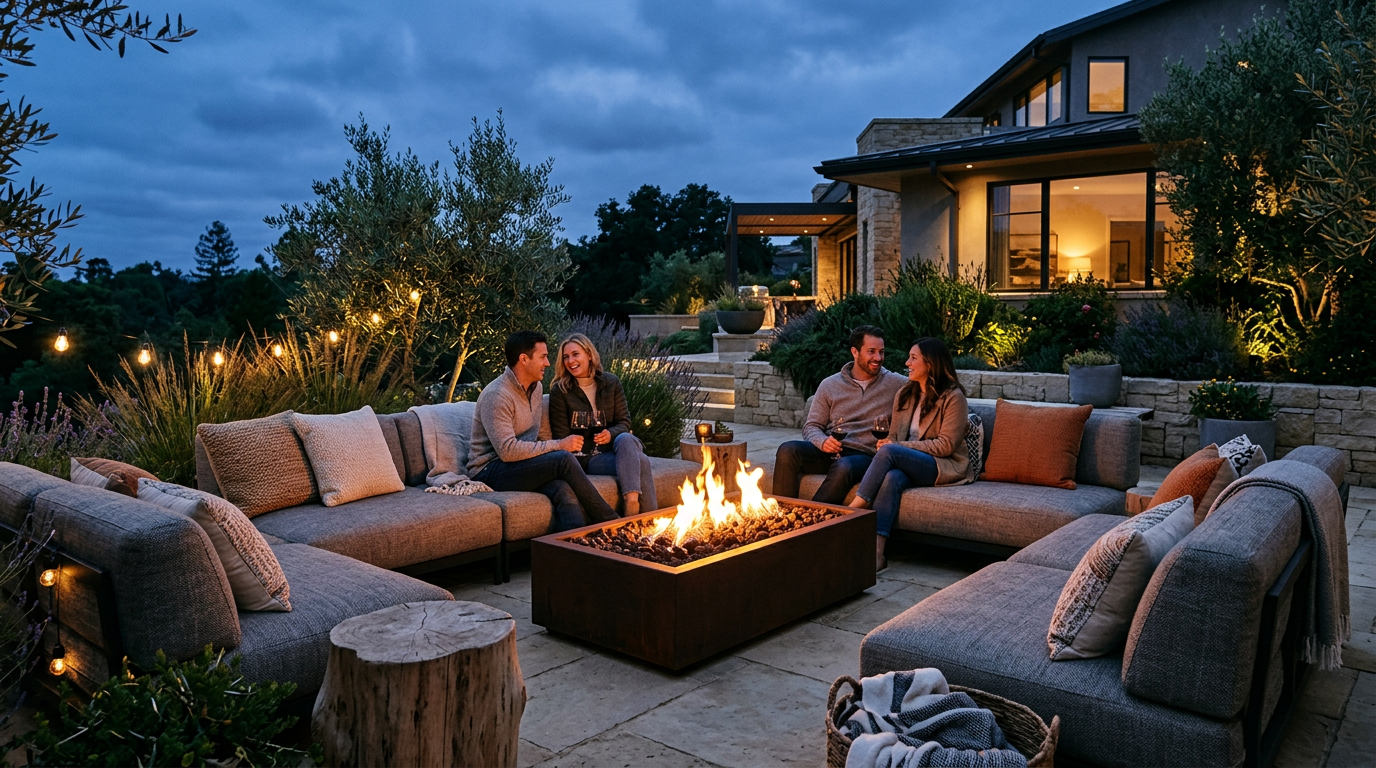
There is something primal about gathering around a fire in the backyard. It draws people in, softens conversation, and stretches outdoor living season deep into the autumn. But adding a permanent fire pit to your property requires balancing local building codes, safety precautions, and your own lifestyle preferences before breaking ground.
Choosing the right system involves understanding fuel sources, material durability, and property placement rules. Here is how to navigate the choices to create a safe, beautiful outdoor hearth that suits your home.
Gas vs. Wood: Choosing Your Fuel Source
The debate between gas and wood-burning fire pits is rarely just about cost; it is about how you want to use your outdoor space. Each system offers a completely different ownership experience.
Gas Fire Pits (Natural Gas and Propane)
Gas fire pits operate with either a dedicated natural gas line run from your home or a hidden liquid propane tank. They are designed for convenience and modern lifestyles.
- Immediate Control: You get instant ignition and instant shutdown with the turn of a key or a remote control. There is no waiting for embers to die out before you can go to bed.
- No Smoke or Ash: Because there is no smoke, guests do not go home smelling like a campfire, and nobody has to play "musical chairs" to dodge shifting winds.
- Property Versatility: Under the right conditions and with proper overhead clearances, gas features can occasionally be integrated into partially covered patios or pavilion structures, provided you use approved outdoor appliances with appropriate venting.
- Installation Investment: Running a natural gas line requires professional trenching and plumbing. This makes the initial setup cost significantly higher than a wood-burning equivalent.
Wood-Burning Fire Pits
Wood-burning fire pits are the traditional choice, offering a sensory experience that gas simply cannot replicate.
- The Sensory Experience: The crackle of seasoned hardwood, the smell of woodsmoke, and the intense, natural heat radiation are classic hallmarks of outdoor living.
- Affordable Setup: At their simplest, wood-burning pits require no utility hookups, making them much less expensive to construct or buy as standalone units.
- High Maintenance: You must source, split, store, and dry firewood. Afterward, you have to shovel out cold ash and ensure the fire is completely extinguished with water or a snuffing lid.
- Safety and Environmental Footprint: Wind can carry dangerous embers onto dry grass or shingle roofs. Furthermore, wood smoke releases fine particulates, making them subject to strict municipal regulations.
| Feature | Gas Fire Pits | Wood-Burning Fire Pits |
|---|---|---|
| Ignition Time | Instant (seconds) | 15–30 minutes to build a coal bed |
| Smoke & Odor | None | High smoke, distinctive campfire scent |
| Fuel Source | Plumbed natural gas or propane tank | Seasoned firewood |
| Year-Round Usability | High (exempt from most burn bans) | Low (restricted during dry or high-wind seasons) |
| Average Install Cost | Higher (requires gas line plumbing) | Lower (no utility connections needed) |
Materials: Building for Longevity and Style
The materials you select dictate both the longevity of your fire pit and how well it integrates with your home's architectural style.
Gas Burner Pans, Lava Rock, and Fire Glass
For gas units, the burner assembly sits inside a pan. To distribute the flame and protect the burner ports, the pan is filled with media.
- Lava Rock: This is a classic, budget-friendly option. It offers a rustic look, retains heat exceptionally well, and stands up to intense thermal stress.
- Fire Glass: Made of tempered glass that will not melt or emit toxic fumes, fire glass gives a clean, modern aesthetic. The flames dance over the reflective surfaces, creating a brighter light profile.
Poured Concrete Surrounds
Perfect for clean, minimalist, or industrial architectural styles, poured concrete surrounds are cast in place or pre-cast offsite. They can be dyed, textured, or left raw. Concrete is incredibly durable, but it must be properly sealed to prevent water penetration, which can cause cracking during winter freeze-thaw cycles.
Natural Stone
Using stacked stone, flagstone, or pavers creates a timeless, organic look that blends beautifully with traditional landscaping. If you are building a wood-burning pit out of natural stone, the interior must always be lined with a steel fire ring or specialized firebricks joined with refractory mortar. Ordinary stone or concrete blocks can crack, degrade, or even spall dangerously when exposed to direct wood-fire temperatures.
Steel Bowls
Steel fire pits offer a lighter, often portable option.
- Carbon Steel: Over time, raw steel will develop a beautiful copper-brown patina. It is incredibly tough but will eventually rust through if water is allowed to pool in the bottom.
- Stainless Steel: For sleek modern yards or coastal environments where salt air eats away at common metals, marine-grade stainless steel is the premier gold standard for rust resistance.
Placement Rules: Safety and Clearances
Where you put your fire pit is not just a matter of convenience; it is a critical safety decision. Municipal codes dictate explicit clearances that must be met to protect your home and your neighborhood.
                  [ 10+ FEET MINIMUM DISTANCE ]
+-------------------+                      +-------------------+
|                   |                      |                   |
|   YOUR HOUSE &    | <------------------> |    FIRE PIT       |
|   COMBUSTIBLES    |                      |  (Center Point)   |
|                   |                      |                   |
+-------------------+                      +-------------------+
                                                     |
                                                     v
                                           [ DOWNWIND OF SEATING ]
The 10-Foot Rule
In almost all jurisdictions, a fire pit must be located a minimum of 10 feet away from any structure, property line, overhanging tree canopy, or combustible material (such as wooden fences or wood decking). For wood-burning fire pits, many fire departments recommend extending this clearance to 15 or 20 feet.
Overhead Obstructions
Never place a wood-burning fire pit under a pergola, gazebo, covered porch, or low-hanging trees. Rising embers can easily lodge in rafters or dry foliage. While some gas fire pits can be installed under unrated covers, they require specialized tall ceilings, open-sided ventilation, and explicit approval from both your local building inspector and the manufacturer.
Upwind dynamics
Pay attention to the prevailing wind patterns in your yard. You want to position a wood-burning fire pit downwind of your primary outdoor seating area and pool patio, and well away from your home’s HVAC outdoor air intakes to prevent smoke from being pulled indoors.
Navigating Local Restrictions and Codes
Before purchasing materials or hiring a contractor, you must verify your local ordinances. Ignorance of local codes can lead to costly fines or being forced to tear out a completed project.
- Wildland-Urban Interface (WUI) Codes: If you live in an area prone to wildfires, WUI codes may ban wood-burning fire pits entirely. In these fire-sensitive zones, only spark-free, certified gas appliances are permitted.
- Spare-the-Air Days: Many metropolitan regions ban wood burning on days with poor air quality. If you have a wood-burning pit, you may find yourself legally prohibited from using it during many prime autumn and winter weekends.
- HOA Regulations: Homeowners associations often have quiet hours, aesthetic guidelines, and specific rules regarding open flames. Always submit your design to your HOA board for approval first.
Best Practices for Safe Operation
A fire pit is a beautiful addition to a home, but it remains an active heat source that deserves respect.
- Cover It When Cold: Always use a weather-resistant cover. For gas units, this prevents water and debris from clogging the burner ports. For wood units, it keeps rainwater from mixing with ash to create a highly corrosive paste that eats through metal linings.
- No Accelerants: Never use lighter fluid, gasoline, or kerosene to start a wood fire. They create unpredictable flares that can cause severe burns or ignite surrounding dry brush. Use natural fire starters or dry kindling instead.
- Set Family Ground Rules: Establish a clear safety perimeter for children and pets. Keep a fire extinguisher, garden hose, or a bucket of dry sand nearby whenever the pit is active. Never leave an active fire unattended—even for a few minutes.
Whether you prefer the crisp, modern convenience of a custom natural gas fire table or the rustic charm of a stone-walled wood campfire, designing your fire pit with the right materials and safety parameters ensures it remains a source of joy for years to come.
If you are ready to design a safe, beautiful, or custom-built fire feature for your backyard, we can help you navigate local building permits, gas line installations, and material selections. Reach out to the team at Modern Builders of America today to schedule your free in-home estimate at /contact.