Every day, your front door does three major jobs at once: it establishes your home’s curb appeal, stands as the first line of defense against intruders and the elements, and prevents your conditioned air from leaking outside. Because it bears so much responsibility, upgrading an aging or drafty entry door is one of the smartest investments a homeowner can make.
In fact, year after year, Remodeling Magazine’s Cost vs. Value report ranks entry door replacement near the very top of the list for return on investment (ROI). It is not uncommon for a new steel entry door to recoup 90% to over 100% of its cost at resale. Few other home improvement projects—interior or exterior—can boast that level of immediate financial return. A new front door instantly refreshes the face of your home while quietly lowering your monthly utility bills and boosting your home's security.
Comparing Entry Door Materials
Choosing the right material is the most critical decision in the buying process. It dictates the door's lifespan, the amount of maintenance you will have to perform, and how well it insulates your home.
| Material | Best For | Pros | Cons |
|---|---|---|---|
| Steel | Security & Budget | High strength, low cost, excellent insulation value | Prone to dents, can rust if scratched, transfers heat/cold in extreme weather |
| Fiberglass | All-Around Performance | Low maintenance, highly durable, mimics wood perfectly, won't rot | Higher upfront cost than utility-grade steel |
| Solid Wood | Historic Charm & Luxury | Unmatched natural beauty, heavy feel, excellent sound dampening | Expensive, requires regular painting or varnishing, can warp |
Steel: The Budget and Security Champion
If maximum security and budget-friendliness are your primary goals, a steel door is hard to beat. These doors feature a heavy-duty steel shell wrapped around a dense polyurethane foam insulation core. This construction gives them a higher insulation value per dollar than wood.
However, steel has a few drawbacks. It can dent if struck by a stray lawnmower rock or a heavy package, and those dents are difficult to repair smoothly. Furthermore, if the paint scratches down to the bare metal, steel will rust—meaning it is generally not recommended for coastal homes exposed to salty, humid air.
Fiberglass: The Low-Maintenance All-Rounder
Fiberglass is the workhorse of modern entry systems. It can be molded with deep, convincing grain patterns that make it nearly indistinguishable from real oak, mahogany, or fir, yet it will never rot, warp, or split.
Inside, fiberglass doors are packed with high-density foam, providing outstanding thermal performance. They handle extreme temperature swings, driving rain, and intense sunlight without degrading. While a premium fiberglass door costs more than a standard steel door, its virtually maintenance-free lifespan makes it the best all-around choice for most homeowners.
Solid Wood: Timeless, Heavy, and Prestigious
There is an unmistakable heft and warmth to a genuine solid wood door. When you close a wood door, it shuts with a satisfying, solid thud that metal and fiberglass struggle to replicate. Wood also provides excellent natural sound insulation, keeping street noise out of your foyer.
The trade-off is maintenance and cost. Wood is the most expensive material choice and is sensitive to moisture and sun exposure. To prevent warping, bowing, or peeling, you must refinish or paint a wood door every few years, especially if your entryway lacks a deep protective porch overhang.
Glass-Heavy Modern Doors: Bringing the Light In
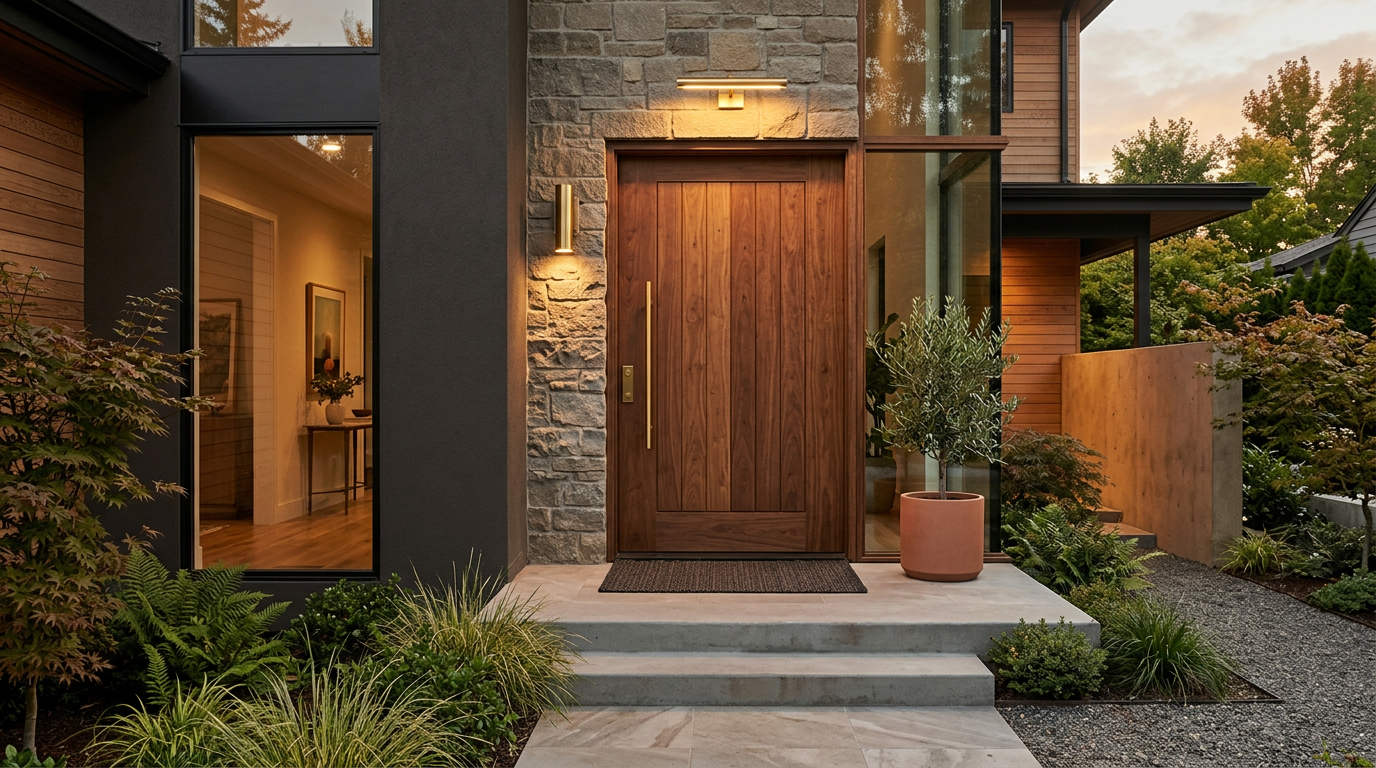
Modern architectural styles often call for doors featuring large, clean-lined panes of glass. While these doors flood dark entryways with natural light, they require careful specification. If you live in a coastal storm zone or an area prone to severe weather, these glass panels must be impact-rated to withstand flying debris and high winds. Opt for double- or triple-pane insulated glass with Low-E coatings to prevent your foyer from acting like a greenhouse in the summer.
Architectural Styles: Matching Your Home’s Character
The style of your front door should feel like a natural extension of your home's architecture. Stepping outside of your home's design language can create a jarring visual disconnect.
Traditional Six-Panel
This is the quintessential American front door. Featuring a symmetrical grid of raised or recessed panels, the six-panel door is a perfect match for Colonial, Cape Cod, Georgian, and traditional ranch homes. It is a safe, classic design choice that never goes out of style.
Craftsman with a Dentil Shelf
Craftsman-style doors are characterized by a small cluster of glass panes at the very top (usually three or six small lites) sits above a thick decorative wood trim block known as a dentil shelf. This style is a beautiful complement to Bungalows, Craftsman homes, and rustic cottage designs, emphasizing sturdy, honest craftsmanship.
Modern Flush
If your home features clean lines, asymmetrical shapes, or mid-century modern architecture, a flush door is the ideal fit. These doors present a completely flat surface, often broken up by minimalist, narrow horizontal glass inserts or bold, vertically oriented wood grain.
Dutch Doors
A Dutch door is split horizontally in the middle, allowing you to open the top half to let a breeze in while keeping the bottom half securely latched to keep pets or small children inside. They offer a charming, welcoming farmhouse aesthetic but require high-quality weatherstripping along the center seam to ensure a tight, draft-free seal when fully closed.
Sizing Up: The 42-Inch Statement Door
Standard entry doors are typically 36 inches wide and 80 inches tall. If you are planning a major renovation and want to make a dramatic visual statement, consider upgrading to a larger door system.
An increasingly popular trend is the 42-inch-wide door, often paired with an 8-foot height. This extra width creates a grand, estate-like entrance. Beyond the visual impact, a wider door makes moving furniture, appliances, and large crowds in and out of the house incredibly easy.
Keep in mind that expanding your entryway requires structural modifications. Our team will need to cut back the existing wall framing, install a wider structural header overhead, and re-route any electrical wiring running alongside the old frame. It is a more involved construction process, but the dramatic transformation is well worth the effort.
Enhancing Light with Sidelights and Transoms
If you want a grander entrance but do not want to alter the actual size of the door slab, you can expand the entire opening using sidelights and transoms.
- Sidelights are narrow, vertical windows that flank one or both sides of the front door. They visually widen the entrance and let you see who is standing on the front porch before you open the door.
- Transoms are horizontal windows positioned directly above the door frame. They can be rectangular, arched, or semi-circular (often called a fanlight). Transoms are particularly effective at letting deep daylight penetrate far into a dark hallway or foyer, making the entire entrance feel airy and spacious.
For privacy, you can specify sidelights and transoms with textured, frosted, rain-patterned, or stained glass. These options allow light to pour into your home while keeping your interior private from the street.
Security and Style: Selecting Hardware
Your door hardware is the "jewelry" of your front entry. It needs to look beautiful, feel heavy and substantial in your hand, and offer reliable protection.
Multi-Point Locking Systems
Standard doors secure to the frame at a single point near the handle. A multi-point locking system, however, engages three separate deadbolts—typically at the top, middle, and bottom of the door frame—with a single turn of the key or handle. This distributes force evenly along the entire height of the door, making it nearly impossible for an intruder to kick in. It also pulls the door tightly against the weatherstripping, preventing drafts and warping over time.
Smart Locks
Integrating your front door into your home automation system has never been easier. Today’s smart locks allow you to lock and unlock your door via a smartphone app, look up access logs, and program temporary entry codes for dog walkers, house cleaners, or guests. Look for smart locks that feature physical key overrides and keypad backups so you are never stranded outside due to a dead battery.
Modern Finishes
Currently, two finishes dominate residential design:
- Matte Black: This finish offers a sharp, high-contrast, contemporary look. It resists fingerprints well and pairs beautifully with painted white, gray, or blue doors.
- Satin Brass: For a warmer, luxury feel, satin brass provides a soft, brushed golden hue that feels traditional without looking dated. Unlike the shiny, lacquered brass of the 1980s, satin brass ages gracefully and looks stunning against dark wood or deep forest green paint.
Installing Your New Door Right the First Time
A high-performance door is only as good as its installation. When a door is hung poorly, even the most expensive fiberglass or wood slab will stick, draft, squeak, and fail to lock properly. Proper installation requires precise leveling of the frame, custom shimming, and expert flashing to ensure that water is shed away from your home's structural framing.
If you are ready to elevate your home's curb appeal, lower your energy bills, and enjoy the peace of mind that comes with a secure, beautiful new entryway, we are here to help. Contact the team at Modern Builders of America today to schedule your free in-home estimate and explore the best door options for your home and budget.