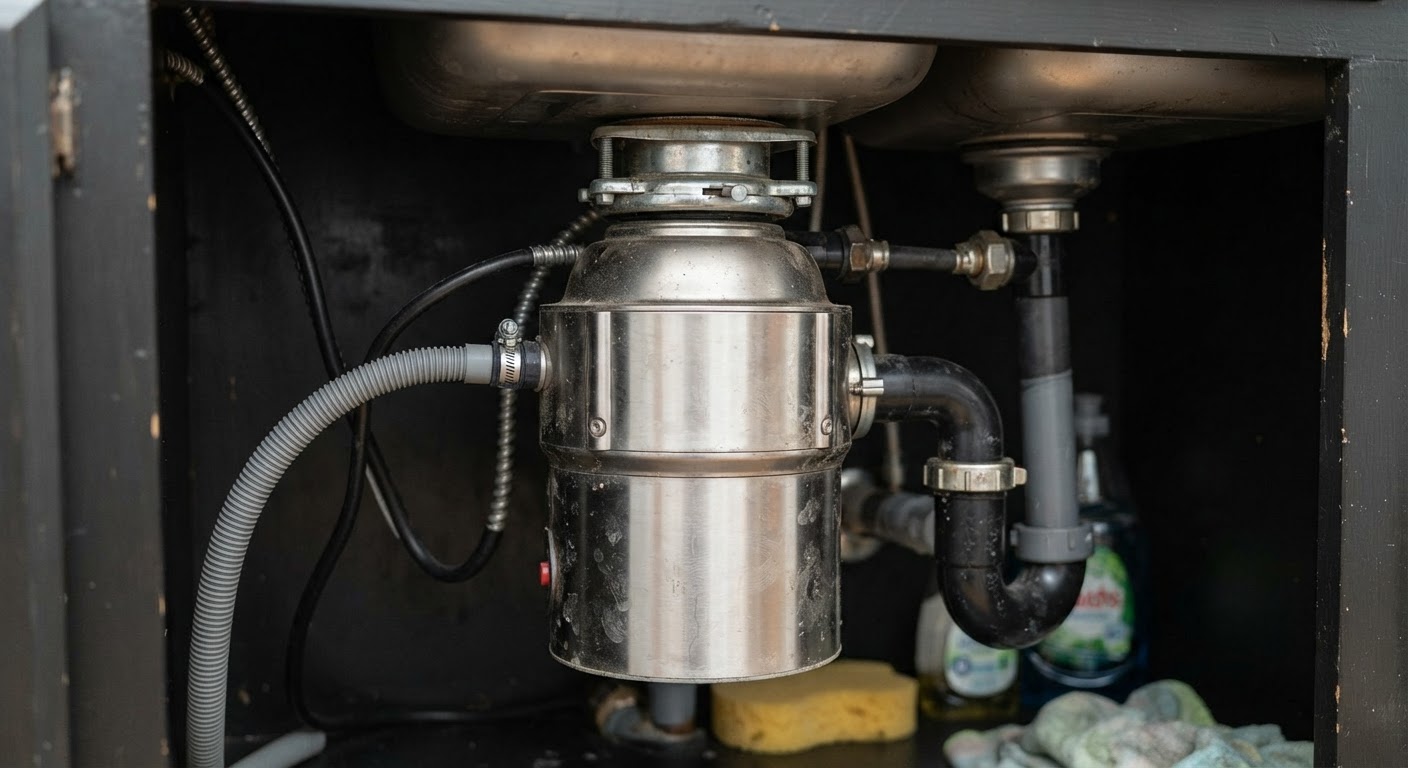
Garbage disposals are one of those things nobody thinks about until theirs starts making a grinding-metal noise mid-dinner-party. The right disposal is quiet, grinds food to a slurry, and lasts 10–15 years. The wrong one jams every few weeks and eventually clogs your drain line downstream.
Horsepower ratings, translated
- 1/3 HP — Rental-flip / builder-grade. Chokes on anything fibrous. Loud. Life expectancy 3–5 years. Not worth installing.
- 1/2 HP — Handles soft food scraps. Struggles with celery, potato peels, apple cores, chicken bones. Expect frequent resets.
- 3/4 HP — The realistic minimum. Handles most food waste. Still loud unless you spend up.
- 1 HP — Where quiet, reliable, "install and forget" territory starts. Multi-stage grind chambers. Sound insulation.
- 1.25–2 HP — Overkill for most homes but not wasted money in a busy kitchen.
What we install by default
1 HP minimum, always. Usually InSinkErator Evolution Excel or Waste King equivalent, on a dedicated 20A circuit (see: dedicated electrical lines). The upgrade cost from a builder 1/3 HP to a 1 HP disposal is $150–$250 at retail — a rounding error on a kitchen remodel and the single easiest way to avoid disposal calls forever.
Why the low-HP ones fail
- Weak grind chamber sends chunks downstream that clog the P-trap or drain line
- Motor stalls, thermal overload trips, homeowner presses the red reset button, motor stalls again
- Loud vibration transmits into the sink and cabinet
- Bearings fail within 3–5 years
Buttons and switches
Wall switches are yesterday's install. A counter-mounted air switch (a big flat button near the sink) is safer (no reaching for a wet switch), easier to add during rough-in, and looks intentional. Same story for a built-in soap dispenser — cheap to rough in, impossible to add cleanly later. We rough in both by default.
Sizing for households
- 1–2 people: 1 HP is plenty and future-proofs the kitchen
- 3–4 people: 1 HP minimum
- 5+ or you cook every night: 1.25 HP+
Planning a kitchen remodel and want the disposal, buttons, and dedicated circuit done right? Get a quote and we'll spec every rough-in detail.