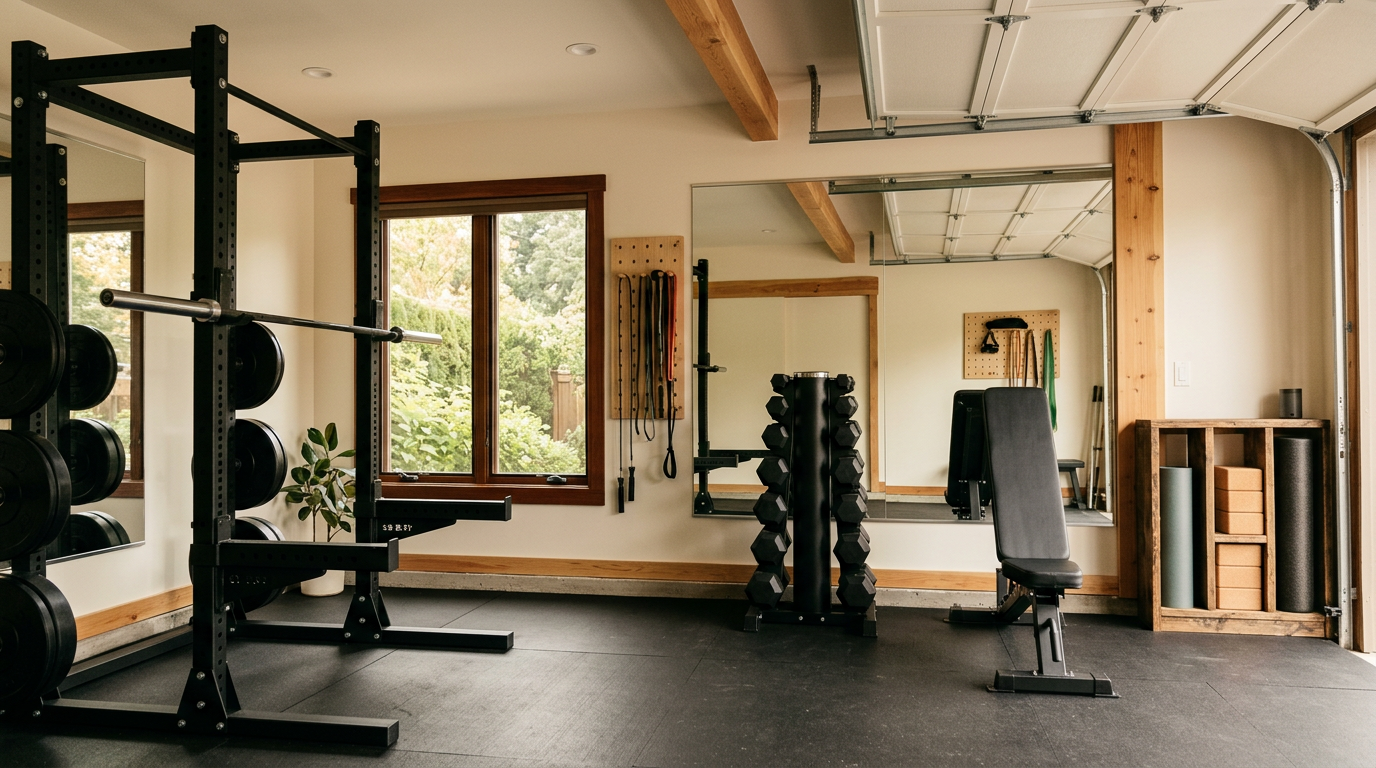
Building a home gym is one of the most rewarding home improvement projects you can undertake. It eliminates the commute, cuts out monthly membership fees, and allows you to train in a space tailored exactly to your routine. However, throwing a set of dumbbells and a treadmill into a spare corner rarely results in a space you actually want to use.
Creating a functional, safe, and comfortable workout environment requires careful planning around spatial limits, structural demands, and environmental controls. Whether you are converting a garage, finishing a basement, or building a dedicated home addition, this guide will walk you through the essential engineering and design decisions that make a home gym work.
Space Planning: Finding the Right Footprint
The biggest mistake homeowners make is underestimating how much physical space exercises actually require. You do not just need room for the equipment itself; you need a buffer zone for safe movement, loading barbells, and stretching.
Minimum Space Requirements
- The Compact Setup (8’ x 10’): This is the minimum footprint required for a basic cardio and dumbbell station. It accommodates a treadmill, an adjustable bench, a set of dumbbells on a vertical rack, and a yoga mat.
- The Lifting Station (12’ x 14’ or larger): If you plan to install a power rack or a lifting platform, this is your baseline. A standard Olympic barbell is 7.2 feet long. To safely load plates onto the bar without hitting walls, you need at least 1.5 to 2 feet of clearance on either side of the bar, making a 10-foot width the absolute minimum, with 12 feet being much safer and more comfortable.
- Ceiling Height: Ceiling height dictates what exercises you can perform. A standard 8-foot ceiling is sufficient for bench pressing and typical cardio equipment. However, if you plan on performing overhead presses, pullups, or using a jump rope, you will generally need at least a 9-foot ceiling. Always measure your height with your arms fully extended upward before finalizing your gym layout.
Evaluating Your Location Options
Where you place your gym within your home’s footprint determines your construction budget and how much work you will need to do regarding climate control and soundproofing.
| Location | Pros | Cons | Best For |
|---|---|---|---|
| Garage | Excellent floor load capacity; easy access for heavy equipment. | Poor climate control; prone to dust and humidity. | Heavy lifting, powerlifting racks, CrossFit setups. |
| Basement | Natural sound dampening; concrete subfloor supports heavy weights. | Lower ceilings; potential moisture issues. | General strength training, cardio, and yoga. |
| Spare Bedroom | Existing heating and AC; comfortable and clean environment. | Limited floor strength; high sound transfer to rest of house. | Light cardio, dumbbells, and bodyweight training. |
| Dedicated Addition | Custom built to your exact specifications and ceiling height. | Highest initial construction cost. | Premium, long-term home wellness centers. |
Garage Conversions
Garages are highly popular because the concrete slab can easily support thousands of pounds of iron. However, garages are rarely insulated to the same standard as the rest of the home. You will need to address drafty garage doors and concrete floors that radiate cold in the winter and hold heat in the summer.
Basement Gyms
Basement floors are structurally ideal for heavy lifting, and the surrounding earth acts as natural insulation. The main challenges here are ceiling height—which is often obstructed by ductwork, plumbing, and structural beams—and moisture control.
Spare Bedrooms
While convenient, an upstairs spare bedroom has structural limits. Standard residential subfloors are engineered for living spaces, not for the impact of dropped weights. If you use a bedroom, you must focus on noise dampening and stick to lighter, controlled training styles.
Flooring: Foundation and Subfloor Protection
Your gym floor has two jobs: protect your home’s subfloor from impact damage and protect your joints from repetitive stress.
+--------------------------------------------------+
|      Rubber Matting (3/4" Horse-Stall Mats)      |  <- Protects equipment & absorbs shock
+--------------------------------------------------+
|  Structural OSB/Plywood Platform (Double Layer)   |  <- Distributes heavy point loads
+--------------------------------------------------+
|             Concrete Slab / Subfloor             |  <- Original foundation
+--------------------------------------------------+
Heavy Strength Training: 3/4-Inch Rubber Mats
For powerlifting, Olympic lifting, or heavy dumbbell work, standard consumer-grade foam tiles will not cut it. They compress too easily under load, rendering them useless for protection. Instead, look for 3/4-inch heavy-duty rubber horse-stall mats. These are incredibly dense, durable, and cost-effective. While they are heavy to install, they provide the absolute best protection for both your concrete slab and your barbell plates.
Light Cardio and Yoga: Interlocking Foam or Thin Rubber
If your routine focuses on bodyweight movements, yoga, static stretching, or cardio machines, you do not need industrial-strength rubber. Interlocking 3/8-inch rubber or high-density foam tiles are comfortable underfoot, easy to clean, and simple to install over existing hardwood or laminate floors.
Building a Lifting Platform
If you plan to perform deadlifts or Olympic lifts, you should build or purchase a dedicated lifting platform. This typically consists of two layers of 3/4-inch exterior-grade plywood laid flat, covered by a center strip of smooth hardwood and outer strips of 3/4-inch rubber mats where the weight plates land. This multi-layered approach distributes the force of a dropped barbell across a massive surface area, ensuring your concrete foundation never cracks.
Wall Organization and Aesthetics
A well-designed gym should feel open, clean, and organized. Clutter on the floor is a safety hazard, and dark, closed-off walls can sap your energy.
Mirrors
Installing high-quality mirrors on at least one wall is not just about vanity; it is a critical safety tool for monitoring your form during lifts. We recommend 1/4-inch thick glass mirrors with polished safety edges. Avoid cheap plastic or thin acrylic mirrors, which warp over time and create a "funhouse" distorting effect.
Accessory Storage
Keep your floor clear by utilizing vertical wall space.
- Pegboards: Heavy-duty metal pegboards are perfect for hanging resistance bands, jump ropes, collars, and mobility tools.
- Barbell Wall Mounts: Gun-rack style wall mounts hold your barbells horizontally against the wall, keeping them safe from damage and out of the way when not in use.
- Weight Tree: A central plate tree keeps your bumper plates organized by weight and makes loading the bar much more efficient.
Media and Technology
A wall-mounted television is perfect for following along with instructional workout videos or keeping you entertained during long cardio sessions. Ensure your TV bracket is rated for the vibrations of your gym, especially if it is mounted to a shared wall where weights might be re-racked heavily.
HVAC, Ventilation, and Climate Control
Nothing ruins a workout faster than a space that is stiflingly hot, freezing cold, or smelling of stale sweat. Proper mechanical ventilation and climate control are non-negotiable for a premium home gym.
The Mini-Split Solution
For garage gyms and basement conversions, a ductless mini-split heat pump is often the absolute best solution. These systems do not require connection to your home’s main HVAC ductwork, which prevents gym odors and dust from circulating through your living spaces. Modern mini-splits provide both whisper-quiet heating and cooling, and they are highly energy-efficient.
In warmer, humid climates, dehumidification is just as important as cooling. High humidity makes it harder for your body to cool itself through sweat and causes cast-iron weights to rust rapidly. Look for a mini-split system with a dedicated "dry" or dehumidification mode.
Active Ventilation
If a full HVAC system is not in your budget, you must still move stale air out. For garage gyms, installing a commercial-grade wall exhaust fan with a shutter system allows you to pull fresh outdoor air through the space. Match this with a high-velocity floor fan to direct airflow right at your main workout station.
Electrical and Lighting Design
A home gym has unique electrical demands that standard residential rooms are rawly equipped to handle.
Dedicated Circuits
Commercial-grade treadmills, electric space heaters, and large portable AC units draw a massive amount of power. Running a high-end treadmill and an entertainment system on a shared 15-amp bedroom circuit will likely trip your breaker. We recommend installing a dedicated 20-amp circuit specifically for your heavy cardio machines to ensure uninterrupted performance.
Smart Lighting Layouts
Avoid placing overhead recessed lights directly above where your head will be when lying on a bench or doing floor exercises: looking straight up into a bright, unshielded LED bulb is incredibly uncomfortable. Instead, opt for diffused, high-output LED strip lighting or perimeter lighting. Select fixtures with a neutral или cool color temperature (around 4000K to 5000K), which mimics natural daylight and helps keep your energy levels high during early morning or late evening sessions.
Building a home gym is an investment in your health, your home’s value, and your daily routine. By planning your space layout, structural support, and climate controls upfront, you can create a training center that matches the utility and comfort of any commercial club. If you are ready to design and build the ultimate workout space in your home, reach out to us at Modern Builders of American for a free in-home estimate. Our team of experts will help you evaluate your space, handle the structural engineering, and build a high-performance gym tailored exactly to your lifestyle.