You don't need a plumber to figure out what's behind your walls. Head to the exposed plumbing in your garage, basement, crawl space, or under a bathroom sink — the pipe material there is (almost always) the same material running through the walls.
The visual cheat sheet
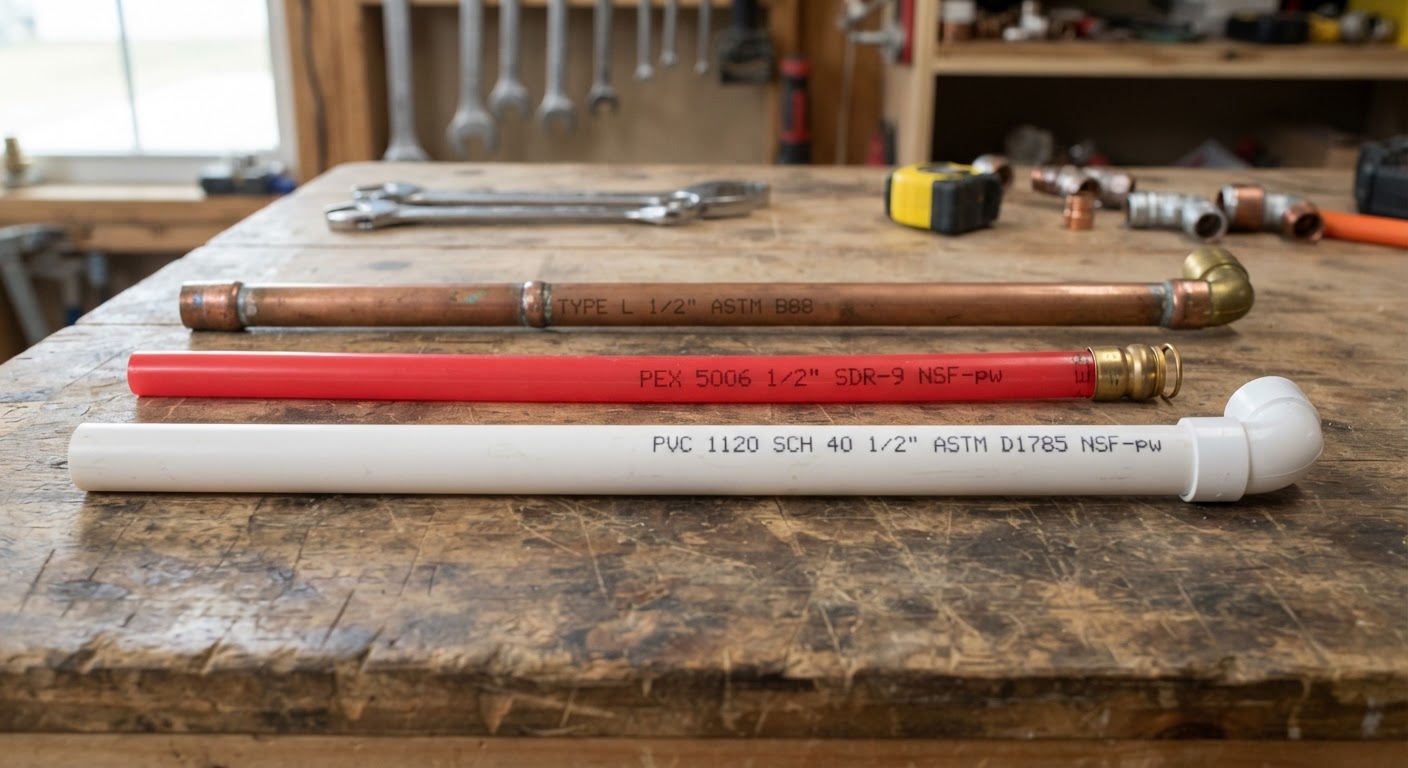
Copper
- Color: Reddish-orange when new, dark brown or greenish (verdigris) with age.
- Diameter: 1/2" or 3/4" typical for water lines.
- Fittings: Soldered joints — smooth silver-gray at the joint.
- Sounds: Rings if you tap it with a coin.
- Verdict: Excellent. Rust-free. Lasts 50–70+ years.
PEX
- Color: Bright red (hot), blue (cold), or white flexible tubing. Sometimes orange for radiant heat.
- Fittings: Crimp rings (copper or stainless bands) or expansion fittings.
- Verdict: Excellent. Rust-free. Flexible, freeze-resistant, our default for repipes.
Galvanized steel
- Color: Silver-gray when new; dull dark gray, brown, or rusty with age.
- Diameter: Threaded connections (visible external threads at every joint).
- Sounds: Dull thud when tapped; feels heavy.
- Verdict: Repipe it. If your house is pre-1970 and hasn't been repiped, this is your material. Rusts from the inside; expect discolored water, low pressure, and pinhole leaks.
Polybutylene ("PB" / "poly")
- Color: Gray flexible plastic pipe with plastic fittings (barbed with a crimp ring).
- Era: Installed roughly 1978–1995.
- Verdict: Repipe on sight. Massive class-action failure history. Insurance companies have refused claims for polybutylene failures.
CPVC
- Color: Cream / off-white / light tan rigid plastic. Slightly yellowish.
- Fittings: Solvent-welded (glued).
- Verdict: OK. Gets brittle with age (25–40 year life). Cracks if bumped when cold.
PVC (drain lines only)
- Color: White rigid plastic.
- Location: Drain, waste, and vent lines only — never for pressurized supply. If you see white PVC feeding a faucet, it's an illegal install.
Where to look
- Under any bathroom or kitchen sink — the supply lines coming out of the wall
- Garage — water heater supply lines
- Basement — main water shutoff and trunk lines above your head
- Crawl space — same story, but bring a flashlight
- Behind the washing machine — hose bibs and supply lines
Take a photo. If you see two different materials at different sinks, your house has been partially repiped — worth asking a plumber what's still behind the walls.
When to plan a repipe
- Any polybutylene → immediately
- Galvanized older than 40 years → within the next remodel cycle
- CPVC older than 25 years → monitor; replace during a remodel
- Copper with green corrosion crust or repeated pinhole leaks → repipe
- Copper or PEX in good shape → leave it alone
Any kitchen, bath, ADU, or whole-home remodel is the ideal time to repipe — the walls are already open. See our full breakdown: When should you repipe your home?
Not sure what you're looking at? Send us a photo and we'll take a look.