When a backyard fence starts to lean, rot, or lose its structural integrity, it is more than just an eyesore. It is a security issue for your pets, a privacy issue for your family, and a potential liability if a strong wind knocks it over. But before you call a contractor to tear it down and build a new one, a critical question almost always comes up: does your neighbor have to pay for half?
While it seems fair to split the cost of a barrier that benefits both properties, the intersection of property law, local ordinances, and human nature makes this a surprisingly complicated issue. Here is a look at how the law views shared fences, the practical realities of trying to split the bill, and why paying for the project yourself is often the smartest path forward.
The Legal Reality of Shared Fences
In the United States, there is no single, federal "fence law." Instead, property boundaries and the structures built upon them are governed by a patchwork of state statutes, local county codes, and municipal ordinances.
Depending on where you live, the legal expectations for who pays to repair or replace a fence can look very different.
Joint Ownership and the "boundary Fence"
In many states, if a fence sits directly on the property line dividing two parcels of land, it is legally considered a "boundary fence." By extension, both property owners are deemed co-owners of that fence. Under this legal framework, both parties are equally responsible for keeping the fence in good repair.
The classic example of this is California’s Good Neighbor Fence Act of 2013. This law explicitly states that landowners on adjoining sides are presumed to gain an equal benefit from a shared boundary fence. Therefore, they are jointly responsible for the reasonable costs of construction, maintenance, and replacement.
Notice Requirements and Cost Estimates
Even in jurisdictions that mandate shared financial responsibility, you cannot simply build a fence and present your neighbor with a surprise invoice. Most state and local laws require a formal process before any legal obligation to pay is triggered.
This process typically involves:
- Providing written notice to the neighbor well in advance of the project (often 30 to 60 days).
- Including detailed cost estimates for the proposed work.
- Outlining how the costs will be shared.
- Explaining the proposed design, materials, and timeline.
If you fail to follow these procedural steps, you may lose any legal right to demand a financial contribution, even if the state laws generally support cost-sharing.
Local Variance
Beyond state laws, city and county zoning laws have massive influence over what you can and cannot build. These local rules govern:
- Permitted heights: Typically six feet in backyards and three to four feet in front yards.
- Allowed materials: Many municipalities ban materials like chain-link in certain developments or require specific types of wood or vinyl.
- Setbacks: How far back from the actual property line a fence must be built.
| Aspect | State Law Influence | Local Ordinance Influence |
|---|---|---|
| Financial Responsibility | High (determines if cost-sharing is legally mandated) | Low |
| Permits & Approvals | Low | High (handles building codes and zoning permits) |
| Aesthetic Constraints | Low | High (governs materials, height, and setbacks) |
The Practical Bottlenecks of Splitting the Cost
While the legal theory of shared responsibility sounds clean on paper, the practical reality of enforcing it is often a lesson in frustration. Trying to force a neighbor to pay their share can turn a straightforward home improvement project into a multi-month headache.
The Timeline Drag
If your fence is falling over, you probably want it fixed within a couple of weeks. When you involve a neighbor who may not share your urgency, that timeline stretches significantly. Here is how a simple project gets delayed:
- The Waiting Period: You must draft, mail, or hand-deliver a formal notice. Legal notices usually require a statutory waiting period for the neighbor to respond.
- The Negotiation: If they object to the cost, the contractor, or the timing, you enter a negotiation phase. They might want to search for lower bids, which can take weeks.
- Small Claims Court: If your neighbor simply refuses to pay despite a clear legal obligation, your only recourse is typically small claims court. Gathering evidence, filing the paperwork, getting a court date, and presenting your case often takes three to six months—all while your fence remains broken.
The Compromise Curse
When someone pays for half of a project, they get a vote on how it is built. This is where many homeowners run into major design disappointments.
If your neighbor is contributing financially, they have a say in:
- Materials: You might want low-maintenance, lifetime vinyl or premium western red cedar. Your neighbor, looking to save money, might insist on the cheapest possible pressure-treated pine, which is prone to warping and shrinking.
- Style: You may want a solid privacy fence, while they want a shadowbox style to let wind through.
- Height: You may want a full six-foot fence for privacy, while they feel a five-foot fence is plenty.
- The "Good" Side: Wood fences have a finished side and a rail side. Deciding who gets the clean face of the fence can become a major point of contention.
Why Going It Alone Is Often the Best Path
Given the legal hurdles, potential delays, and design compromises, many experienced homeowners come to the same conclusion: it is often far better to pay for the new fence yourself.
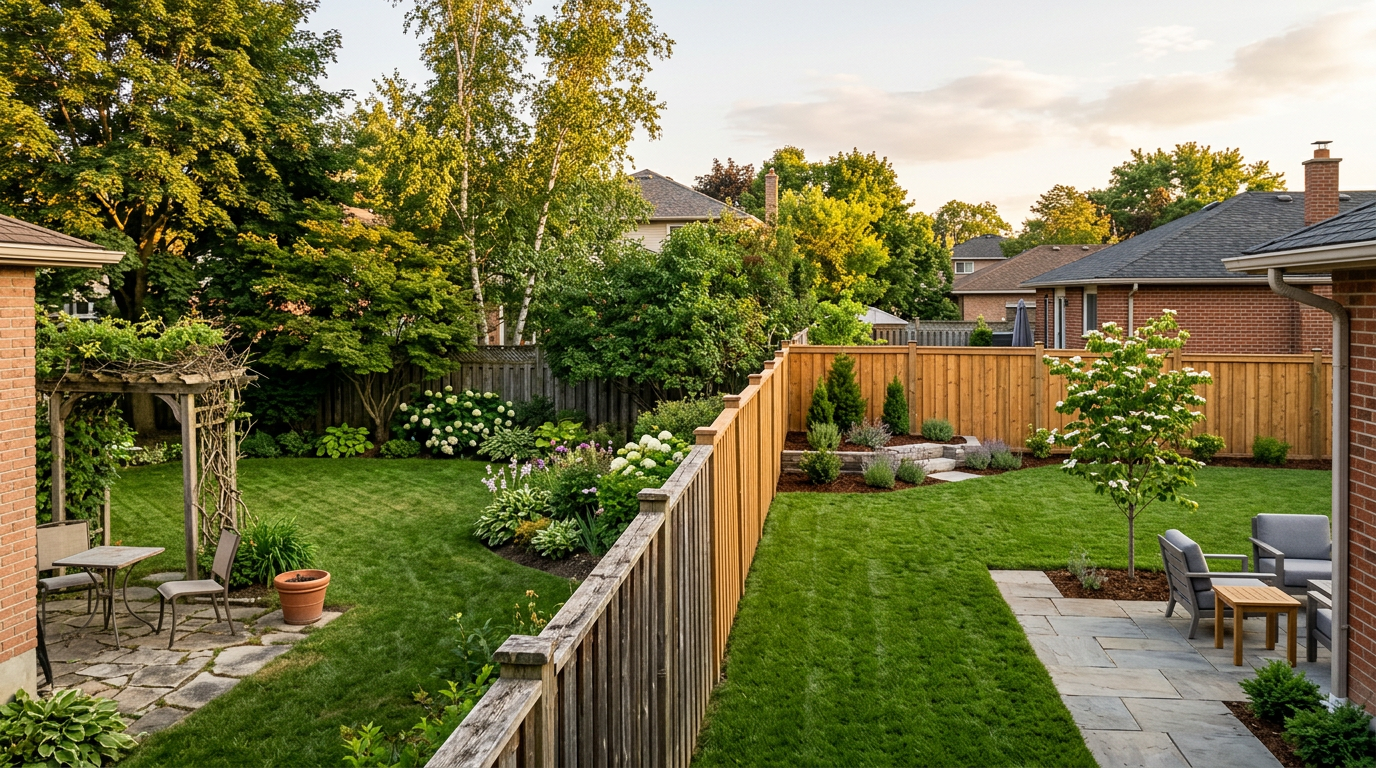
By taking full financial responsibility and placing the new fence entirely on your side of the property line (usually an inch or two inside your boundary), you gain complete control over the project.
Property Line:       |=========================
Your New Fence:    [=========================]  <-- Placed completely on your side
Your Yard:
The Benefits of Solo Ownership
1. Your Custom Design, Without Compromise
When you pay for the fence, you get to choose exactly what goes into your yard. You can select the precise material, the exact color, the ideal height, and the architectural style that complements your home’s exterior. You do not have to settle for cheap materials just to accommodate a neighbor’s budget.
2. Your Schedule, Your Timeline
You do not have to wait for anyone's permission, sign-off, or budget clearance. You can hire your contractor, schedule the work, and have a brand-new, secure fence installed in a matter of days, rather than waiting out a statutory 30-day notice period or a civil court date.
3. A Single, Clean Warranty
When you contract the work directly, the warranty for both materials and labor belongs entirely to you. If a gate sags or a post settles a year down the road, you can call the contractor to fix it under warranty. There is no confusion about who owns the contract or who needs to initiate the service call.
4. Preserving the Peace
Your relationship with your neighbors is worth a lot. Living next to someone in a state of ongoing tension or simmering resentment is exhausting. Forcing a neighbor to pay hundreds or thousands of dollars for a project they did not want or cannot afford is a quick way to create a permanent enemy next door. Paying for it yourself maintains a peaceful, neighborly relationship.
Best Practices (Even If You Pay for It Yourself)
If you decide to take the solo route and build the fence on your side of the property line, there are still a few steps you should take to ensure a smooth project:
- Get a Boundary Survey: Do not guess where your property line is based on old landmarks or where the old fence stood. Hire a licensed surveyor to mark the exact property corners. This prevents future legal disputes if your neighbor ever objects to the placement.
- Talk to Your Neighbor Out of Courtesy: Even if you do not need their permission or their money, knock on their door and let them know you are replacing the fence. Let them know when the crew will be there, especially if they have pets that need to be kept inside while the old fence is down.
- Check Your HOA Rules: Even if you build on your own land and pay for it yourself, Homeowners Association (HOA) rules are legally binding. Ensure your chosen style, height, and color are pre-approved by your HOA board to avoid costly fines or a forced tear-down.
The Bottom Line
While the law in many markets encourages or even mandates shared responsibility for boundary fences, the practical headache of enforcing those laws is rarely worth the savings. By managing the project independently, you protect your peace of mind, your timeline, and your home’s curb appeal. You get the exact fence your property needs, built on your timeline, with zero neighborhood drama.
If you are ready to replace a worn-out fence with a beautiful, durable new boundary that stands the test of time, we can help. Reach out to the team at Modern Builders of America to schedule a free, in-home estimate where we can discuss your goals, assess your property line, and design a custom solution that fits your budget.