If you are planning a home remodel or simply looking to update your current space, changing out your old lightbulbs is one of the easiest ways to improve how your home looks, feels, and functions. While we often focus on countertops, paint colors, and flooring, the quality of the light falling on those surfaces makes or breaks the entire design. Making the shift from legacy incandescent and halogen bulbs to modern Light Emitting Diodes (LEDs) is no longer just about saving a few dollars on your electric bill—it is about taking control of your home's aesthetic and safety.
The Technical Leap: Why LEDs Outperform Legacy Bulbs
For over a century, choosing a lightbulb was simple: you bought a 60-watt bulb for a reading lamp or a 100-watt bulb for a dark hallway. That wattage did not actually measure brightness; it measured how much electricity the bulb consumed. Legacy bulbs are incredibly inefficient, converting only about 10% of their electrical energy into visible light, while wasting the remaining 90% as heat.
LED technology works on an entirely different principle, using a microchip and semiconductors to produce light with minimal energy waste.
Energy Consumption and Lifespan
When you compare the numbers, the efficiency of an LED becomes clear. A standard 60-watt incandescent bulb can be replaced by an LED that consumes only 9 to 12 watts, offering the exact same amount of light. This represents an energy reduction of roughly 80% to 85% per fixture.
The difference in longevity is even more dramatic. A typical incandescent bulb has a lifespan of about 1,000 hours, meaning you might replace it once or twice a year in a high-traffic room. Halogen bulbs, while slightly more efficient, still only last around 2,000 to 3,000 hours. A high-quality LED bulb is rated for 25,000 hours or more. Under normal residential use—about three to four hours a day—an LED bulb can easily last 15 to 20 years before needing replacement.
| Performance Metric | Incandescent | Halogen | LED |
|---|---|---|---|
| Typical Wattage | 60W | 43W | 9W – 12W |
| Lifespan (Hours) | 1,000 | 2,000 – 3,000 | 25,000+ |
| Operating Temp | High (Up to 250°F) | Very High (Up to 500°F) | Cool to the touch |
| Vibration Resistant | No (Fragile filament) | No | Yes (solid-state) |
Heat Output and Safety
Legacy bulbs get hot enough to cause severe burns and can present a real fire hazard if they come into contact with keeping materials, drapes, or framing inside ceiling cavities. Halogen bulbs run even hotter, often reaching temperatures over 500°F.
In contrast, modern LEDs run remarkably cool. While they do generate a small amount of heat at the base of the bulb (which is managed by an internal heat sink), the light-emitting surface itself stays safe to the touch. This low heat output means you can safely install them in tight spaces, enclosed closets, and deep cabinets without worrying about heat buildup or fire risks. Furthermore, reducing the heat output of dozens of light fixtures throughout your house means your air conditioning system does not have to work quite as hard during the hot summer months.
Decoding the Box: The Specs That Matter Now
When you walk down the lighting aisle today, looking at wattage won't help you find the right bulb. Instead, you need to understand a few key specifications that dictate how bright, warm, and accurate the light will be.
Lumens: The New Measure of Brightness
Lumens measure the actual amount of visible light emitted by a source. If you want to replace an old bulb and keep the same level of brightness, you should match the lumen output, not the wattage.
- To replace a 40W incandescent, look for 450 lumens.
- To replace a 60W incandescent, look for 800 lumens.
- To replace a 75W incandescent, look for 1,100 lumens.
- To replace a 100W incandescent, look for 1,600 lumens.
Color Temperature: Getting the Right Glow
Color temperature is measured in Kelvin (K) and tells you whether the light will look warm and yellow, or cool and blue. Getting this wrong is the number one reason homeowners sometimes feel disappointed with the look of LEDs.
[ 2700K: Warm White ] ---> [ 3000K: Soft White ] ---> [ 4000K: Cool/Bright White ] ---> [ 5000K+: Daylight ]
   (Living/Bedrooms)           (Kitchens/Baths)          (Garages/Workshops)            (Avoid Indoors)
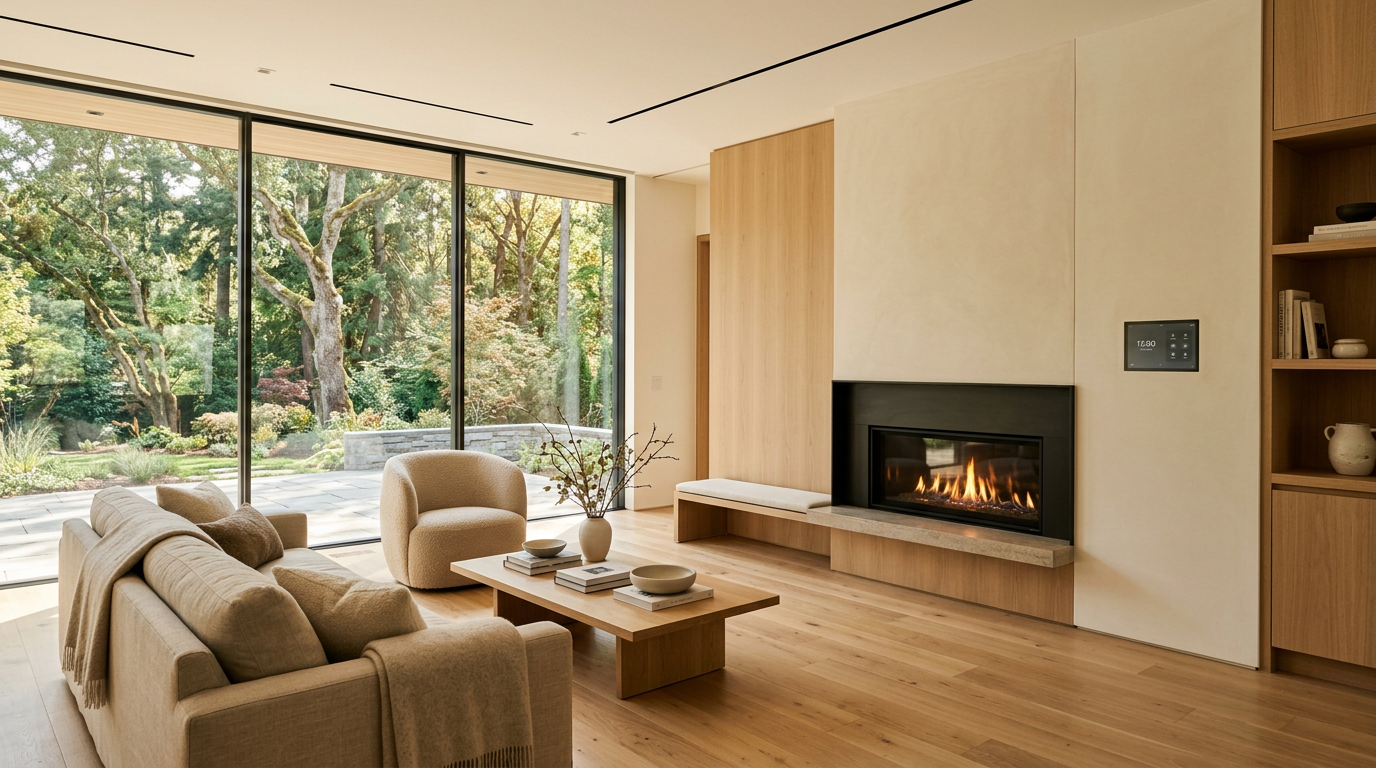
- 2700K (Warm White): This matches the cozy, amber glow of traditional incandescent bulbs. It is highly recommended for living rooms, dens, and bedrooms where you want a relaxing, intimate atmosphere.
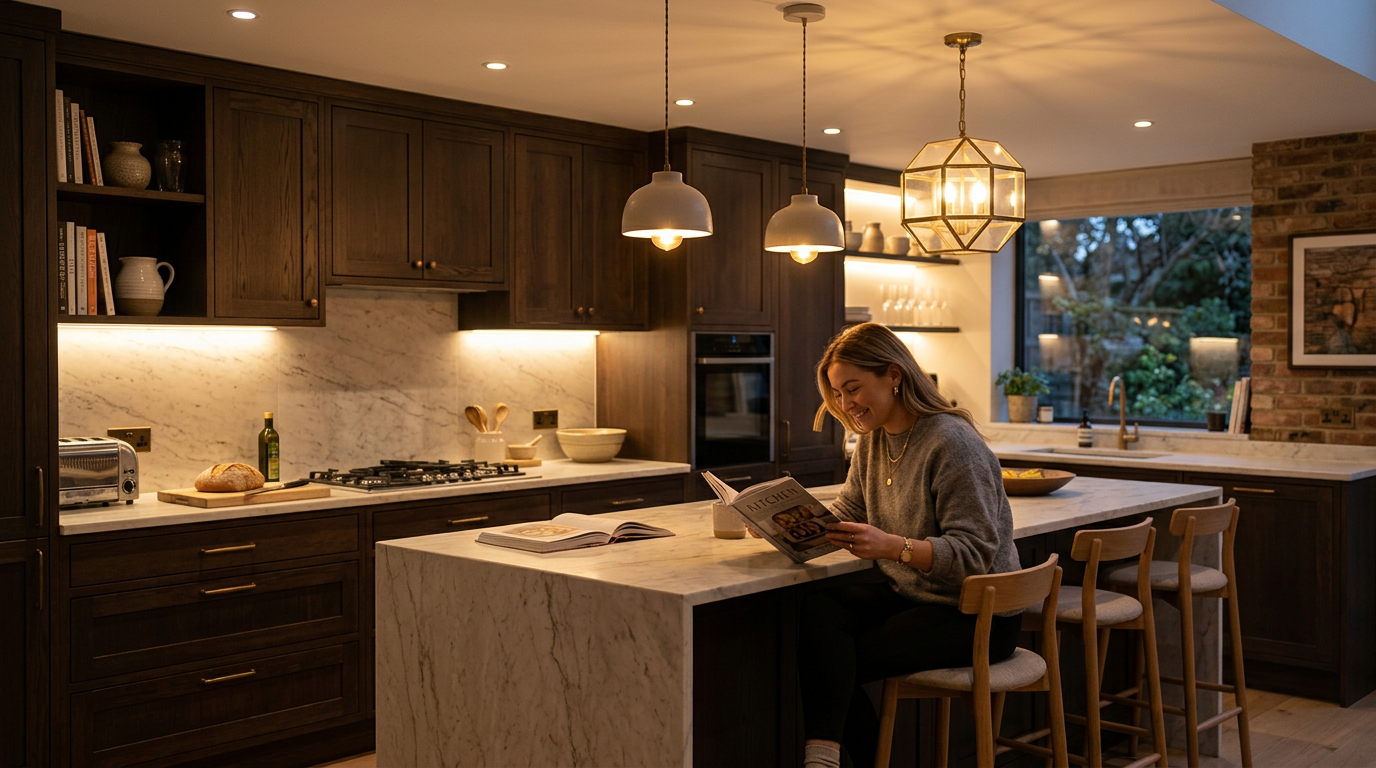
- 3000K (Soft White): Slightly crisper and cleaner than 2700K, but still warm. This is the sweet spot for kitchens, bathrooms, and dining spaces where you want visibility without losing warmth.
- 4000K (Cool White / Daylight): This is a clean, energetic light that mimics bright afternoon sun. It is excellent for utility rooms, home offices, garages, and workshops where task visibility is key.
- 5000K and Above (Daylight/Blue): This light is very blue and stark. While it is useful in commercial spaces or outdoor security lighting, we strongly recommend avoiding 5000K+ bulbs inside your home. It can feel clinical, harsh, and can disrupt your natural sleep cycles.
Color Rendering Index (CRI): Seeing True Color
Have you ever bought a bulb that made your kitchen countertops look gray and lifeless, or made food look unappealing? That is a failure of the Color Rendering Index (CRI). CRI is a scale from 0 to 100 that measures how accurately a light source reveals the true colors of objects beneath it compared to natural sunlight.
Standard, budget-friendly LED bulbs often have a CRI of 80. While acceptable for hallways or closets, 80 CRI can make skin tones look washed out and wood grains look dull. For living spaces, kitchens, and bathrooms, always look for bulbs labeled with a CRI of 90 or higher (often labeled as "High CRI" or "Title 24 Compliant"). High-CRI lighting makes your paint colors pop, your food look appetizing, and your wood finishes look deep and rich.
Dimming Compatibility
One of the most common issues homeowners run into when swapping in LEDs is flickering, buzzing, or a limited dimming range. This happens because old dimmers were designed to control large electrical loads. Because LEDs pull so little power, old incandescent dimmers often cannot read the load properly.
To get smooth, silent dimming down to low levels, you must pair your dimmable LED bulbs with an LED-compatible dimmer switch (often marked as an ELV or CL dimmer). When purchasing bulbs, always double-check the packaging to ensure the bulb specifically states it is "dimmable."
Fixture Types: How to Deploy LEDs in Your Home
Upgrading your lighting is not just about screwing new bulbs into old lamps. Modern residential remodeling utilizes several types of LED fixtures to create layered, high-end lighting designs.
Recessed Cans vs. Integrated Ultra-Thin Downlights
Traditionally, recessed lighting required installing bulky metal housing canisters inside the ceiling joists, which then held a standard trim and bulb. Today, we frequently use integrated LED downlights. These sleek, ultra-thin fixtures do not require a housing can at all. They are about half an inch thick and can clip directly into the drywall anywhere on your ceiling—even directly beneath a ceiling joist. This provides immense structural flexibility during a remodel.
LED Tape Lighting
LED tape lighting (or strip lighting) consists of a flexible, low-profile backing populated with tiny LEDs. Operating on low voltage, tape lights can be cut to custom lengths. They are the gold standard for adding high-end accent details to your home, such as:
- Under-cabinet lighting to illuminate kitchen countertops.
- Over-cabinet or cove lighting to bounce soft light off the ceiling.
- Toe-kick lighting under bathroom vanities to serve as a low-glare nightlight.
Smart Bulbs
Smart LEDs allow you to adjust brightness, schedule lighting times, and even change the color temperature via your smartphone or voice commands. While you do not need smart bulbs in every fixture, they are highly useful in bedrooms, media rooms, and outdoor entryways where automated scheduling and custom mood settings enhance daily living.
The Payback: Initial Cost vs. Long-Term Value
While LED bulbs and fixtures cost more upfront than old incandescent options, the financial math overwhelmingly favors the upgrade. Because LEDs draw so little power and last for decades, they quickly pay for themselves.
In most markets, a typical whole-home LED retrofit pays for itself in lower utility bills within 6 to 18 months, depending on local energy rates and how often you run your lights. When you factor in the reality that you won't have to buy or climb ladders to replace those burned-out bulbs for the next fifteen years, the convenience and safety savings are even greater.
If you are planning an upcoming home renovation and want to ensure your new spaces are lit beautifully, safely, and efficiently, the team at Modern Builders of America is here to help. We can design and install a custom, cohesive LED lighting layout that brings out the absolute best in your home. Reach out to us today to schedule your free in-home estimate through our contact page and let’s start planning your project together.