When you step out onto your patio on a Saturday morning, you should be holding a cup of coffee, not a weed trimmer. Yet many homeowners find themselves locked in a constant battle with their yards, pouring weekends and irrigation budgets into plants that simply do not want to live here. Achieving a beautiful yard doesn't require endless labor; it requires shifting your strategy toward plants and systems that work with our climate rather than fighting against it.
Choosing between low-maintenance and high-maintenance landscaping isn't just about how much you water. It is about understanding how plants interact with our intense summer heat, our soil, and our seasonal dry spells.
The High-Maintenance Hall of Fame: Beautiful but Demanding
Many of the plants we struggle with are beloved because they look spectacular in garden magazines. However, in hot climates, these varieties require near-constant intervention to survive.
Turf Grass (Particularly St. Augustine)
A lush, green lawn is the traditional American ideal, but St. Augustine grass is incredibly demanding. It is notoriously thirsty, requiring immense amounts of water during the peak of summer just to stay green. It is also highly susceptible to chinch bugs, take-all patch, and fungal diseases. If you have large mature trees, you will also battle thinning grass, as St. Augustine struggles to thrive in dense shade.
Hydrangeas and English Roses
While a blooming hydrangea or a climbing rose bush looks romantic, placing them in full sun is a recipe for heartbreak. Hydrangeas have large, thin leaves that transpire water rapidly; in the afternoon sun, they wilt almost immediately, demanding daily manual watering. Roses, while beautiful, are heavy feeders that require precise pruning, pest management, and treatments for black spot and powdery mildew.
Boxwood Hedges
Boxwoods have long been the default choice for structured evergreen borders. However, keeping them looking neat requires constant shearing. More importantly, boxwoods in our region are increasingly plagued by boxwood blight and spider mites, which can turn an expensive, decades-old hedge brown and brittle in a single season.
Seasonal Annuals
Planting beds full of petunias in the spring and pansies in the autumn creates a bright burst of color, but it is a temporary fix. Annuals have shallow root systems, meaning they need daily watering. Because they die off with the first freeze or the first extreme heatwave, you are locked into a cycle of digging, planting, fertilizing, and throwing away plants three to four times a year.
| Plant Category | High-Maintenance Choice | Low-Maintenance Alternative | Why the Switch Works |
|---|---|---|---|
| Groundcover / Turf | St. Augustine Grass | Dwarf Mondo Grass or Frogfruit | Uses a fraction of the water; needs little to no mowing. |
| Flowering Shrub | Hydrangea / Rose | Autumn Sage (Salvia greggii) | Autumn sage blooms from spring through frost with minimal water. |
| Evergreen Structure | Boxwood | Dwarf Yaupon Holly | Dwarf yaupon shrugs off heat, needs less shearing, and resists blight. |
| Accent Plant | Ornamental Annuals | Red Yucca or Agave | Succulents offer year-round sculptural beauty without replanting. |
The Low-Maintenance Winners: Native and Adapted Plants
The secret to a low-maintenance yard is choosing plants that evolved to thrive in our specific soil and weather patterns. Once established, these plants require minimal water, resist local pests, and look beautiful year-round.
Texas Sage (Leucophyllum frutescens)
Often called the "barometer bush" because it bursts into purple blooms right before it rains, Texas sage loves heat, poor soil, and dry conditions. Its silvery-gray foliage provides excellent color contrast against darker green shrubs, and it requires almost no pruning if given room to grow.
Ornamental Grasses (Like Muhly Grass)
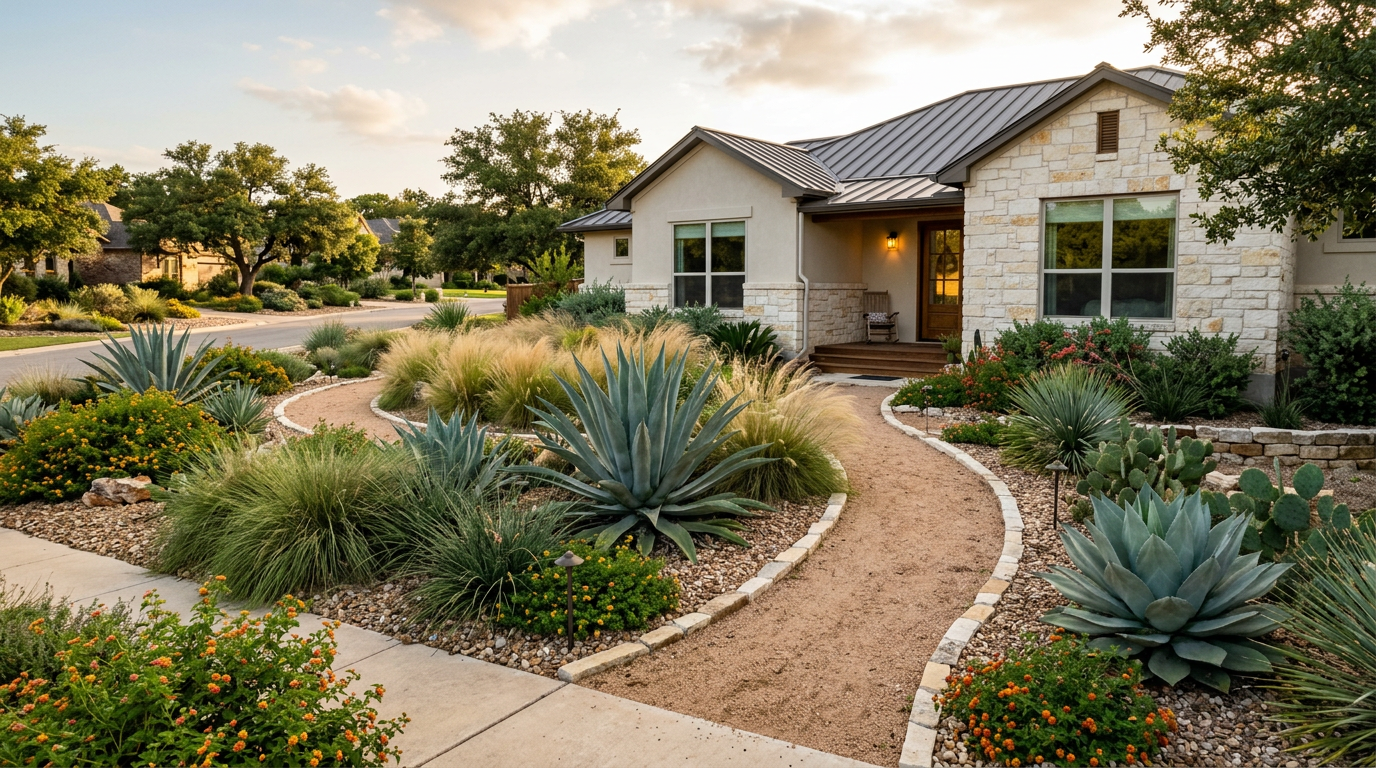
Gulf Muhly grass is a showstopper. For most of the year, it provides a neat, green, fountain-like structure. In the autumn, it produces airy, feathery plumes of vibrant pinkish-purple that catch the late afternoon light. It is incredibly drought-tolerant and only needs to be cut back once a year in late winter.
Agave and Yucca
For bold, architectural structure, look to native agaves and yuccas (such as Paleleaf Yucca or Red Yucca). These plants store water in their thick leaves, allowing them to breeze through prolonged droughts. They provide reliable, evergreen structure and require zero trimming or deadheading.
Autumn Sage (Salvia greggii)
This native perennial is a workhorse in the garden. It produces small, vibrant flowers—typically in red, pink, or purple—from spring all the way until the first hard freeze. Hummingbirds love it, deer generally ignore it, and it thrives on minimal water once its roots are established.
Native Trees: Live Oak and Texas Mountain Laurel
When investing in trees, longevity and wind resistance are key. Live oaks are iconic for a reason; they are deeply rooted, evergreen, and incredibly resilient. For smaller spaces, the Texas Mountain Laurel is an exceptional choice. It is a slow-growing, small evergreen tree that produces fragrant purple flower clusters in the spring that smell remarkably like grape soda.
Right-Plant, Right-Place: The Golden Rule of Landscaping
Even the toughest native plant will struggle if it is planted in the wrong spot. Before buying anything at the nursery, analyze your yard's microclimates based on three factors.
- Sun and Shade: Observe your yard at 9:00 AM, 1:00 PM, and 5:00 PM. A spot that gets blasted by afternoon sun requires plants labeled for "Full Sun." Areas under mature trees or on the north side of your home need shade-tolerant varieties like Cast Iron Plant or Inland Sea Oats.
- Soil Drainage: Native plants hate "wet feet." If you have heavy clay soil that holds water like a sponge after a storm, planting a desert native like agave directly into the ground will cause root rot. In clay areas, you must either amend the soil with compost and expanded shale to improve drainage, or build raised planting beds.
- Water Zoning (Hydrozoning): This is the practice of grouping plants with similar water needs on the same irrigation zone. Never plant a thirsty hydrangea in the same bed as a drought-tolerant Texas sage. If you do, you will either drown the sage or dry out the hydrangea. By grouping plants by water consumption, your irrigation system can run efficiently without wasting water.
Designing Smarter Irrigation
Hose-end sprinklers are highly inefficient, losing massive amounts of water to evaporation and wind drift. To keep maintenance low, your irrigation should be automated and precise.
Drip Irrigation for Garden Beds
Instead of spraying water into the air, drip irrigation delivers water slowly and directly to the root zones of your plants through flexible tubing buried beneath the mulch. This minimizes weeds (because the soil surface stays dry), prevents fungal diseases on plant leaves, and reduces water waste by up to 50 percent.
MP Rotators for Turf Grass
If you do keep a lawn, replace traditional spray heads with MP Rotators (multi-stream rotary sprinklers). These deliver rotating streams of water at a much slower rate than standard sprays, allowing the soil time to absorb the water rather than letting it run off into the street.
Smart Controllers
Modern smart irrigation controllers use local weather data, humidity, and soil moisture sensors to automatically adjust your watering schedule. If it rained yesterday or is predicted to rain tomorrow, the controller skips the watering cycle, saving you money and protecting your plants from overwatering.
Mulch, Edging, and Structural Layering
To keep weeds down and moisture in, you need a healthy layer of organic mulch. A three-inch layer of shredded hardwood mulch is ideal. Avoid cheap, dyed mulches, which can contain chemical residues, and stick to natural double-shredded cypress or hardwood. The shredded fibers knit together, preventing the mulch from washing away during heavy downpours.
To keep your mulch beds separated from your lawn, install deep, commercial-grade steel edging. Cheap plastic edging will crack and heave out of the ground after a couple of seasons, while steel creates a clean, permanent barrier that stops grass roots from creeping into your garden beds.
When planning your beds, focus on structural layering. Design the backbone of your garden using evergreen shrubs and architectural plants like dwarf yaupon holly and agave. Once this permanent green structure is in place, tuck in a few long-blooming perennials like autumn sage for seasonal color. This approach looks organized and lush year-round, unlike a bed filled entirely with annual flowers that leave your yard looking empty and brown in the winter.
Utilizing Hardscape to Reduce Maintenance
One of the easiest ways to cut down on yard work is to simply have less lawn to maintain. Integrating hardscape elements reduces your mowing, weeding, and watering chores while adding valuable living space to your property.
- Decomposed Granite Paths: A winding pathway of compacted decomposed granite is an affordable, permeable option that drains beautifully and looks natural.
- Patios and Seating Areas: Replacing a patch of struggling grass with a flagstone or concrete paver patio creates an outdoor living room that requires nothing more than an occasional sweeping.
- Boulders and River Rock: Incorporating large, structural limestone boulders and beds of smooth Mexican beach pebbles adds texture and visual interest to your landscape. These features take up physical space where weeds might otherwise grow, and they never require water.
Building a beautiful, low-maintenance outdoor space is all about making smart choices early in the planning phase. If you are ready to transform your backyard into an easy-to-manage oasis that thrives in our climate, we are here to help. Reach out to the team at Modern Builders of America today to schedule a free in-home estimate and discuss your landscaping goals.