When was the last time you really looked at your mailbox? For most of us, it is a purely functional object that we ignore until it gets hit by a snowplow, begins to lean at a sad forty-five-degree angle, or starts letting rainwater soak our bills. Yet your mailbox is the literal handshake of your home—it is one of the very first things guests and passersby see, and it plays a critical role in keeping your personal information secure.
Upgrading or replacing a mailbox seems like a straightforward Saturday morning project, but it is surprisingly easy to run afoul of federal regulations, municipal codes, and homeowners association (HOA) rules. Whether you are replacing a rotten post, upgrading to a high-security locking unit, or building a custom stone pillar, here is what you need to know to get the job done right the first time.
USPS Regulations for Curbside Mailboxes
Because mail carriers have to reach your box safely and quickly without leaving their vehicles, the United States Postal Service (USPS) has strict, non-negotiable guidelines for curbside installations. If your mailbox does not meet these measurements, your local carrier can legally suspend your mail delivery until it is corrected.
To keep your mail delivery running smoothly, keep these three crucial measurements in mind during installation:
- Height Above the Road: The floor of the mailbox—the actual surface the mail rests on—must be between 41 inches and 45 inches above the road surface. Note that this is measured from the road itself, not the top of the curb or your grassy parkway. If you have a deep gutter or a high curb, you will need to adjust your post height accordingly.
- Distance from the Curb: The front face of your mailbox door must be set back between 6 inches and 8 inches from the front edge of the curb or the edge of the road shoulder. This prevents the box from being clipped by side-view mirrors on passing cars or snowplow blades, while still keeping it within arm’s reach of your carrier.
- The Red Flag: Your mailbox must feature an carrier signal flag on the right-hand side of the door when you are looking at the box from the front.
Furthermore, the post itself must be placed on the right-hand side of the road in the carrier's direction of travel. Always check with your local postmaster before moving a mailbox to a new location entirely, as they must approve any changes to delivery routes.
The Ease of Wall-Mounted Mailboxes
If your mail is delivered directly to your front door rather than the street, your options are much more flexible. The USPS does not enforce strict height or size regulations for wall-mounted mailboxes, provided the mailbox is easily accessible to the carrier.
The general rule of thumb is to mount the box at eye level, roughly 50 to 60 inches from the porch floor, near the main entrance door. If you choose an architectural wall-mount box, select one large enough that catalogs, magazines, and small bubble-mailer envelopes can fit completely inside without being bent or left sticking out in the rain.
Securing Your Mail: The Case for Locking Boxes
Mail theft and identity theft are on the rise across the country. A standard latch-door mailbox is an open invitation for thieves searching for checks, pre-approved credit card offers, or bank statements. For this reason, high-security locking mailboxes have transitioned from a luxury item to a practical home necessity.
When shopping for a locking mailbox, look for models featuring a restricted slotted mail intake and a keyed rear-access door. The slot allows the carrier to easily drop letters and small packages inside, but prevents hands from reaching down into the holding compartment. Having the access door on the back of the box is the gold standard for safety: it means you do not have to stand in the street or gutter with your back to traffic while fumbling with your keys to retrieve your mail.
Several manufacturers make exceptionally durable, secure structures that resist pry bars and heavy weather:
| Manufacturer | Known For | Key Features |
|---|---|---|
| Architectural Mailboxes | Elegant curb appeal | Heavy-gauge steel construction, larger parcel drop options, wide variety of powder-coated finishes. |
| Mail Boss | Maximum security and strength | Patented anti-pry latching systems, welded steel builds, excellent resistance to physical vandalism. |
| Salsbury Industries | Commercial-grade durability | Heavy-grade aluminum and brass options, often used in both high-end residential and multi-tenant setups. |
Cover Styles: Choosing the Right Look for Your Home
Your mailbox should complement your home’s architectural style. There are three primary design paths you can take, ranging from simple and classic to permanent masonry structures.
Post-Mount Mailboxes
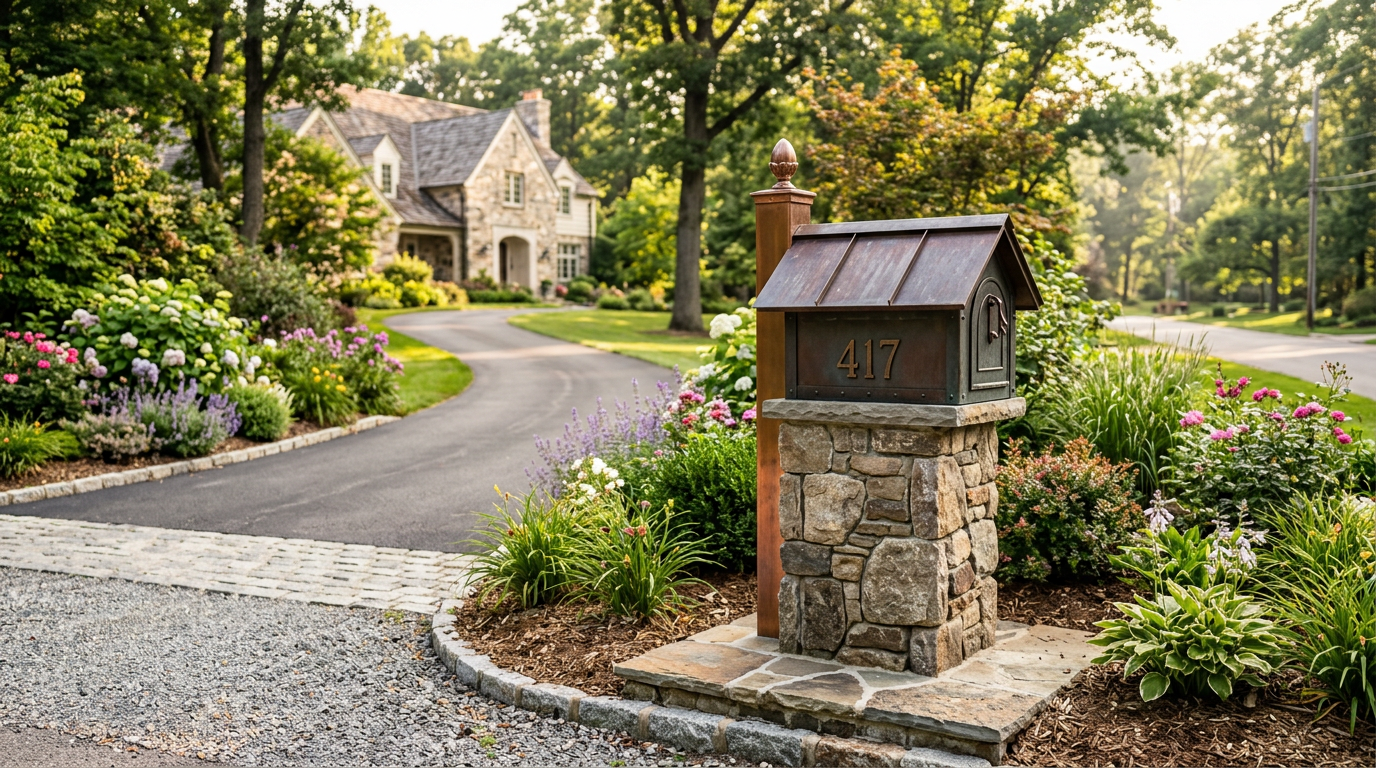
This is the traditional American mailbox setup. While the shape is classic, you can elevate the look by choosing high-quality materials. Instead of thin plastic or basic aluminum, consider heavy-gauge steel finished in oil-rubbed bronze, matte black, or brushed nickel. These materials resist rust and warping, and they hold up beautifully against sun exposure. Combine them with a clean timber post (such as cedar or redwood) or a matching powder-coated metal post for a cohesive, understated look.
Architectural Wall-Mount Boxes
If your home has front-porch delivery, the mailbox becomes a prominent decorative element right next to your front door. Large, architectural wall-mount boxes can be selected to match your door hardware, outdoor light fixtures, and house numbers. Materials like copper—which develops a beautiful green patina over time—or cast aluminum with detailed moldings can instantly elevate your entryway's architectural character.
Stone, Brick, or Stucco Pillar Mailboxes
For a permanent, high-end look, many homeowners build a masonry pillar that matches the brick, stone, or stucco on their home’s exterior. These structures look incredibly solid and neat, and they are highly favored by many homeowner associations.
However, building a masonry mailbox requires careful planning. Because they are heavy and permanent, these structures often require a local building permit. You must also check your city ordinances regarding "fixed object" hazards near roadways. Many jurisdictions ban heavy masonry mailboxes outright because they pose a fatal hazard to drivers who veer off the road; instead, they require "break-away" posts that shear off upon impact.
Demystifying HOAs and Local Ordinances
Before you purchase a new mailbox or dig a single hole, check your Homeowners Association (HOA) covenants or neighborhood bylaws. Many HOAs enforce strict regulations to maintain neighborhood consistency. They may dictate:
- The exact style, brand, and color of the mailbox and post.
- The font, size, and material of your house numbers.
- The exact species of wood or type of metal allowed for the post.
- Whether landscaping is permitted around the base of the post.
Even if you do not live in an HOA, local city codes may have specific rules regarding street-side structures, utility easements, and clear-sight-triangle rules for corner properties. Always do your research first to avoid a costly tear-down later.
Best Practices for a Long-Lasting Installation
If you are taking on a mailbox installation yourself, a few professional practices will ensure the structure stays level, upright, and compliant for decades.
Digging the Post Hole
For a standard wooden or metal post, your hole should be at least 24 inches deep. This depth ensures the post sits below the frost line in cooler climates, preventing the ground from shoving your post out of alignment during winter freeze-and-thaw cycles. Fill the bottom of the hole with a few inches of gravel to encourage drainage and prevent the bottom of your post from rotting, then pour in concrete to secure the post in place.
                  [MAILBOX] ---> 41"–45" above road surface
                      |
                      | <--- 6"–8" setback from curb
   [CURB]             |
  =======|------------|--- [GROUND LEVEL]
         |            |
         |  [CONCRETE]| <--- 24" minimum depth
         |   [GRAVEL] |
Break-Away Design Requirements
Many local road commissions require mailbox posts to be "break-away" structures for traffic safety. By law in many areas, a wooden post should be no larger than 4-by-4 inches, and a metal pipe post should have a diameter of no more than 2 inches. Avoid using heavy railroad ties or thick steel beams. If you do use a larger wooden post, you may need to drill holes through the post parallel to the road near the ground level so that it will snap cleanly if struck by a vehicle.
Proper Numbering and Visibility
Your mailbox is not just for the mail carrier; it is a critical beacon for emergency services. If paramedics, police, or firefighters are looking for your home in the dark, a clear, readable mailbox is invaluable.
To ensure safety and meet local fire codes, use house numbers that are at least 3 inches tall (some jurisdictions require 4 inches) on both sides of the mailbox. Use high-contrast colors—such as white or reflective silver numbers on a dark mailbox, or black numbers on a light mailbox. If your mailbox is mounted to your house, ensure the numbers are clearly visible from the street and illuminated by your porch light.
By understanding the balance between federal mail delivery rules, local safety dynamics, and personal aesthetic tastes, you can choose a mailbox setup that adds curb appeal, keeps your packages dry, protecting your identity, and welcomes you home for years to come.
If you are looking to refresh your home's exterior appeal, upgrade your entryway, or tackle a larger residential remodeling project, we would love to help you bring your vision to life. Reach out to Modern Builders of America today to schedule a free in-home estimate and discuss your home improvement goals with our team of building experts at /contact.