Short answer: yes, and it happens on more remodels than you'd think. Moisture underneath a floor doesn't need a leak — it just needs a slab that isn't sealed, a crawl space without a vapor barrier, or a bathroom with the wrong underlayment.
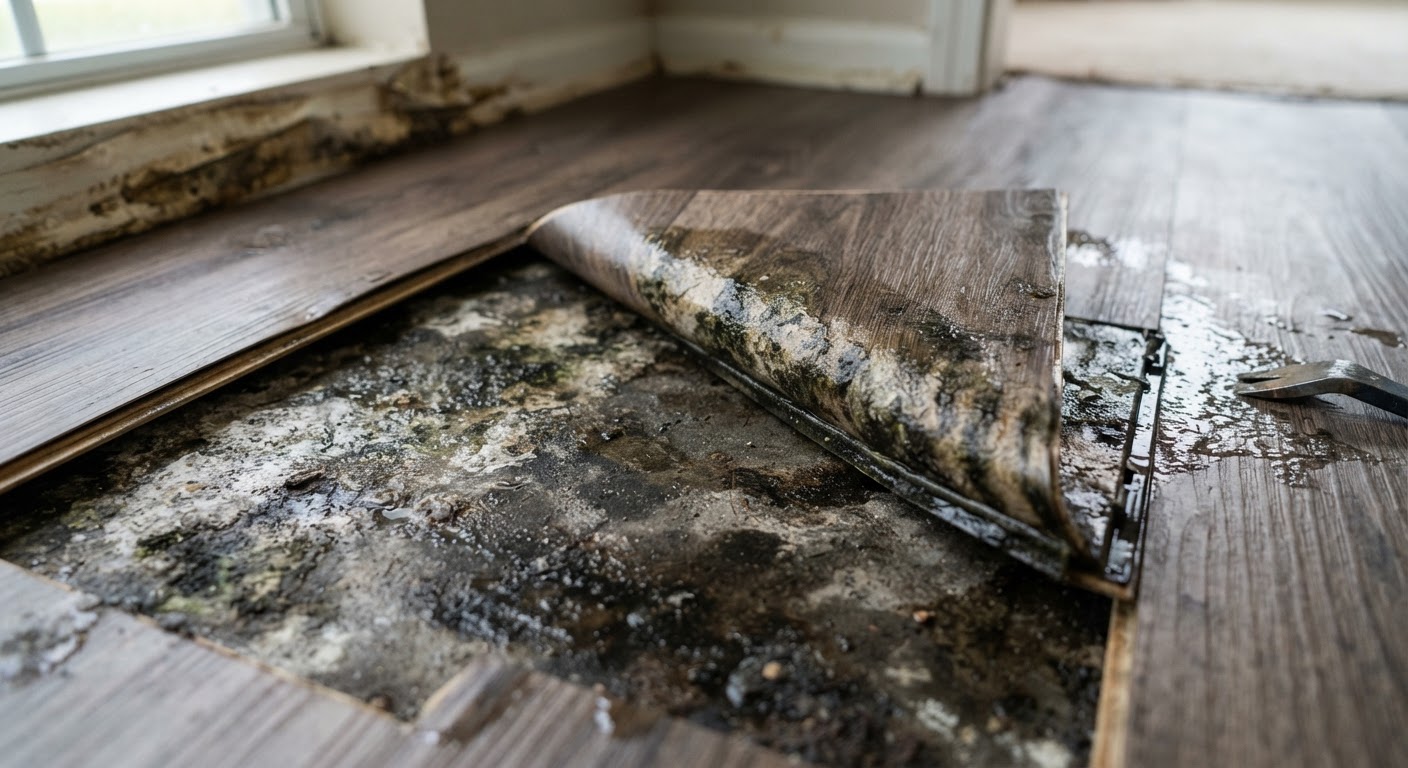
By the time it shows up on top — cupped hardwood, mystery buckle in your LVP, dark stains at grout joints, a musty smell — the substrate is usually already damaged.
Where moisture comes from
- Concrete slabs release water vapor forever. A 1,000 sqft slab can transmit 10–20 lbs of water vapor per day. That vapor rises into whatever's on top of the slab and condenses on the underside of the flooring.
- Crawl spaces breathe humid outside air unless they're encapsulated. That humidity rises through the subfloor.
- Bathrooms get water at the tub/shower splash zone, at the toilet flange, and behind the vanity plumbing. Any of those can wick under adjacent flooring for years before it shows.
- Kitchens — dishwasher supply lines, fridge water lines, and disposal drains. Slow drips soak into the subfloor under cabinets and go undetected.
- Exterior wall condensation — poorly insulated exterior walls sweat inside the wall cavity and drip onto the subfloor edge.
What it does to each flooring type
- Hardwood — cups (edges rise), then crowns (center rises), then delaminates. Can't be sanded flat without removing 1/16"+ from every board.
- Engineered hardwood — top veneer separates from the core. Not repairable.
- Laminate — swells at the click-lock joints. Blows the seams. Permanent.
- LVP / SPC — the vinyl itself is waterproof, but the subfloor under it rots and telegraphs through. Adhesive fails.
- Tile — grout stays wet, mold grows in the thinset, tiles pop off individually.
How we prevent it on every remodel
- 6-mil poly vapor barrier stapled to the underside of the joists in crawl spaces
- Liquid-applied moisture membrane on every concrete slab before flooring
- Schluter Ditra or KERDI under every tile install (uncoupling + waterproofing)
- Full waterproof membrane on bathroom shower pans and 6"+ up the walls
- Silicone seal at every plumbing penetration through the subfloor
- Backer rod + sealant at the perimeter of wet-area floors
Warning signs to look for now
- Any cupping or crown in wood flooring
- Grout lines that look darker than they used to
- A "hollow" sound when you tap a tile
- Musty smell that gets stronger near a specific spot
- Baseboards that look separated from the wall near a bathroom or kitchen
Any of these on a remodel means we open the floor, dry the substrate, and fix the moisture source before we install anything new. Skipping that step is a guaranteed callback.
If you're planning a kitchen, bath, ADU, or whole-home remodel and you've had any flooring or moisture symptoms — reach out and we'll take a look.