For many homeowners, a backyard pool is the ultimate retreat. But if you’ve spent any time managing one, you know that the transition from the water to the indoors is where the friction happens. An outdoor shower installed nearby isn't just a luxury addition; it acts as a functional buffer zone that protects your home’s interiors and simplifies your pool maintenance.
Here is a practical guide to designing an outdoor shower that works beautifully, survives the elements, and makes your outdoor living space far more usable.
The Practical Value: Why an Outdoor Shower Makes Sense
An outdoor shower is often viewed as an aesthetic upgrade, but its real value lies in utility. It solves several daily pain points for families who spend their summers by the water.
Keeping the Pool Cleaner
Every time someone jumps into your pool, they bring organic matter with them. Sweat, body oils, performance sunscreens, grass clippings, and tracking dirt all compromise your water chemistry. When guests rinse off before stepping into the pool, you significantly reduce the organic load on your filtration system. This means you will use fewer chemical sanitizers, spend less time shocking the pool, and extend the lifespan of your pool filter.
Preserving Your Indoor Flooring
Without an outdoor rinse station, the path from the pool to the nearest indoor bathroom becomes a high-traffic wet zone. Dripping swimsuits and bare, wet feet leave a trail across hardwood, laminate, or tile flooring. This isn't just a slipping hazard; over time, repeated moisture exposure can warp wood floors and ruin subfloors. An outdoor shower keeps the wet feet—and the pool water—outside where they belong.
Relieving Bathroom Traffic
During a backyard gathering or a busy weekend afternoon, your indoor bathrooms can quickly become bottlenecked. Guests tracking in and out to rinse off or change creates a constant cycle of cleanup. An outdoor shower, particularly one designed with a changing area, serves as an auxiliary bathroom. It keeps your primary indoor spaces quiet, dry, and available.
Choosing Your Layout and Privacy Style
How you design the enclosure depends on your yard's layout, your budget, and how you plan to use the space. Outdoor showers generally fall into three design categories.
+------------------+-----------------------------+-----------------------------+
| Layout Style     | Best For                    | Primary Advantage           |
+------------------+-----------------------------+-----------------------------+
| Simple Wall-Unit | Quick rinses, tight spaces  | Low cost, minimal footprint |
| Semi-Open        | Corner spaces, scenic yards | Good balance of view & shade|
| Fully Enclosed   | Changing clothes, privacy    | Maximum utility, high value |
+------------------+-----------------------------+-----------------------------+
1. Fully Enclosed Suites
If you want a space where guests can not only rinse but also change out of wet swimsuits, a fully enclosed structure is the best choice. These designs typically feature a two-zone layout: a "wet" showering side and a "dry" changing vestibule equipped with hooks and a bench.
For the walls, choose materials that complement your home's architecture:
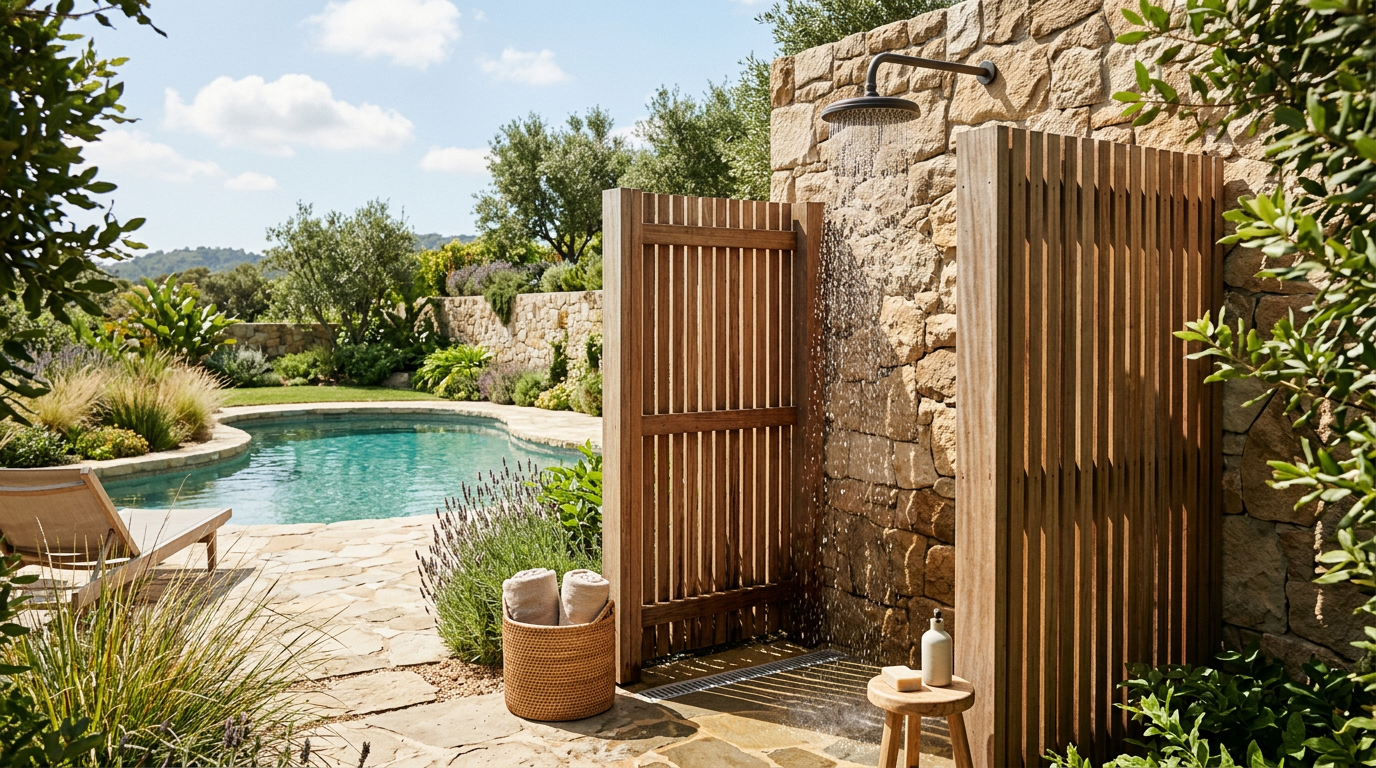
- Clear-grade Cedar or Redwood: Naturally rot-resistant, these timbers weather to a beautiful silver-grey if left untreated, or they can be sealed to maintain their warm, red tones.
- Ipe or Cumaru: These Brazilian hardwoods are incredibly dense, scratch-resistant, and can last for decades in wet environments.
- Composite Panels: High-quality composite polymers offer a clean, modern look with zero maintenance requirements.
- Masonry and Stone: For a permanent, high-end look, stone veneer or stucco walls provide excellent privacy and wind protection.
2. Semi-Open Structures
Semi-open showers use strategic screen placement to block lines of sight from the house or neighbors while remaining open to the sky and surrounding landscape. This can be achieved with louvered wood panels, horizontal slat fencing, or frosted glass partitions. This style offers a wonderful compromise, giving you the feeling of showering in nature without sacrificing personal comfort.
3. Wall-Mounted Rinse Stations
If your primary goal is simply washing feet and rinsing off chlorine before and after a swim, a simple wall-mounted fixture may be all you need. Installed directly onto an exterior home wall, a pool cabana, or a sturdy privacy fence, this option requires no structural footprint. While it offers no privacy for full bathing, it is highly efficient and keeps the focus entirely on utility.
Fixtures That Elevate the Experience
To make your outdoor shower truly functional, look beyond the standard cold-water garden hose hookups. Investing in high-quality plumbing fixtures turns a basic rinse station into an outdoor oasis.
The Mixing Valve (Hot and Cold Water)
A cold-only outdoor shower is rarely used on cooler spring details or breezy autumn evenings. By plumbing both hot and cold lines to a mixing valve, you extend the usability of your shower into the shoulder seasons. It makes morning swims more inviting and allows for comfortable evening rinses long after the sun goes down.
Rain Showerheads and Handheld Sprayers
A broad, ceiling-mounted or high-arc wall-mounted rain head provides a relaxing, low-pressure flow of water that feels natural outdoors. However, pairing it with a diverter and a handheld sprayer adds immense practicality. Handheld sprayers make it easy to wash thick hair, rinse off pets, clean outdoor toys, and spray down the shower enclosure walls during routine cleaning.
Dedicated Foot Washes
A low-mounted foot wash faucet is one of the most used features of any outdoor shower. Installed about 12 to 18 inches off the ground, it allows swimmers to rinse grass off their feet before jumping into the pool, or to wash off dirt without having to take a full shower.
Plumbing, Drainage, and Winter Protection
The mechanical side of an outdoor shower requires careful planning to ensure it functions safely and complies with local building codes.
Water Lines and Supply
The easiest way to supply water is to run hot and cold PEX lines from the nearest utility room or bathroom inside the house, drilling through the rim joist to exit outdoors. These supply lines should always run through interior heated walls as much as possible before transitioning outside.
Drainage Solutions
Where does the water go? This is a critical question that depends heavily on your local municipality’s regulations:
- French Drains and Dry Wells: In many jurisdictions, graywater from an outdoor shower can drain directly into the ground through a bed of gravel (a French drain) or a buried plastic dry well. This works beautifully if your soil drains well and you use biodegradable, eco-friendly soaps.
- Sewer Connections: Some local codes require any shower that uses soap to be tied directly into the home’s main sanitary sewer system. This prevents graywater from pooling or entering local waterways.
- Grading: No matter which method you use, the ground beneath the shower must slope away from your home's foundation to prevent water from pooling near the basement or crawlspace walls.
Winterization is Essential
If you live in a region that experiences freezing winter temperatures, your outdoor plumbing must be winterized to prevent burst pipes. Your builder should install dedicated shut-off valves inside the heated envelope of your home, along with low-point drain valves. Every autumn, you will shut off the water supply inside, open the outdoor fixtures to let gravity drain the remaining water, and blow out the lines with compressed air if necessary. This simple ten-minute routine protects your investment from costly freeze damage.
Materials Built to Endure the Elements
The outdoor environment is harsh. Intense sunlight, freezing cold, pool chemicals, and constant moisture will quickly degrade interior-grade materials. Choose products designed specifically for outdoor longevity.
Metal Finishes: Choose Marine-Grade
Chrome-plated brass, which is common in indoor bathrooms, can pit, flake, and corrode when exposed to outdoor humidity and pool chemicals. Instead, opt for solid marine-grade stainless steel (316 grade) or solid brass with a living finish. These metals develop a beautiful patina over time or can be easily polished back to their original luster without losing their structural integrity.
Slip-Resistant Flooring
The floor of your shower must remain safe when soapy and wet.
- Teak or Ipe Duckboards: A removable wooden slatted platform allows water to run through easily and feels comfortable underfoot.
- Textured Stone: Natural slate, flamed granite, or river stones set in concrete provide excellent natural traction and drain well.
- Textured Porcelain Tile: If you prefer a tiled look, choose tiles with a high dynamic coefficient of friction (DCOF) rating, which indicates high slip resistance when wet.
Designing and building an outdoor shower is one of the most satisfying upgrades you can make to your pool deck, turning your backyard into a highly efficient, resort-like space. If you are ready to explore layout options, plumbing routes, and material choices designed to complement your home, we are here to help. Reach out to the team at Modern Builders of America to schedule your free in-home estimate at /contact, and let's start planning your backyard oasis.