Deciding to cover your patio is one of the most impactful home improvements you can make. It transforms an underutilized concrete slab or deck into a true outdoor living room, shielding you from the summer sun and keeping the rain off your outdoor furniture. However, with so many styles, materials, and custom features available, choosing the right structure requires balancing aesthetics, budget, and how you actually plan to use the space.
By understanding the differences between permanent roofs, adjustable systems, and various building materials, you can design a space that feels like a seamless extension of your home.
Choosing Your Style: Five Patio Cover Designs
The structure you choose dictates how much protection you have from the elements and how often you will use your outdoor space throughout the year. Most designs fall into one of five categories, ranging from permanent, fully covered roofs to flexible, fabric-based solutions.
1. Solid-Roof Covers
A solid roof is a permanent extension of your home’s existing roofline. Typically finished with shingles or metal paneling that matches your house, a solid roof offers total shade and complete protection from rain and snow.
- The Big Picture: This is the most premium, durable option. Because it features a solid ceiling underneath, you can easily run electrical wiring for ceiling fans, recessed can lights, and mounted heaters.
- The Drawback: It can block natural light from entering the windows of your house adjacent to the deck. It is also the most labor-intensive and expensive style to build, often requiring architectural drawings and structural engineering permits.
2. Open Lattice and Pergolas
Pergolas offer a classic, architectural look characterized by heavy posts, overhead beams, and closely spaced cross-spars (or lattices).
- The Big Picture: Rather than blocking the sun entirely, a pergola provides dappled shade. It is an aesthetic choice that defines an outdoor dining or lounging area without completely sealing it off from the sky.
- The Drawback: A traditional lattice offers zero protection from rain. If a sudden summer shower hits, you will have to move your cushions and head indoors.
3. Motorized Louvered Roofs
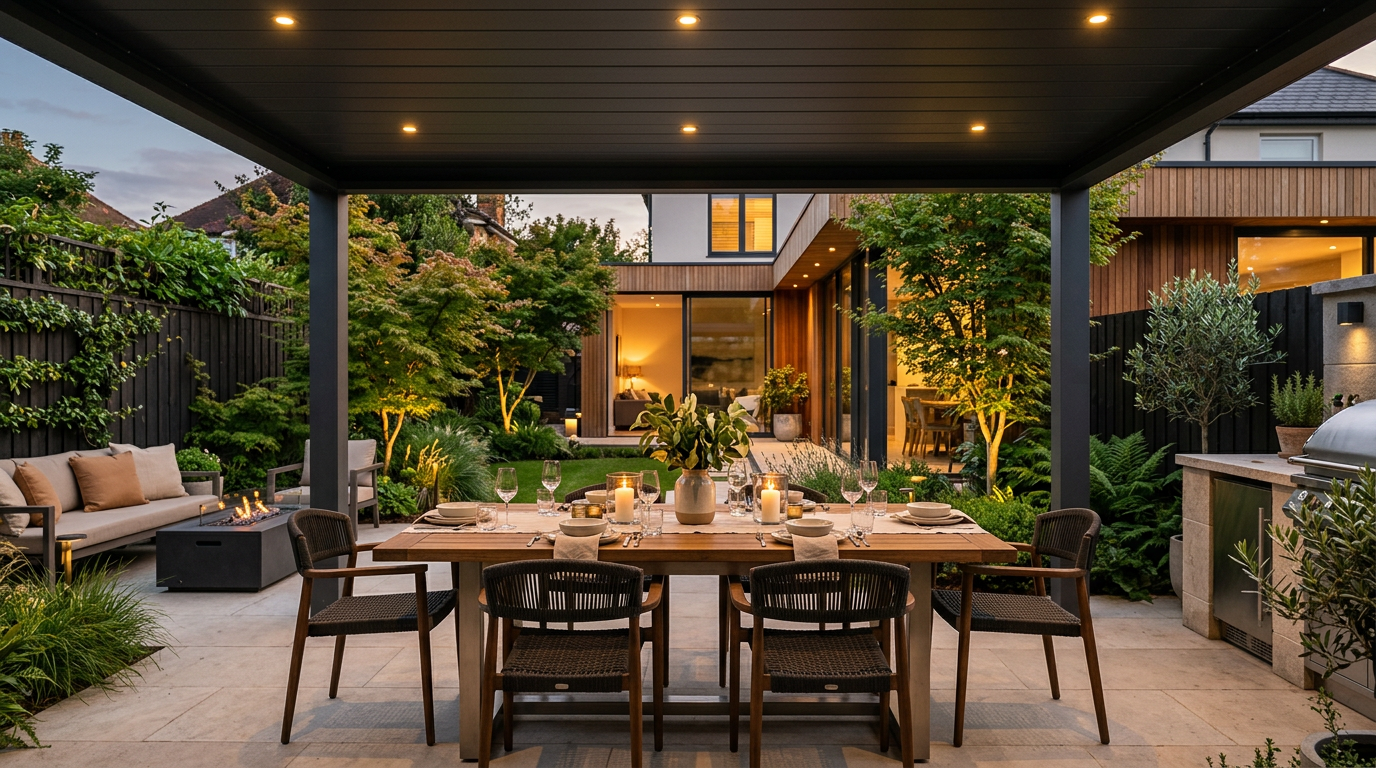
Louvered roofs represent the modern "best of both worlds" solution. Constructed from heavy-duty aluminum, these systems feature overhead slats that rotate at the touch of a button or via a smartphone app.
- The Big Picture: On a beautiful spring day, you can open the louvers completely to let the sun shine through. When the afternoon heat peaks, you can angle them for partial shade. If it starts to rain, you can close them completely; built-in gutter channels in the support beams direct the water away safely.
- The Drawback: Because of the motorized components, precision engineering, and specialized installation required, louvered roofs are typically the most expensive option on the market.
4. Retractable Fabric Canopies
Often integrated into a wooden or metal pergola frame, retractable canopy systems use durable outdoor fabric threaded along tracks or wires.
- The Big Picture: These systems offer great flexibility at a middle-ground price point. You can manually slide the fabric back to look at the stars or pull it shut to block the midday glare.
- The Drawback: Fabric degrades faster than wood, aluminum, or steel. Canopies must be retracted during high winds or heavy snow to prevent tearing, and they require periodic cleaning to prevent mold, mildew, and staining.
5. Tension-Mounted Shade Sails
Shade sails are large sheets of durable, UV-resistant fabric stretched tightly between heavy-grade posts or anchored directly to your home’s exterior walls.
- The Big Picture: This is a cost-effective, modern, and highly visual way to shade a pool deck or casual seating area. They can be installed quickly and come in a variety of geometric shapes.
- The Drawback: They offer very limited weather protection and cannot realistically support accessories like ceiling fans or permanent lighting. Over time, the tension can loosen, requiring manual adjustment, and they must be taken down before winter in colder climates.
Comparing Patio Cover Styles at a Glance
| Style | Rain Protection | Shade Level | Durability | Relative Investment |
|---|---|---|---|---|
| Solid Roof | Complete | 100% Block | High (Decades) | Premium |
| Open Lattice | None | Dappled (30% to 60%) | High | Moderate |
| Motorized Louvered | Complete (when closed) | Adjustable (0% to 100%) | Moderate to High | High |
| Retractable Fabric | Light rain only | Adjustable (0% to 100%) | Moderate (Fabric wear) | Moderate |
| Shade Sails | Minimal | High (UV Block) | Low to Moderate | Low |
Selecting the Right Material
Once you have settled on a style, you must choose the material for the framing and support posts. The material you select dictates the long-term maintenance requirements, the overall aesthetic, and the structural lifespan of the cover.
Wood: Warmth, Character, and Craftsmanship
Wood remains the traditional favorite for high-end patio covers. Most quality builders use either pressure-treated pine (often clad in finish lumber) or premium species like Western Red Cedar or Redwood.
- The Look: Wood offers an organic warmth, texture, and architectural weight that synthetic materials cannot match. It can be stained to show off the natural grain or painted to perfectly match your home's trim.
- The Reality: Wood naturally expands, contracts, cracks, and fades. To prevent rot, insect damage, and graying, you must commit to resealing, staining, or painting your wooden structure every three to five years.
Aluminum: Sleek, Modern, and Maintenance-Free
Aluminum patio covers have surged in popularity because they require virtually zero upkeep. Modern powder-coated finishes ensure the paint will not chip, peel, or rust.
- The Look: Aluminum profiles are typically thinner and cleaner than wood, making them an excellent match for contemporary or mid-century modern homes. Some systems even feature realistic wood-grain sublimation finishes for those who want the look of timber without the upkeep.
- The Reality: Because aluminum is lightweight, it does not have the same heavy, commanding presence as solid timber. It can also be susceptible to denting during severe hail storms.
Steel: Unmatched Strength and Industrial Appeal
For homeowners looking for an industrial-chic aesthetic or those building in regions with extreme weather conditions, structural steel is a compelling option.
- The Look: Steel allows for incredibly long spans with minimal support posts. This creates wide-open, unobstructed views of your yard.
- The Reality: Steel is incredibly heavy, requiring deep, robust concrete footings. It is also highly labor-intensive to weld and install. While galvanized or powder-coated steel resists rust, any deep scratches must be touched up immediately to prevent corrosion.
Turning a Shade Structure Into a Year-Round Outdoor Room
The difference between a simple shelter and a luxurious outdoor living space often comes down to the utilities and comforts you integrate into the structure. Designing your ceiling and support posts to accommodate hardwired features ensures you can use the space early in the spring, late into the fall, and well after the sun goes down.
Recessed LED Lighting
Relying on a single floodlight mounted to the back of your house creates harsh shadows and a cold, sterile environment. By running electrical framing inside a solid-roof cover or along the perimeter beams of a pergola, you can install dimmable, recessed LED can lights. This provides soft, even, ambient lighting that makes your patio feel like an indoor room.
Ceiling Fans
On hot, humid summer afternoons, even a perfectly shaded patio can feel stifling. A flush-mounted, damp-rated outdoor ceiling fan keeps the air moving, lowering the perceived temperature by several degrees. As an added benefit, the constant breeze created by a ceiling fan is highly effective at keeping mosquitoes and other flying pests away from your seating area.
Infrared Radiant Heaters
Unlike traditional gas heaters that warm the surrounding air (which easily blows away with a light breeze), flush-mounted infrared heaters emit radiant heat that warms objects and people directly. By mounting these slim heaters to your patio cover’s ceiling or cross-beams, you can comfortably sit outside on chilly autumn evenings or crisp spring mornings, effectively extending your outdoor season by several months.
Planning Your Project
Before you begin clearing space on your patio, take time to check with your local municipality and Homeowners Association (HOA). In most areas, any structure attached to your home or exceeding a certain square footage requires a building permit, structural engineering calculations, and setback inspections. Working with a licensed contractor ensures that your new patio cover is safe, complies with local building codes, and will withstand wind and snow loads common to your area.
If you are ready to explore the possibilities for your backyard, we can help you design and build a custom patio cover tailored to your home's architecture and your family's lifestyle. Contact Modern Builders of America today to schedule a free in-home estimate and get started on your outdoor transformation.