Choosing the right pool surface is one of the most consequential decisions you will make during a backyard remodel. The material you select dictates not only the water color and how the pool feels underfoot, but also how much time and money you will spend on chemicals and maintenance over the next decade.
When homeowners look at pool finishes, they are often surprised by the sheer variety of options. What used to be a simple choice of white plaster has evolved into a field of high-durability aggregates, polished pebbles, and custom glass tiles. Navigating these choices requires balancing your budget, your design aesthetic, and your tolerance for lifetime maintenance.
The Foundation: Traditional Plaster finishes
Standard pool plaster, often called marcite, is a mixture of white Portland cement, water, and marble dust. It has been the industry standard for decades because it is economical, smooth, and creates that iconic, bright backyard-blue water.
White Plaster
White plaster is the most budget-friendly finish available. When filled with water, a white plaster pool reflects light to create a clean, classic, light-blue aesthetic.
However, white plaster is the most fragile of all pool surfaces. Because it is highly alkaline and porous, it is incredibly sensitive to water chemistry. If your pH or calcium hardness wanders out of range, the water will actively leach minerals from the plaster, leading to etching, scaling, and staining.
- Lifespan: Typically 7 to 12 years with proper care.
- Texture: Very smooth and gentle on swimmers' feet.
- Drawbacks: Highly susceptible to staining from leaves, metal, and unbalanced water. It wear down faster than aggregate-based finishes.
Colored Plaster
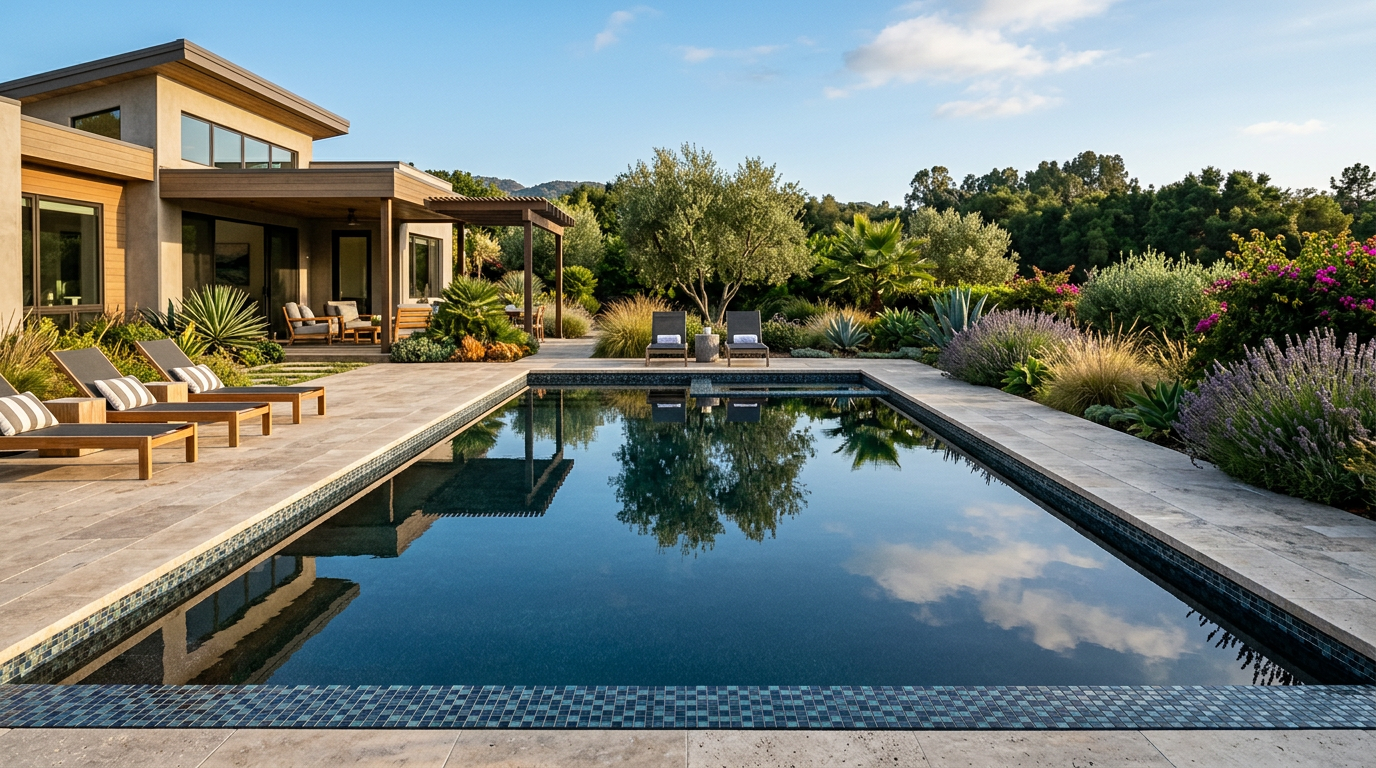
By adding pigments to the wet plaster mix, builders can create shades ranging from deep charcoal and black to rich teals and medium blues. Darker plaster finishes are highly sought after because they create a dramatic, mirror-like reflection on the water's surface and help naturally heat the pool by absorbing sunlight.
While beautiful, colored plaster is notoriously difficult to apply perfectly. It is prone to "mottling"—a natural shading variation where some areas look lighter or darker than others. Over time, as pool chemicals interact with the pigment, colored plaster can show signs of bleaching, streaking, and calcium scaling much more visibly than white plaster.
- Lifespan: Typically 7 to 12 years.
- Texture: Smooth.
- Drawbacks: Prone to uneven fading and visible scale buildup.
The Mid-Range Upgrade: Quartz Aggregate
To solve the durability issues of standard plaster without the high cost of a full pebble finish, manufacturers developed quartz aggregate finishes. This material is made by mixing colored ceramic-coated quartz granules into a fortified plaster base.
Why Quartz Outperforms Standard Plaster_
Quartz is one of the hardest minerals on earth. By replacing a portion of the soft marble dust in standard plaster with hard quartz, the resulting surface is significantly more resistant to chemical erosion, scratching, and staining.
The quartz crystals also add a subtle sparkle to the pool surface when the sun hits it. Because the quartz granules are pre-colored and baked at high temperatures, the overall color of the pool remains richer and resists fading far better than traditional colored plaster.
- Lifespan: Typically 10 to 15 years.
- Texture: Slightly textured, similar to fine sandpaper, but generally comfortable for sensitive skin.
- Drawbacks: Costs more than standard plaster, and poor water chemistry can still cause the plaster binder around the quartz to degrade over time.
The Premium Standard: Pebble Finishes
Pebble finishes represent the gold standard for modern inground pools. These finishes blend a modified hydraulic cement with tiny, naturally tumbled river pebbles or glass beads. Once applied, the installation crew washes away the top layer of cement paste to expose the beautiful, dense bed of stones.
Pebble Brands and Sizing
You will often hear names like PebbleTec® or PebbleSheen®. These are proprietary brands, but the general category includes several variations:
- Standard Pebble: Large, natural river stones. This finish has a rustic, organic look and is incredibly durable, but it has a distinct, bumpy texture.
- Mini-Pebble: Uses smaller, stones that are often buffed or polished. It offers the same durability as standard pebble but with a much smoother surface that is gentler on feet and swimsuit fabrics.
- Glass Bead Blends (e.g., Beadcrete): Replaces some or all of the natural pebbles with round glass beads. This creates an iridescent, three-dimensional water effect that reflects light beautifully, though it sits at the highest end of the pebble price spectrum.
| Finish Type | Lifespan | Surface Texture | Stain Resistance |
|---|---|---|---|
| White Plaster | 7–12 Years | Very Smooth | Low |
| Quartz Aggregate | 10–15 Years | Light Texture | Moderate–High |
| Pebble Finish | 15–20+ Years | Medium to Bumpy | High |
| All-Tile | Infinite | Smooth / Textured | Very High |
The primary draw of a pebble finish is its longevity. Because natural stone does not react with pool chemicals, these pools are highly forgiving of occasional water chemistry imbalances. They hide dirt, debris, and wear exceptionally well due to their multicolored, mottled appearance.
- Lifespan: Typically 15 to 20+ years.
- Texture: Distinctly textured. Sensitive feet may find standard pebble too abrasive, making mini-pebble or glass bead blends a preferred choice.
- Drawbacks: Higher upfront cost; can be rough on kids' feet during long swim sessions.
The Luxury Option: All-Tile Pools
For an uncompromising, resort-style aesthetic, an all-tile pool is unmatched. This process involves skipping plaster entirely and covering the entire interior shell of the pool with ceramic, porcelain, or glass tiles.
An all-tile pool is a true work of art. Glass tile, in particular, reflects sunlight in a way no other material can, giving the coordinate water a glowing, jewel-box appearance.
Beyond its beauty, tile is functionally superior to all other finishes. It is completely non-porous, meaning it does not absorb chemicals, resist algae growth better than plaster, and will not etch or fade.
- Lifespan: Virtually infinite, provided the underlying pool shell remains structurally stable and the tile is installed by an expert craftsman.
- Texture: Smooth, silky, and premium underfoot.
- Drawbacks: The most expensive pool finish option by a wide margin. Installation is incredibly labor-intensive, requiring weeks of meticulous hand-laying.
Waterline Tile: The Critical Accent
No matter which interior finish you choose for the floor and walls of your pool, you will need to select a waterline tile. This is the 6-inch band of tile that runs along the top edge of the pool where the water meets the coping.
Waterline tile is not just decorative; it serves an important functional purpose. As pool water evaporates, it leaves behind body oils, sunscreen, and calcium deposits. A tile band is easy to scrub clean, whereas raw plaster or pebble at the water line would stain permanently.
When selecting waterline tile, you have three primary material options:
- Ceramic and Porcelain: The most common and versatile options. They are highly durable, frost-proof, and come in thousands of colors, hand-painted patterns, and textures.
- Glass Tile: A premium choice that adds modern shimmer and depth. Glass reflects the moving water and sunlight, making the pool boundary feel seamless and expansive.
- Natural Stone: Ledgestone, travertine, or slate tile can hide the waterline beautifully in rustic, lagoon-style pool designs. However, natural stone is porous, meaning it requires regular sealing and is harder to clean if hard-water scale builds up.
The Critical "Startup" Period: Don't Ruin Your Investment
Many homeowners assume that once their pool is sprayed and troweled, the job is done. In reality, the most critical phase of a pool finish's life begins the moment the water starts flowing into the pool.
Newly applied cement-based finishes (including plaster, quartz, and pebble) take approximately 28 days to fully cure underwater. During this period, the plaster is highly vulnerable. Mishandling the startup process can permanently stain, streak, or weaken your new finish—shortening its lifespan before you ever take a swim.
The 28-Day Curing Rules
- Never Stop the Fill: When filling the pool for the first time, never turn off the hose until the water reaches the middle of the tile line. Stopping the water midway causes a permanent "bathtub ring" line to bake into the uncured plaster.
- Twice-Daily Brushing: New plaster releases loose calcium dust as it cures. You must brush the entire pool walls and floor twice a day for at least the first two weeks. If you skip this, the dust will settle and cure hard onto the surface, leaving a rough, sandpaper-like scale.
- Strict Chemical Monitoring: You cannot simply throw chlorine tablets or salt into a freshly plastered pool. High chlorine, salt, or incorrect pH levels will ruin the curing cement. Water chemistry must be tested and balanced daily, typically starting with adjusting pH and alkalinity before introducing sanitizers.
- No Automatic Vacuums: Keep wheeled pool cleaners out of the pool for the first three to four weeks. Their wheels can leave permanent tracks in the soft, curing plaster.
Modern Builders always manages or closely guides this startup phase for our clients to ensure your warranty remains fully intact.
Budgeting for Your Resurface
When planning your backyard renovation, it helps to understand how the choice of finish impacts your overall investment. While exact pricing depends on the size of your pool, its shape, your geographic region, and the ease of access to your yard, cost relationships remain consistent across materials.
- Standard Plaster (White or Colored): This is the baseline cost. Homeowners typically choose this when prioritizing budget or seeking a traditional look.
- Quartz Aggregate: Typically adds a 20% to 35% premium over standard plaster.
- Pebble Finishes: Typically represent a 50% to 100% increase over standard plaster, with mini-pebble and glass blends sitting at the higher end of that range.
- All-Tile: This is a luxury tier that can easily cost several times the price of a standard plaster job, driven largely by the specialized labor required for precision installation.
While premium finishes like pebble or quartz require a larger investment upfront, they often save you money over time. By lasting twice as long as standard plaster and requiring fewer chemicals to balance, they minimize the long-term cost of pool ownership.
If you are ready to transform your backyard and want to see how these finishes look in person, we are here to help. Contact the team at Modern Builders of America to schedule a free in-home estimate at /contact, and let us help you design a pool that will look stunning and perform beautifully for years to come.