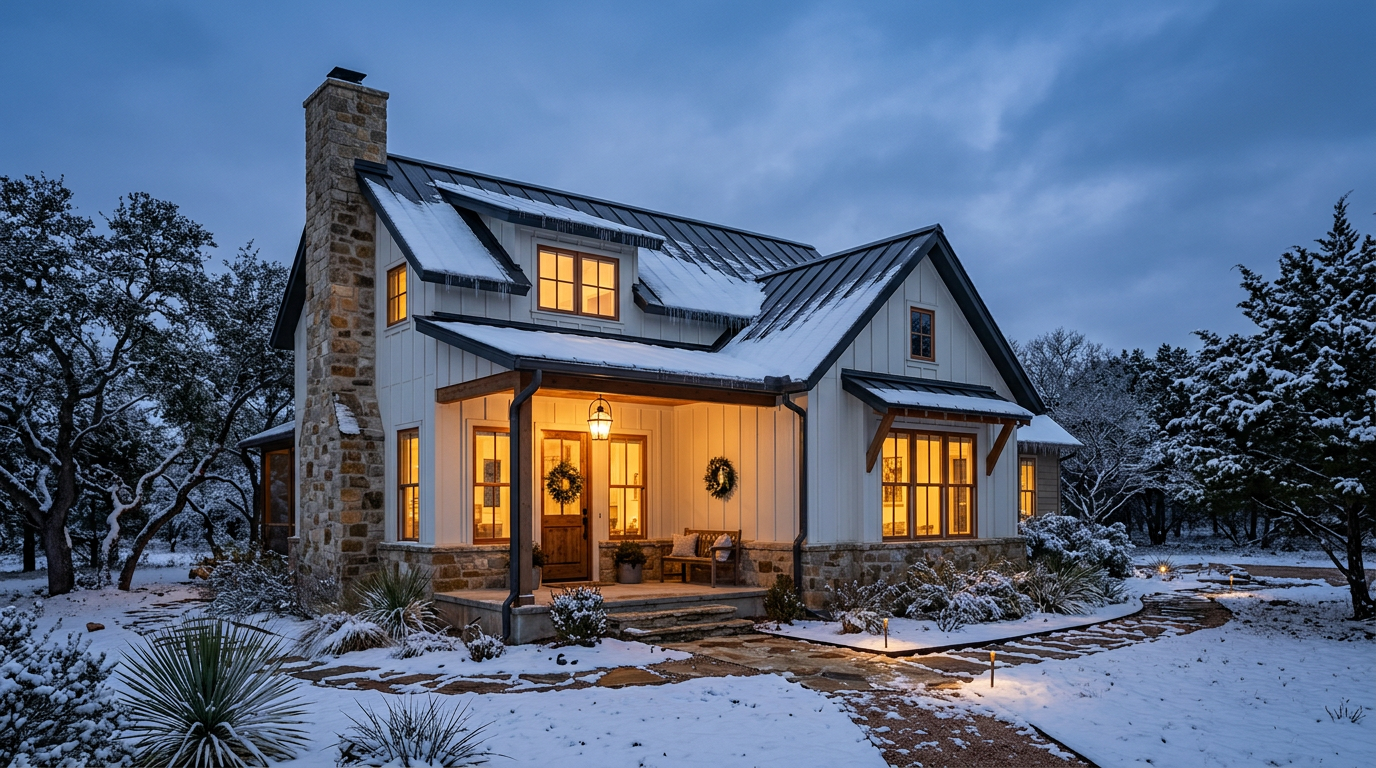
Every year as autumn fades, Texas homeowners share a collective thought: are we ready if the grid or the weather repeats February 2021? That historic freeze taught us that our homes, designed primarily to shed brutal summer heat, are uniquely vulnerable to sustained, sub-freezing temperatures. Preparing your home for a hard freeze isn’t about panic; it is about taking practical, systematic steps to ensure your pipes, heating systems, and electrical backups are ready to perform when the mercury drops.
This guide breaks down the essential tasks you need to complete before the next major cold front arrives, ensuring your family stays safe, warm, and dry.
The Plumbing Defensive Line: Protecting Your Pipes
Water expands when it freezes, exerting thousands of pounds of pressure per square inch. When a pipe bursts, the damage rarely happens at the freeze point itself; the ice block acts as a plug, and the pressure builds between that plug and the closed faucet until the pipe ruptures. Preventing this requires a two-part strategy: insulation and movement.
Insulating Exposed Lines
Any pipe exposed to unconditioned air is a liability. You need to inspect and insulate pipes in four critical zones:
- The Attic and Garage: Walk your attic and garage to locate any exposed copper or PEX water lines. Snugly wrap these in split-foam sleeves. Secure the seams with duct tape or zip ties every two feet so they do not slip or gap.
- Exterior Walls: Pipes running through exterior wall cavities are vulnerable if the insulation behind them is thin.
- Under Sinks on Outside Walls: Kitchen and bathroom vanities located on exterior walls can become iceboxes. If a freeze is forecast, open these cabinet doors to let warm room air circulate around the pipes.
- Outdoor Spigots: Disconnect all garden hoses, drain them, and store them away. Cover every outdoor spigot with an insulated foam cone or a insulated fabric pouch.
The Drip Strategy: Keeping Water Moving
Moving water is incredibly difficult to freeze. When temperatures are forecast to drop below 28 degrees Fahrenheit for more than four successive hours, you should initiate a drip.
Run a steady, pencil-thick trickle of water from the faucet that is both physical highest in the home (usually a second-story bathroom) and furthest from the main water shut-off valve. Do not just let it slowly drip drop-by-drop; a thin, continuous stream of both hot and cold water is necessary to keep the entire line active and prevent pressure blockages.
| Pipe Location | Protection Method | Action Checklist |
|---|---|---|
| Outdoor Spigots | Foam covers / Hose removal | Disconnect hoses, install covers before freezing temps arrive. |
| Attic & Garage Pipes | Split-foam insulation sleeves | Wrap fully, seal seams with zip ties or tape. |
| Under-Sink Pipes | Cabinet ventilation & foam wrap | Open cabinet doors; wrap lines on exterior-facing walls. |
| Whole-House System | Controlled water drip | Run a pencil-thick stream from the furthest, highest faucet. |
Securing the Attic Hatch and Thermal Envelope
Most homeowners focus entirely on pipes, completely overlooking the massive thermal chimney sitting right above their heads. Your attic access panel is often just a thin sheet of plywood resting on a wood frame. During a freeze, warm air rapidly escapes through this uninsulated gap, while freezing attic air drops down into your living space.
Sealing the Hatch
To stop this draft, apply self-adhesive foam weather-stripping tape along the ledge where the attic hatch door rests. On the back of the hatch door itself, glue or staple a thick piece of rigid foam board or a fiberglass insulation batt. If you have a pull-down ladder, invest in an insulated zippered tent cover that sits over the closed stairs inside the attic.
Protecting Attic-Mounted Equipment
Many Texas homes have HVAC air handlers or tankless water heaters installed in the attic. If you have a tankless unit, ensure its internal electric freeze-protection heating elements are plugged in and working. If power fails, these units must be manually drained to prevent the expensive copper heat exchanger from cracking.
Additionally, lay fiberglass insulation batts over any exposed water supply lines leading to attic-mounted water heaters, and wrap garage-mounted water heaters in dedicated fiberglass insulating blankets.
Power Infrastructure: Generators and Electrical Prep
When a winter storm overloads the local grid, or freezing rain snaps tree limbs onto power lines, you need a reliable backup plan. Electrical preparation falls into three categories depending on your budget and needs.
Portable Generators with Interlock Kits
A portable generator (running on gasoline, propane, or natural gas) is the most common backup choice. However, running extension cords through open windows defeats the purpose of keeping your home sealed against the cold.
The safest and most efficient setup is to have a licensed electrician install a generator interlock kit on your main electrical panel, along with an exterior inlet box. This allows you to plug your generator directly into the outside of your house and feed power back to select breakers—like your heating blower, refrigerator, and key lighting circuits—without the risk of dangerous utility back-feeding.
Whole-Home Standby Generators
For hands-off reliability, a permanent standby generator runs on your home’s existing natural gas or propane line. It monitors the utility line continuously. Within seconds of a power outage, the automatic transfer switch (ATS) disconnects your home from the utility grid and starts the generator, restoring power to your entire house without you having to step foot in the cold.
Battery Banks for Critical Equipment
If you rely on medical devices, or simply need to keep phones and tablets charged during rolling blackouts, keep dedicated portable lithium battery power stations fully charged inside the house. Unlike generators, these can be safely operated indoors and will keep essential low-draw equipment running for days.
Fireplaces and Alternative Heating
When the central heating system goes dark, your fireplace or backup heater becomes the focal point of the home. However, improper use poses extreme fire and carbon monoxide hazards.
Fireplace and Stove Inspection
If you plan to use a wood-burning fireplace or a pellet stove, clean the firebox and check the flue damper before winter arrives. Ensure the damper opens fully and seals tightly when closed. Keep a dry, covered supply of firewood or premium pellets close to the house so you do not have to trek through ice to retrieve fuel.
Indoor-Safe Propane Heaters
As a last resort for homes without fireplaces, a small, indoor-safe liquid propane heater (such as a "Buddy" heater) can keep a single room warm.
- Only use heaters rated specifically for indoor use, which feature automatic low-oxygen shutoff systems.
- Keep a window cracked roughly a quarter-inch in the room where the heater is running to ensure fresh air exchange.
- Never leave a propane heater running unattended or while you sleep.
- Place dual-power or battery-operated carbon monoxide detectors in any room where alternative heating is used.
The Empty House Protocol: Leaving During a Freeze
If you plan to travel during the winter months, or if you decide to temporarily evacuate to a hotel or relative’s home during an extended power outage, you must secure the property before you walk out the door. Leaving a house empty and unmonitored during freezing temperatures is a recipe for catastrophic water damage.
Follow this checklist to safely shut down your home:
- Shut Off the Main Water: Locate your home's main water shut-off valve (usually in the front yard near the street, or where the main line enters the garage or utility closet) and turn it completely off.
- Drain the Lines: Open every faucet in the house—both hot and cold—and flush all toilets to drain the remaining water out of the pipes.
- Leave Faucets Open: Keep the valves open so any remaining moisture has room to expand without building pressure.
- Keep the Heat On: Set your thermostat no lower than 55 degrees Fahrenheit to ensure the interior wall cavities stay warm enough to protect the drained lines.
Preparing your home for a hard freeze is a smart, proactive investment that protects your greatest financial asset. If you need help sealing up your attic, insulating vulnerable plumbing runs, replacing drafty doors, or installing dedicated winter barriers before the cold weather sets in, reach out to Modern Builders of America today to schedule a free in-home estimate at /contact.