Choosing a new roof is one of the most significant investments you will ever make in your home. The right material not only shields your family from the elements but also defines your home's architectural character, impacts your energy bills, and influences your homeowner's insurance premiums. With options ranging from traditional asphalt to high-tech synthetics, finding the right balance between upfront cost, durability, and aesthetics is key to making a smart long-term decision.
Understanding Roofing Measurements and Costs
Before diving into the materials, it helps to understand how the roofing industry measures projects. Roofers do not typically price projects by the square foot; instead, they use a unit called a "square."
One roofing square equals 100 square feet of roof surface. For context, an average-sized single-family home with a 2,000-square-foot roof translates to roughly 20 squares. When comparing costs, remember that structural complexity, roof pitch (steepness), and the removal of old layers also influence your final estimate.
1. Asphalt Shingles: The Most Common Option
Asphalt shingles cover the vast majority of suburban homes, primarily because they offer the lowest upfront starting cost and are relatively easy to install. They consist of a fiberglass mat saturated with asphalt and coated with ceramic granules that protect against ultraviolet rays.
+-----------------------------------+--------------------+----------------------------+-----------------------+
| Shingle Tier                      | Typical Lifespan   | Pros                       | Cons                  |
+-----------------------------------+--------------------+----------------------------+-----------------------+
| 3-Tab                             | 15 to 20 Years     | Cheapest upfront cost      | Low wind resistance   |
| Architectural / Dimensional        | 25 to 30 Years     | Rich look, great value     | Moderate cost         |
| Luxury / Designer                 | 30 to 40+ Years    | Mimics slate/wood shakes   | Heavy, premium cost   |
+-----------------------------------+--------------------+----------------------------+-----------------------+
The Three Tiers of Asphalt
- 3-Tab Shingles: These are flat, single-layer shingles with a uniform cut. They are the cheapest option to install, but they have the shortest lifespan (often lasting 15 to 20 years) and are vulnerable to lifting in high winds.
- Architectural (Dimensional) Shingles: These feature two or more layers of asphalt laminated together, creating a textured, three-dimensional look that mimics wood shake. They offer superior wind resistance (often rated up to 110–130 mph) and usually last 25 to 30 years.
- Luxury (Designer) Shingles: Thicker and heavier than architectural shingles, luxury shingles replicate the appearance of natural slate or hand-split wood shakes. They offer maximum durability, often lasting 40 years or more, but carry a premium price tag.
Key Considerations
- Lifespan: 15 to 40 years, heavily dependent on the chosen tier and local weather.
- Insurance Considerations: Standard rates apply. Many insurers offer premium discounts if you install impact-rated asphalt shingles (typically rated Class 4) that resist hail damage.
- Best Climes: Highly versatile, working well in almost all North American climates, though high heat and humidity can accelerate granule loss if your attic is poorly ventilated.
2. Metal Roofing: Durability and Fire Resistance
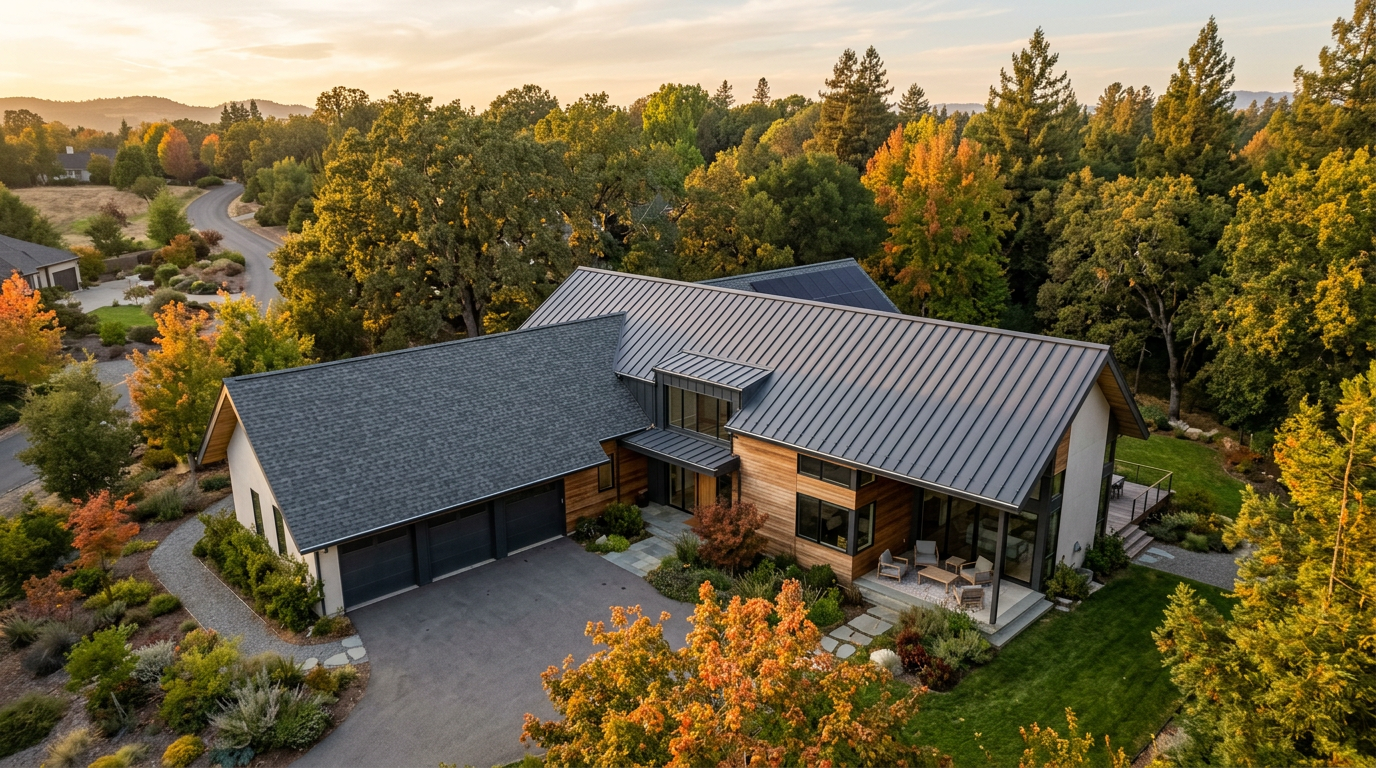
Metal roofing has surged in popularity due to its clean architectural lines and exceptional longevity. Far from the noisy tin roofs of the past, modern residential metal roofing is sophisticated, highly engineered, and exceptionally quiet when installed with proper solid decking and underlayment.
Common Metal Roofing Styles
- Standing Seam: The gold standard of metal roofing. Vertical panels are joined by raised interlocking seams that conceal the fasteners, protecting them from weather and eliminating potential leak points.
- Corrugated Metal: Exposed-fastener panels that are more economical than standing seam. While highly durable, the exposed screws require routine inspection and maintenance to ensure the rubber washers do not degrade.
- Stone-Coated Steel: Steel panels coated with stone granules that mimic the look of traditional shingles, clay tile, or wood shakes, providing the strength of metal with a traditional neighborhood aesthetic.
- Aluminum: Naturally rust-resistant and highly reflective, making it excellent for coastal environments where salt spray destroys steel.
Key Considerations
- Lifespan: 40 to 70 years, often lasting the lifetime of the homeowner.
- Insurance Considerations: Metal is highly rated for fire resistance (Class A) and wind resistance. Homeowners in wildfire zones or high-wind coastal areas often see substantial reductions in their annual homeowner's insurance premiums.
- Best Climes: Exceptional in heavy snow areas (snow slides right off, preventing ice dams) and hot southern states where solar reflectivity lowers cooling costs.
3. Clay and Concrete Tile: Mediterranean Beauty
Commonly seen across the Southwest, Florida, and California, tile roofs are known for their distinctive S-shape profiles, earth-toned colors, and incredible longevity.
- Clay Tiles: Made from baked molded clay, these tiles are naturally resistant to fire, rot, and insects. They retain their color for decades because the clay is fired at extreme temperatures.
- Concrete Tiles: A more affordable alternative to clay, made from a cured mixture of cement, sand, and water. Concrete tiles can be molded to look like wood shakes or slate, but their colors may fade slightly over time compared to natural clay.
Structural Requirements
The biggest caveat with tile is weight. A clay or concrete tile roof can weigh three to four times as much as an asphalt roof. Before installing tile, an engineer must verify that your home's framing and rafters can support the load. If not, structural reinforcements will be required, increasing your overall installation costs.
Key Considerations
- Lifespan: 50 to 100 years. It is common for the tiles to outlast the waterproofing underlayment beneath them, which may need to be replaced every 30 years.
- Insurance Considerations: Excellent fire rating. However, clay tiles can be brittle and crack if hit by large hail or heavy falling branches.
- Best Climes: Hot, dry, and coastal climates. Clay and concrete do not handle repeated freeze-thaw cycles well, as trapped moisture can crack the tiles.
4. Natural Slate: The Century Roof
Natural slate is often called the "forever roof." Sourced from deep-earth quarries, slate is sliced into thin, uniform stone shingles. It is undeniably elegant, conveying a sense of historic permanence that no other material can fully replicate.
The Trade-offs of Slate
Slate is the most expensive material to install and requires highly specialized stone-masonry skills. Like clay tile, natural slate is incredibly heavy, requiring a robust, engineered roof structure to hold the weight. It is also brittle; walking on a slate roof requires specialized knowledge, as a misplaced step can easily crack a tile.
Key Considerations
- Lifespan: 100+ years. Many historic homes still feature their original slate roofs.
- Insurance Considerations: Highly fireproof and wind-resistant. However, because slate is so expensive to replace, some insurers may require a special rider or higher premium to cover repair costs.
- Best Climes: Performs beautifully in cold, wet, or humid climates. Unlike wood or asphalt, stone is completely impervious to rot, insects, mold, and fire.
5. Wood Shake and Shingle: Rustic Appeal
Wood roofs offer an organic, rustic texture that blends beautifully with natural landscapes.
- Wood Shingles: Machine-sawn from wood blocks, offering a smooth, uniform surface and clean lines.
- Wood Shakes: Hand-split, resulting in a rough, deeply textured surface with varied thicknesses.
Most wood roofs are made from western red cedar, redwood, or cypress because these woods contain natural preservatives that resist decay.
High Maintenance Requirements
A wood roof requires hands-on ownership. You must regularly clear away leaves, pine needles, and moss, which hold moisture against the wood and cause rot. You will also need to treat the roof periodically with preservatives, moss retardants, or fire-retardant coatings.
Key Considerations
- Lifespan: 30 to 40 years if meticulously maintained.
- Insurance Considerations: Wood is combustible. In fire-prone regions, local building codes may ban wood roofs entirely, and insurance companies may refuse coverage or charge prohibitively high premiums unless the wood is chemically treated with factory-applied fire retardants.
- Best Climes: Dry, temperate climates with low humidity. Constant humidity leads to premature rot, mold growth, and splitting.
6. Synthetic Slate and Shake: Modern Composites
Synthetic (or composite) roofing is a rapidly growing segment designed to offer the stately appearance of slate or the rustic charm of wood shakes without the heavy weight, high cost, or intense maintenance. These shingles are engineered from a combination of recycled plastics, rubber, and specialized polymers.
The Advanced Alternative
Because they are molded from real slate stones and wood shakes, high-quality composites feature incredibly realistic textures and variations. They are lightweight, requiring no additional structural support, and are durable enough to withstand being walked on during installation or maintenance.
Key Considerations
- Lifespan: Typically rated for 50 years with robust manufacturer warranties.
- Insurance Considerations: Excellent. Most synthetics carry a Class 4 impact rating (the highest possible for hail) and a Class A fire rating. Installing them often qualifies you for significant insurance discounts.
- Best Climes: Exceptionally versatile. They perform well in freezing northern winters (they do not crack or break in the cold) and stand up to high-UV summer sun without warping or degrading.
Choosing Your Next Roof
Deciding on a roofing material comes down to a balance of priority: are you looking for the lowest upfront cost, a dramatic architectural change, or a roof you will never have to replace again?
+-----------------------------------+--------------------+----------------------------+-----------------------+
| Material                          | Cost Tier          | Average Lifespan           | Best For              |
+-----------------------------------+--------------------+----------------------------+-----------------------+
| Asphalt Shingles                  | Low to Moderate    | 15 to 40 Years             | Budgets & Versatility |
| Metal Roofing                     | Moderate to High   | 40 to 70 Years             | Fire Zones & Snow     |
| Clay/Concrete Tile                | High               | 50 to 100 Years            | Hot, Dry Climates     |
| Natural Slate                     | Very High          | 100+ Years                 | Historic/High-End     |
| Wood Shake                        | High               | 30 to 40 Years             | Rustic Aesthetics     |
| Synthetic Composites              | Moderate to High   | 50 Years                   | Hail & Easy Care      |
+-----------------------------------+--------------------+----------------------------+-----------------------+
As you weigh these choices, remember that a roof's performance is only as good as the crew installing it. Even the highest-grade slate or standing-seam metal will fail prematurely if the flashing is poorly sealed or the ventilation is restricted. Always work with licensed, insured contractors who understand local climate challenges and building codes.
If you are ready to explore your options and find the perfect roof for your home’s architectural style and your budget, the team at Modern Builders is here to help. Contact us today to schedule a free in-home estimate with one of our experienced project managers.