When your home starts feeling tight, the instinct is often to start browsing real estate apps. But before you call a real estate agent, it is worth looking at the math and the long-term lifestyle impact of moving versus staying put. Expanding your current home with an addition is often the more financially sound, less disruptive path to getting the space you need.
Let’s break down the real decision: comparing the true cost of moving against the cost of building an addition, and how to determine which route makes sense for your family.
The Hidden Costs of Selling and Buying
Many homeowners assume that moving to a larger house is a simple trade-in process. In reality, the transaction costs of selling a home and purchasing another can easily consume a massive portion of your equity before you even pack a single box.
When you calculate the cost of moving, you have to look beyond the list price of the new house.
The Transaction Toll
When you sell your current home and buy a new one, you incur substantial fees on both sides of the transaction:
- Real Estate Agent Commissions: Traditionally 5% to 6% of your home’s sale price. If your current home is worth $500,000, that is $25,000 to $30,000 paid out of your equity.
- Seller Closing Costs: Title insurance, transfer taxes, and escrow fees usually account for another 1% to 3% of the sale price.
- Buyer Closing Costs: On the purchase of your next home, you will face lender fees, appraisal fees, and loan origination charges, typically running 2% to 5% of the new loan amount.
- Physical Moving Expenses: Hiring professional movers to pack, transport, and unpack a family home generally runs several thousand dollars, depending on distance and volume.
The Mortgage Rate Trap
For many homeowners who purchased or refinanced during the historic lows of the late 2010s or early 2020s, their current mortgage rate is likely between 2.5% and 4%.
Leaving that rate behind for a current market rate can drastically increase your monthly payment, even if the new home's purchase price seems reasonable. You are not just paying for more square footage; you are paying significantly more for the money you borrow to secure it.
Property Tax Resets
In many states, property taxes are tied to the purchase price of the home. This is particularly dramatic in states like California under Proposition 13, where assessed values are capped and only reset to current market value upon sale.
If you bought your home ten years ago, your property tax basis is likely far lower than the current market value. Buying a new home—even one of similar value—will trigger a complete reassessment, potentially doubling or tripling your annual property tax bill overnight.
| Expense Category | Moving to a New Home | Building an Addition |
|---|---|---|
| Agent Commissions | 5% to 6% of sale price | None |
| Closing Costs | 3% to 8% (combined buy/sell) | Minimal (permits/financing fees only) |
| Mortgage Rate Impact | High risk of losing historically low rate | None (retained on primary mortgage) |
| Property Tax Impact | Immediate reset to new purchase price | Incremental increase based on added value |
| Lifestyle Disruption | High (new schools, new neighborhood) | Moderate (construction localized to home) |
The Economics of a Room Addition
Rather than spending tens of thousands of dollars on transaction fees that yield zero return, building an addition allows you to reinvest that money directly into your own property.
Cost Per Square Foot vs. Value Added
In most markets, a residential addition typically costs between $250 and $450 per square foot, depending on the complexity of the build, the quality of finishes, and regional labor rates. Kitchen and bathroom additions sit at the higher end of this range due to plumbing and electrical complexity, while family rooms and bedrooms fall on the lower end.
While this represents a significant upfront investment, it is an investment that builds equity. According to historical remodeling data, high-quality home additions consistently recoup a major portion of their cost at resale—often between 60% and 80% immediately.
More importantly, in appreciating markets, adding square footage to a home in a desirable neighborhood frequently creates more equity over time than the actual cost of the construction. You are essentially manufacturing space and value on land you already own.
How to Calculate the True Comparison
To make an honest comparison, use this simple formula:
- Calculate the Moving Loss: Estimate 10% of your current home's value (for commissions and closing costs) plus $5,000 for moving logistics. Add to this the projected increase in your annual mortgage interest and property taxes over the next five years. This is your "loss to transaction."
- Estimate the Addition Cost: Get an estimate for the size of the addition you need.
- Compare: If the "loss to transaction" is $60,000, that is $60,000 you could have spent on a custom addition that actually increases your home's value, rather than handing it over to banks, brokers, and tax authorities.
The Non-Financial Cost: Lifestyle Disruption
Often, the hardest parts of moving cannot be quantified on a balance sheet. When you sell your home, you are not just changing your mailing address; you are uprooting your daily life.
- Schools and Commutes: If you have children, a move often means changing school districts, adjusting to new routines, and finding new childcare. If you move further out to find an affordable larger home, you may also be signing up for a significantly longer daily commute.
- Your Network: Good neighbors are hard to find. Staying in place preserves the community connections, friendships, and support systems you have built over years.
- The Unknowns of a New House: Every house has quirks. When you stay in your current home, you know its history, its maintenance record, and exactly how its systems operate. Buying a different home means inheriting someone else's deferred maintenance and hidden problems.
With an addition, the disruption is localized. While construction requires patience and adaptability for a few months, it has a clear end date—and your daily commute, your children's schools, and your neighborhood connections remain completely untouched.
When Moving Is Actually the Smarter Move
While an addition is often the best choice, it isn't always feasible or logical. There are three specific scenarios where selling and buying a new home is indeed the better path:
1. Your Lot is Too Small or Restrictive
Local zoning laws dictate how close you can build to your property lines (setback requirements) and how much of your lot can be covered by structures. If your backyard is already tight, or if local zoning prevents you from building up or out, your property simply may not have the capacity to expand.
2. The Layout is Beyond Saving
Some floor plans do not adapt well to growth. If your home has a highly compartmentalized layout, low ceilings that cannot be altered, or structural load-bearing walls that make integration impossible without a massive, cost-prohibitive structural overhaul, starting fresh elsewhere might be more practical.
3. You are Ready to Leave the Neighborhood
If your commute has become unbearable, your school district no longer fits your needs, or you simply want a change of scenery, no amount of square footage will make you love your home. If the location is the problem, moving is the only solution.
Making the Right Choice for Your Family
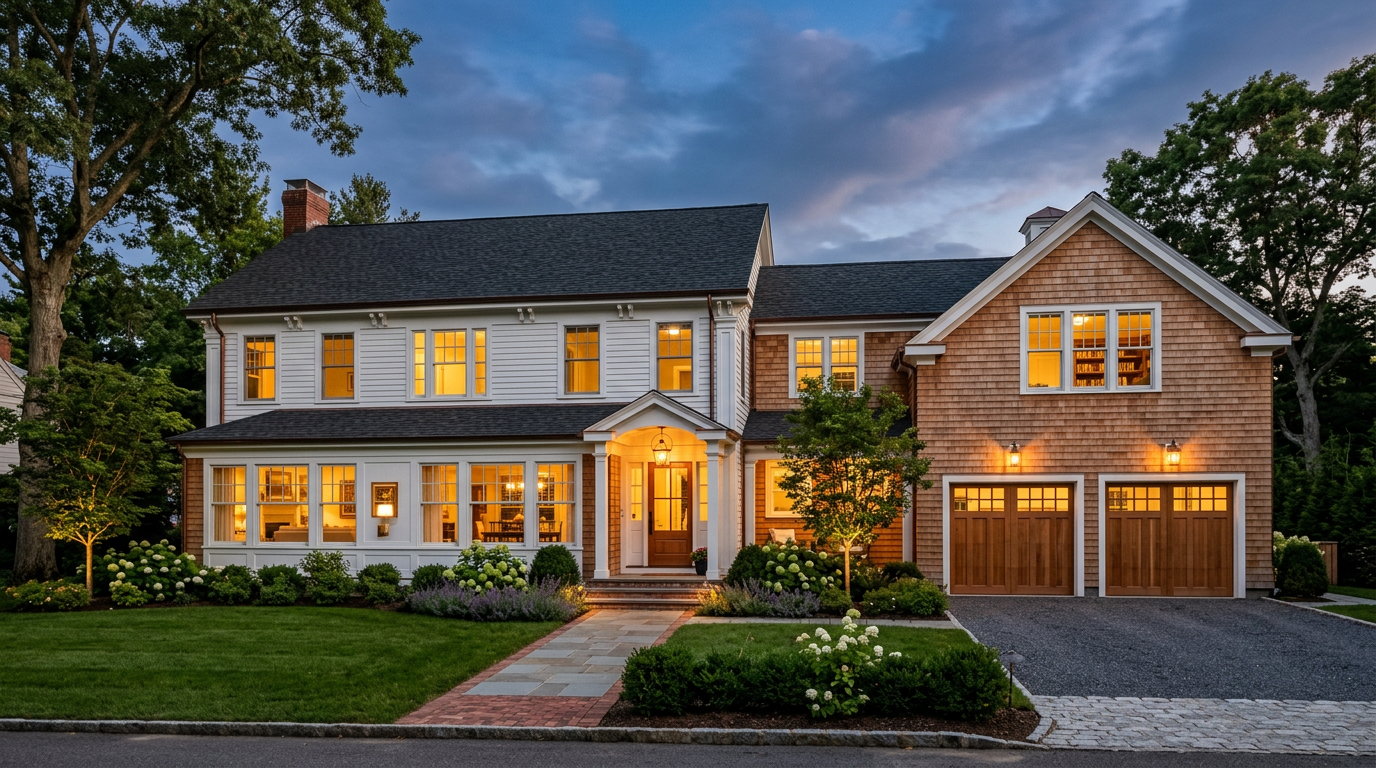
If you love your neighborhood, your neighbors, your schools, and your yard, you do not have to leave them behind just to get the space your family needs to grow. An addition allows you to tailor your home to your exact specifications—whether that is a dedicated home office, a primary suite oasis, or a spacious family room—without throwing away your hard-earned equity on moving fees and high interest rates.
To help you run the numbers and see what is possible on your current property, the team at Modern Builders is here to help. We can look at your home's layout, discuss your space needs, and provide a clear picture of what a custom addition would look like. Please reach out to us today to schedule a free in-home estimate and explore your options.