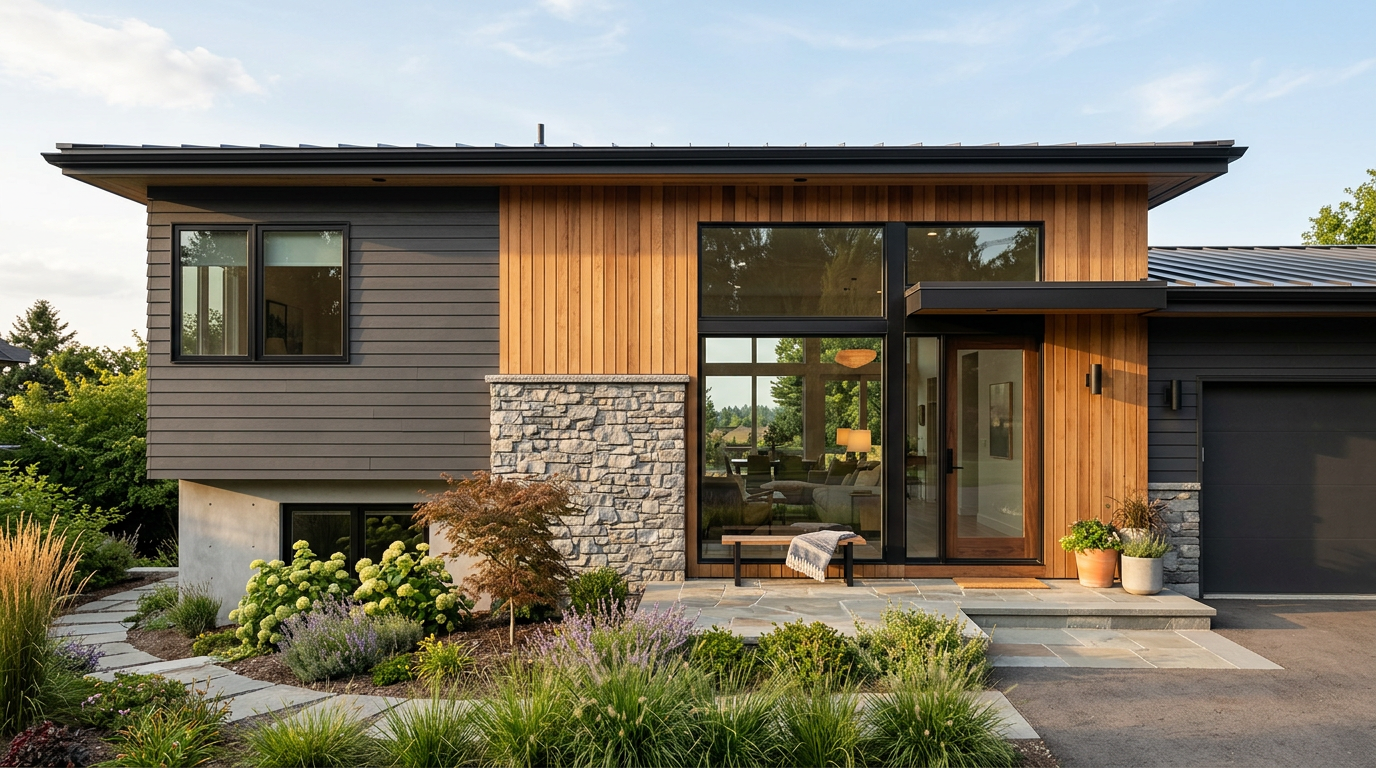
Choosing new siding is one of the most significant investments you will make in your home. The material you select shapes your home’s curb appeal, determines how much weekend maintenance you will have to tackle, and serves as the primary shield protecting your framing from wind, rain, and pests.
To help you make an informed decision, we have broken down the most common residential siding materials used today, evaluating them by real-world performance, maintenance needs, and regional climate considerations.
Direct Comparison at a Glance
Before we dive into the specific characteristics of each material, this table offers a quick snapshot of how they compare across key categories, including typical cost ranges for the materials and professional installation.
| Siding Material | Installed Cost Range | Expected Lifespan | Maintenance Level | Best Climate Fit |
|---|---|---|---|---|
| Fiber Cement | Moderate to High | 30 to 50 Years | Low to Moderate | All Climates |
| Natural Wood | High | 20 to 50+ Years (with care) | High | Dry or Mild Climates |
| Engineered Wood | Moderate | 20 to 50 Years | Moderate | All Climates |
| Standard Vinyl | Low | 20 to 40 Years | Very Low | Temperate Climates |
| Insulated Vinyl | Moderate | 20 to 40 Years | Very Low | Cold or Temperate |
| Traditional Stucco | High | 50+ Years | Moderate (inspect for cracks) | Arid and Hot Climates |
| Brick Veneer | Very High | 100+ Years | Very Low | All Climates |
| Metal (Steel/Alum.) | Moderate to High | 40+ Years | Low | Wet, Cold, or Fire-Prone |
Detailed Siding Material Breakdowns
Fiber Cement
Fiber cement—pioneered and dominated by James Hardie—is a blend of Portland cement, sand, cellulose fibers, and water. It has become the industry standard for homeowners who want the look of real wood without the vulnerability to the elements.
- The Pros: Fiber cement is non-combustible, making it an exceptional choice for fire-prone regions. It resists rot, warping, and wood-boring insects. Because it is highly stable, it holds paint much longer than natural wood—typically 15 years before needing a repaint.
- The Cons: It is incredibly heavy. Installation requires specialized cutting tools, safety gear, and experienced crews. This translates to higher labor costs compared to vinyl or engineered wood.
- Climate Fit: Excellent for all climates, from freezing northern winters to humid southern summers.
Natural Wood & Engineered Wood
Natural wood (such as cedar and redwood) offers an authentic, warm look that synthetic materials try to mimic. Engineered wood (like LP SmartSide) combines real wood fibers with industrial binders and zinc borate treatments to improve durability.
- Natural Wood: Beautiful and highly customizable, but demands regular sealing, staining, or painting every 3 to 5 years to prevent rot, splitting, and insect damage. It also poses a wildfire hazard in dry, forested zones.
- Engineered Wood: Lighter and tougher than natural wood, it comes in long, consistent lengths without natural knots. It resistant to fungal decay and termites, and it is far easier to install than fiber cement, keeping labor costs manageable.
- Climate Fit: Natural wood performs best in dry or temperate regions. Engineered wood is suitable for all climates, provided all cut edges are sealed properly during installation.
Vinyl & Insulated Vinyl
Vinyl remains a popular choice for budget-conscious homeowners. Standard vinyl is thin and hangs loosely on the wall, while modern engineered or insulated vinyl features a solid foam backing.
- Standard Vinyl: The lowest-priced option on the market. It never needs painting and won't rot. However, thin vinyl can look dated, rattle in high winds, and crack under impact in freezing temperatures.
- Insulated Vinyl: A significant upgrade. The form-fitted foam backing adds rigidity, making the siding feel solid to the touch. It improves the home's thermal envelope (adding R-value) and deadens exterior noise.
- Climate Fit: Performs well in temperate regions. Standard vinyl can struggle in areas with extreme temperature swings, which cause it to expand and contract significantly.
Traditional Stucco
Stucco is a classic masonry finish made of portland cement, sand, lime, and water, applied over a metal lath.
- The Pros: Stucco provides a seamless, monolithic exterior that is naturally fire-resistant and offers excellent thermal mass, keeping homes cool during hot days.
- The Cons: Stucco is rigid. If a home's foundation settles, or if there is seismic activity, hairline cracks will develop. If water gets behind those cracks, the damage can be catastrophic. It requires highly specialized plasterers to apply correctly.
- Climate Fit: Ideal for arid, hot climates like the American Southwest. It is much harder to maintain in wet, rainy climates where the wall assembly struggles to dry out.
Brick Veneer
Unlike solid brick structural walls, brick veneer consists of a single outer layer of brick anchored to the home’s wood-framed studs.
- The Pros: It is virtually permanent. A well-built brick exterior can easily last over a century with minimal maintenance. It offers timeless aesthetic appeal, excellent noise reduction, and superb impact resistance.
- The Cons: It is one of the most expensive options due to the cost of materials and the slow, skilled labor of masonry.
- Climate Fit: Suitable for all climates. However, because brick is porous, it absorbs moisture, making proper drainage behind the brick absolute law.
Metal Siding
Commonly installed as standing seam panels, corrugated panels, or horizontal steel siding that mimics wood planks.
- The Pros: Extremely durable, modern aesthetic, and entirely fireproof. It does not rot, host mold, or attract insects. High-quality steel siding can last 40 to 50 years without fading or rusting.
- The Cons: Thin aluminum can dent easily from hail or stray balls. Metal can also be noisy during heavy rainstorms if not backed by solid sheathing and insulation.
- Climate Fit: Highly recommended for areas prone to severe storms, heavy snow, or high wildfire risks.
The Hidden Hero: The Weather-Resistive Barrier (WRB)
Even the most expensive, professionally installed siding will let some water pass through over time—whether through wind-driven rain, joints, or standard wear. Siding is your home's aesthetic armor, but the real waterproofing happens behind the siding.
+-------------------------------------------------------+
|                      SIDING                           |
|  (Fiber Cement, Wood, Vinyl, Brick, Stucco, Metal)   |
+-------------------------------------------------------+
                           |
                           v
+-------------------------------------------------------+
|                 DRYING SPACE / CAVITY                 |
|       (Allows water to drain and air to circulate)    |
+-------------------------------------------------------+
                           |
                           v
+-------------------------------------------------------+
|          WEATHER-RESISTIVE BARRIER (WRB)              |
|        (Housewrap - keeps liquid water out,           |
|            allows water vapor to escape)              |
+-------------------------------------------------------+
                           |
                           v
+-------------------------------------------------------+
|                 WOOD SHEATHING (OSB/PLYWOOD)          |
+-------------------------------------------------------+
Before a single plank of siding is nailed up, your contractor must install a high-quality Weather-Resistive Barrier (WRB), commonly known by brand names like Tyvek. The WRB has a dual role: it prevents liquid water from reaching your wood framing, yet it remains "breathable" so that moisture vapor trapped inside your walls can escape to the outside.
Along with the WRB, flashing details must be flawlessly executed:
- Z-Flashing: Installed over doors, windows, and horizontal trim transitions to redirect water outward.
- Kickout Flashing: Placed where a roofline meets a vertical wall, directing heavy roof runoff away from the siding and into the gutters.
- Weep Holes (for Brick): Tiny openings at the bottom of a brick wall that allow water that has penetrated the brick to drain safely out of the assembly.
If your contractor skimps on the WRB or the flashing, your framing will eventually rot from the inside out, regardless of how durable your siding material is.
How to Choose the Right Material for Your Home
When deciding on a material, ask yourself these three clarifying questions:
- What is my long-term budget? If you plan to stay in your home for decades, investing in fiber cement, metal, or brick veneer pays off in durability and low maintenance. If you plan to sell in a few years, a high-quality insulated vinyl or engineered wood may offer the best return on investment.
- How much maintenance am I actually willing to perform? If you do not want to worry about scraping, priming, and painting every few years, cross natural wood off your list and look closely at fiber cement or metal.
- What is our neighborhood context? While vinyl might be perfect for a starter home or a rental property, a historic or premium neighborhood may require the architectural weight of fiber cement, natural wood, or brick to preserve your home’s market value.
Replacing your siding is a major project, but it is also an opportunity to completely transform your home's appearance, lower your utility bills, and gain peace of mind for the next thirty years.
If you are ready to explore your options and see what these materials look like in person, we are here to help. Contact the team at Modern Builders of America today to schedule a free in-home estimate, and we will help you design a beautiful, weather-tight exterior that fits your budget and your style.