When you walk into a home, your eyes naturally follow the lines of the staircase. It is one of the few architectural elements that spans multiple floors, acting as a functional sculpture in the center of your living space. If your current entryway feels dated, heavy, or dark, upgrading the stair and balcony railing system is one of the highest visual-impact remodeling projects you can undertake for the investment, instantly transforming the first impression of your entire home.
Whether you are looking to update a dated interior foyer or replace a weathering deck railing outside, navigating the choices of materials, styles, and building codes can feel overwhelming. Let’s break down the essential components, styles, and safety standards you need to know to plan your project with confidence.
The Anatomy of a Staircase: Beyond the Railing
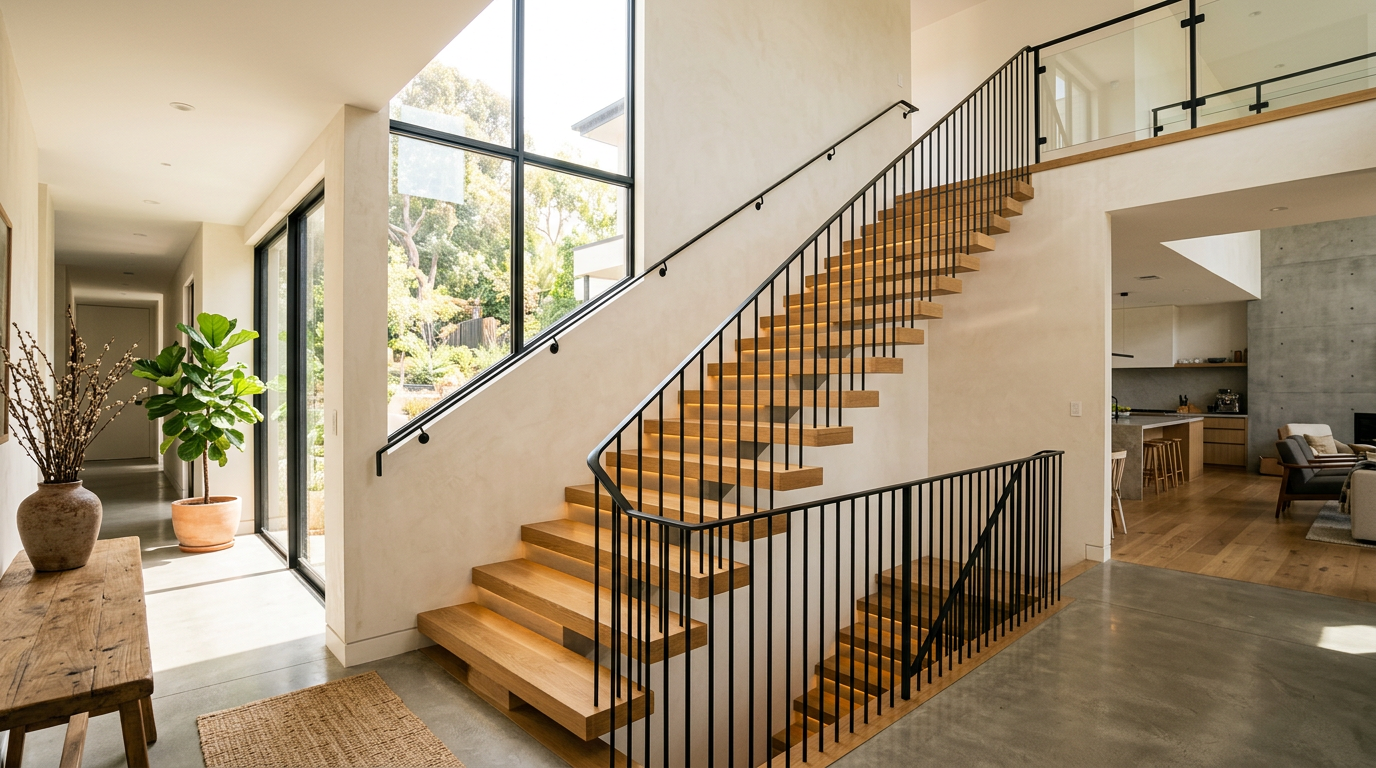
To understand how a new railing system integrates with your home, it helps to understand the structure supporting it. A staircase is constructed from several key components that work together:
- Treads: The horizontal surfaces you step on.
- Risers: The vertical faces between each tread.
- Stringers: The structural side boards that support the treads and risers.
- Newel Posts: The heavy anchor posts at the bottom, top, and corners of a railing system that provide structural stability.
When updating your staircase, you will likely choose between closed risers and open risers.
+-----------------------------------------------------------------+
|                       RISER COMPARISON                          |
+----------------------+------------------------------------------+
| Closed Risers        | • Traditional, formal, and sturdy        |
|                      | • Great for storage underneath           |
|                      | • Classic painted or stained look        |
+----------------------+------------------------------------------+
| Open Risers          | • Modern, airy, and light-filled         |
|                      | • Opens up sightlines in smaller homes   |
|                      | • Often paired with modern steel/wood    |
+----------------------+------------------------------------------+
Updating your balustrade—the collective term for the posts, handrail, and spindles—often goes hand-in-hand with updating your treads and risers. If you have worn carpet on your stairs, swapping it for stained hardwood treads with painted risers instantly modernizes the space.
Navigating the Building Code: Safety First
Before diving into aesthetic choices, we must address the rules that govern railing construction. Building codes are not suggestions; they are strictly enforced safety standards designed to prevent falls and protect small children.
While municipal codes can vary, there are several nearly universal standards that your contractor must follow.
Handrails vs. Guardrails
A handrail is the rail you grip as you walk up and down the stairs. A guardrail (or guard) is the barrier that prevents someone from falling off the edge of a raised platform, balcony, or open-sided stair.
- When a Handrail is Required: In most jurisdictions, any staircase with four or more risers (steps) must have a continuous handrail.
- Handrail Height: The handrail must be mounted between 34 and 38 inches measured vertically from the leading edge of the stair tread (the stair nosing).
- Graspability: Codes require a "graspable" profile. A standard 2x4 on its side does not pass code. The handrail must have a shape (Type I or Type II) that allows your fingers to wrap around it securely to break a fall.
Guardrail Heights: Inside vs. Outside
If there is a drop-off of 30 inches or more to the floor or ground below, a guardrail is required.
- Interior Guards: Typically require a minimum height of 36 inches from the finished floor.
- Exterior Guards: On decks, balconies, and porches with a 30-inch or greater drop, the minimum guardrail height is typically 36 inches in residential codes, though many coastal or urban jurisdictions require a safer 42-inch height.
The 4-Inch Sphere Rule
To keep toddlers and pets safe, the spacing between balusters (the vertical spindles), cables, or panels is strictly regulated. The gap between any two vertical elements must be small enough that a 4-inch sphere cannot pass through at any point. On the stair treads themselves, the triangular gap formed by the tread, riser, and bottom rail must not allow a 6-inch sphere to pass.
Railing Styles: Finding Your Home’s Aesthetic
The material and style of your balusters and posts will define the overall design theme of your space. Here is how the most popular options compare in terms of look, maintenance, and budget.
Traditional Wood Balusters and Newel Posts
Wood remains the most common and classic option. It brings a natural warmth to a home and offers endless customization. You can choose turned, decorative wood balusters for a traditional look, or simple, square-edged oak balusters for a Craftsman or transitional feel. Wood can be stained to showcase its grain or painted a crisp semi-gloss white to pop against darker stained handrails.
Wrought Iron Balusters
If your home still features the fat, orange-toned oak balusters popular in the 1990s, swapping them for wrought iron balusters is the fastest way to bring your home into the 2020s. Iron balusters are incredibly strong and thin, opening up sightlines. They come in plain square bars, twisted metal, or decorative baskets and knuckles. They are typically powder-coated black, oil-rubbed bronze, or charcoal.
Thin Square Modern Metal
For a clean, minimalist, or industrial aesthetic, thin square metal rails (typically steel or aluminum) offer a sleek look. By keeping the lines sharp and the profiles as narrow as possible, this style recedes into the background, focusing attention on the architecture of the staircase itself.
Cable Railing
Perfect for modern interiors and decks with gorgeous backyard views, cable railing utilizes thin, marine-grade stainless steel cables running horizontally between wood or metal posts.
- Pros: Outstanding visibility, sleek modern look, incredibly durable.
- Cons: Generally more expensive than wood or iron.
- Maintenance Note: The steel cables will stretch slightly over time and require tensioning with a hand wrench about once a year to keep them stiff and compliant with the 4-inch spacing rule.
Glass Panels
Glass railings provide the ultimate, unobstructed view. They utilize thick sheets of tempered or laminated safety glass held in place by metal clips, posts, or hidden shoe molds at the base.
- Pros: Best possible visibility, excellent windbreak for outdoor decks, high-end architectural appeal.
- Cons: The most expensive option in almost every market. They show fingerprints, dog noses, and rain spots instantly, making them the highest-maintenance choice.
Horizontal Metal Bars
Running solid metal rods horizontally is a massive trend in modern farmhouse and contemporary home design. It looks exceptionally clean and pairs beautifully with thick wood accent posts.
- A Word of Caution: Because horizontal rails look like a ladder, some local building departments prohibit them in residential spaces to prevent children from climbing over the guardrail. Always check with your local builder to verify if "climb-resistant" codes are enforced in your area before selecting horizontal balusters.
+---------------------------------------------------------------------------------+
|                        RAILING STYLE COMPARISON CHART                           |
+-------------------+--------------------+-------------------+--------------------+
| Style             | Aesthetic          | Relative Cost     | Maintenance        |
+-------------------+--------------------+-------------------+--------------------+
| Traditional Wood  | Classic, Warm      | Low to Mid        | Low (if painted/   |
|                   |                    |                   | stained well)      |
+-------------------+--------------------+-------------------+--------------------+
| Wrought Iron      | Elegant, Timeless  | Mid               | Extremely Low      |
+-------------------+--------------------+-------------------+--------------------+
| Cable             | Modern, Industrial | Mid-High to High  | Low (requires      |
|                   |                    |                   | annual tensioning) |
+-------------------+--------------------+-------------------+--------------------+
| Glass Panels      | Contemporary, High-| High              | High (requires     |
|                   | End                |                   | regular cleaning)  |
+-------------------+--------------------+-------------------+--------------------+
Finishing Touches: Top Rails and Caps
The top rail is the part of the system your hands touch every single day. This is the place to invest in a premium material that feels solid and comfortable.
- Stained Hardwood: Oak, maple, walnut, or cherry top rails offer warmth and a rich texture. They pair beautifully with painted white wood balusters or black metal spindles.
- Painted Wood: Often used in cottage or coastal designs, painted top rails should be sealed with a durable, high-gloss or semi-gloss urethane paint to withstand hand oils.
- Solid Metal: Incredibly sleek and heavily favored in industrial and modern minimalist designs. Aluminum or steel top rails can be powder-coated in almost any color.
- Stone or Quartz Caps: For half-walls (knee walls) that partition a staircase without a full spindle system, capping the drywall with a piece of polished marble, granite, or engineered quartz adds a stunning, custom-home finish that is highly resistant to dust and hand traffic.
Making the Right Choice for Your Home
When deciding on a new railing system, consider how the design integrates with your home's architectural style and your family's daily lifestyle. A glass-paneled system may be visually breathtaking, but if you have young children or pets, the daily maintenance could fast become a chore. Conversely, traditional turned wood can look out of place if you are moving your home toward a more transitional or modern aesthetic.
Because stairways are structural and highly scrutinized by home appraisers and inspectors, working with a professional team ensures your new investment is both jaw-droppingly beautiful and engineered to keep your family safe for decades to come.
If you are ready to elevate your home’s interior or step up your outdoor living space with a custom stair or balcony railing upgrade, we are here to help. Reach out to the design and remodeling experts at Modern Builders of America to schedule a free in-home estimate and let’s start discussing your vision.