Choosing the right tile for a home remodel is about more than just finding a color or pattern you love. Because tile is a permanent, hard-installed material, the physical properties of the tile you choose will dictate how well it performs in your kitchen, bathroom, or entryway over the next twenty years. Understanding how different materials, ratings, and installation methods interact is the best way to ensure your investment looks beautiful and functions flawlessly.
The Core Tile Materials: Pros and Cons
Every tile material has a unique recipe of minerals, clay, heat, and pressure. These ingredients determine where the tile can be safely installed, how it wears underfoot, and how much maintenance it will require from you over time.
Porcelain Tile
Porcelain is a specific subtype of ceramic made from highly refined, dense clay fired at extreme temperatures.
- Pros: It is incredibly dense, highly durable, and has an exceptionally low water absorption rate (typically less than 0.5%). This makes it virtually impervious to water, stains, and frost. It is the gold standard for high-traffic floors, walk-in showers, and outdoor spaces.
- Cons: Because it is so dense, porcelain is difficult to cut and drill. It requires specialized diamond blades and a patient installer. It is also generally more expensive than standard ceramic.
Ceramic Tile
Non-porcelain ceramic tiles are made from coarser clay fired at lower temperatures than porcelain.
- Pros: Ceramic is budget-friendly, lightweight, and easy to cut and install. It is an excellent choice for vertical surfaces like kitchen backsplashes or bathroom walls where traffic and moisture impact are minimal.
- Cons: Ceramic is softer and more porous than porcelain. It can chip more easily under heavy impact, and the glazed surface can wear away if installed on high-traffic floors.
Natural Stone (Marble, Slate, Travertine, and Limestone)
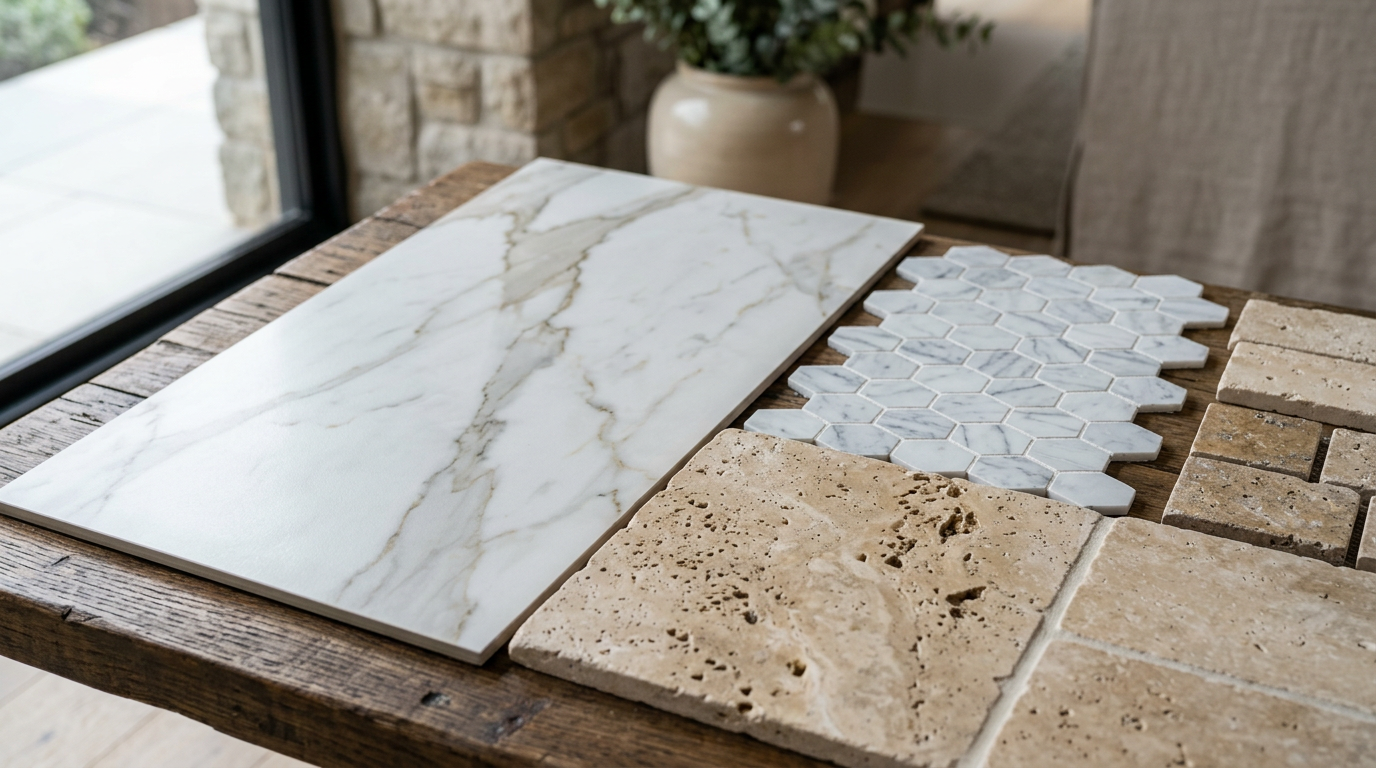
Natural stone tiles are quarried directly from the earth and sliced into slabs and tiles, bringing unmatched organic variation to a home.
- Pros: No two pieces of stone are identical. Natural stone offers a high-end, timeless aesthetic that synthetic materials can only mimic.
- Cons: All natural stone is porous. It must be sealed upon installation and resealed regularly to prevent staining. Acidic substances like lemon juice, vinegar, and certain bathroom cleaners will "etch" (chemically dull) polished stones like marble and limestone. Slate can split or flake over time, and travertine features natural voids that must be filled with grout or epoxy.
Glass Tile
Glass tiles are popular for decorative borders, accent walls, and pool waterlines.
- Pros: Glass reflects light beautifully, making small bathrooms feel larger and brighter. It impervious to water and highly resistant to staining.
- Cons: Glass is expensive to purchase and challenging to install. The transparency of glass means that the adhesive behind the tile is visible if not applied perfectly flat. It also scratches relatively easily, making it unsuitable for most flooring applications.
Cement (Encaustic) Tile
Handmade cement tiles use mineral pigments poured into molds and cured under hydraulic pressure rather than fired in a kiln.
- Pros: Cement tiles offer bold, matte, Old-World patterns with rich saturation that modern glazed tiles cannot replicate.
- Cons: They are thick, heavy, and highly porous. They must be sealed before grouting to prevent the grout from staining the face of the tile, and they must be sealed again after installation. Over time, cement tiles will patina, fade slightly, and show wear, which is part of their characteristic charm but may frustrate those looking for a pristine, unchanging finish.
| Tile Type | Water Resistance | Durability | Best For | Maintenance |
|---|---|---|---|---|
| Porcelain | Excellent | Exceptional | High-traffic floors, wet zones | Very Low |
| Ceramic | Moderate | Moderate | Walls, low-traffic floors | Low |
| Natural Stone | Low (needs sealer) | Varies | Accent floors, dry walls | High |
| Glass | Impervious | Low (scratches) | Backsplashes, shower walls | Low |
| Cement | Low (needs sealer) | Moderate | Accent floors, feature walls | High |
Technical Ratings You Need to Know
To prevent a tile from cracking underfoot or becoming a slipping hazard in the shower, you must understand three critical industry standards before buying.
PEI (Porcelain Enamel Institute) Wear Rating
The PEI rating measures a glazed tile's resistance to abrasion and foot traffic. It ranges from 1 to 5:
- PEI 1: Wall use only. Not suitable for foot traffic.
- PEI 2: Light residential traffic (bathrooms where shoes are rarely worn).
- PEI 3: Normal residential traffic (kitchens, entryways, and hallways).
- PEI 4: High residential and light commercial traffic.
- PEI 5: Heavy commercial traffic.
- Rule of thumb: For residential floor tile, always aim for PEI 3 to 5.
Water Absorption Rate
A tile’s water absorption rate dictates whether it can handle direct water contact in a shower or survive freezing temperatures outside. Look for these classifications in the manufacturer’s specifications:
- Impervious (Absorption < 0.5%): Highly recommended for shower floors, walls, and outdoor patios. Porcelain falls into this category.
- Vitreous (Absorption 0.5% to 3%): Suitable for indoor floor and wall use in wet areas.
- Semi-Vitreous (Absorption 3% to 7%): Safe for dry indoor floors and walls, but should be avoided in direct wet zones like shower interiors.
DCOF (Dynamic Coefficient of Friction)
DCOF measures slip resistance under wet conditions. For residential wet areas—specifically shower floors, bathroom floors, and outdoor pool surrounds—the standard minimum DCOF rating is 0.42. Anything lower than 0.42 is too slippery when wet and should be limited to dry walls or decorative accents.
Edge Profiles: Rectified vs. Non-Rectified
When shopping for tile, you will see options labeled as "rectified" or "non-rectified." This refers to how the tile's edges are finished at the factory.
- Rectified Tile: After firing, these tiles are mechanically ground and cut to precise, highly square dimensions. Because the edges are perfectly straight and consistent, your installer can lay them with incredibly narrow grout lines (as small as 1/16 of an inch). This creates a sleek, modern, nearly seamless appearance.
- Non-Rectified (Traditional) Tile: These tiles retain the slightly uneven, natural edges that form during the firing process. Because there are minor dimensional variances from tile to tile, the installer must use wider grout lines (typically 1/8 to 1/4 of an inch) to mask those variations. This gives a more classic, framed look to each individual tile.
Large-Format Tiles (24x48 and Larger)
The trend toward clean lines has made large-format tiles—any tile where one side is 15 inches or longer, such as 24x48-inch slabs—extremely popular. However, installing these massive tiles requires specific preparation and techniques.
First, your subfloor must be exceptionally flat. Standard tile can tolerate minor dips and crowns in a floor, but large-format tiles have zero flexibility. Any unevenness in the substrate will cause "lippage," where one tile edge sits higher than the adjacent one, creating a tripping hazard. Installers often have to pour self-leveling underlayment or apply extra patching compounds before laying a single tile.
Second, installing large-format tile requires a larger notch trowel (often 1/2-inch square-notched or larger) to ensure proper mortar coverage. The installer must also "back-butter" the tile—applying a thin layer of mortar directly to the back of the tile in addition to the floor—to guarantee there are no hollow voids underneath that could lead to cracking under pressure.
Grout Choices: The Secret to Longevity and Style
Grout holds your installation together and prevents moisture from getting behind the tiles. Choosing the wrong type or color of grout can quickly ruin an otherwise beautiful tile installation.
Sanded vs. Unsanded Grout
- Sanded Grout: This grout contains fine sand suspend in cement. The sand acts as a binding agent to prevent the grout from shrinking and cracking as it cures. It is the standard choice for grout joints wider than 1/8 of an inch. However, the abrasive sand can scratch delicate surfaces like glass, polished marble, or metallic glazes.
- Unsanded Grout: This is a smooth cement paste designed for narrow joints (1/8 of an inch or less) and scratch-sensitive materials.
Cementitious vs. Epoxy Grout
- Cementitious Grout: This is the traditional, budget-friendly option. It is easy for installers to work with and shape. However, cement is naturally porous, meaning it requires regular sealing and is highly susceptible to staining and mildew if not maintained.
- Epoxy Grout: Made from resins and silica filler, epoxy grout is incredibly tough. It is completely impervious to water, chemical damage, and staining. It never needs to be sealed and resists cracking over time. Because it cures quickly and is highly sticky, it is difficult to install and requires an experienced hand, which increases labor costs.
The Impact of Grout Color
Grout color changes the entire visual dynamic of your room:
- Matching Color: Selecting a grout color that closely matches your tile creates a unified, expansive look. It minimizes lines, making a small bathroom feel larger and focusing the eye on the overall texture of the tile.
- Contrasting Color: Choosing a dark grout for a light tile (such as black grout with white subway tile) highlights the individual shapes and creates a vintage, graphic, or industrial feel. The downside is that any slight installation misalignment will be highly visible.
- Complementary Neutrals: Medium gray, taupe, or soft beige are the most practical choices. They soften the grid lines without disappearing entirely, and they are highly forgiving when it comes to showing dirt and wear.
If you are planning an upcoming bathroom remodel, kitchen upgrade, or whole-house flooring project, navigating these choices is much easier with an expert guide. We invite you to schedule a convenient, free in-home consultation with our design-build team by visiting our contact page to discuss how we can bring your vision to life.