Most homeowners look up at their roof and see a neat layout of shingles as their primary defense against a downpour. In reality, shingles are just the outer skin of a highly engineered, multi-layered moisture management system. Understanding how these layers work together is the best way to protect your home’s structural integrity and make informed decisions when it comes time for a repair or replacement.
Here is a look behind the shingles at the hidden components that actually keep your home dry, how they function, and why the smallest details matter the most.
The Roof Deck: The Structural Foundation
Everything starts with the roof deck, also known as the sheathing. This is the structural wooden surface, typically made of 1/2-inch or 5/8-inch thick Oriented Strand Board (OSB) or plywood, nailed directly to your roof trusses or rafters.
The deck's primary job is to provide a flat, stable surface for the waterproofing layers and shingles. However, wood is inherently vulnerable to moisture. If water gets past the upper layers, untreated plywood or OSB will swell, rot, rot out fasteners, and eventually sag. A dry, solid deck is crucial because if the foundation fails, every layer installed on top of it will fail as well.
The Real Waterproofing Layers
Behind the shingles lies a network of barriers designed to shed water, seal around fasteners, and block wind-driven rain. If you stripped your shingles away, these are the components that would keep the inside of your home dry.
1. Ice and Water Shield (Self-Adhering Membrane)
Standard roof underlayment is designed to shed water running down a slope, but it cannot withstand standing water or ice dams. That is where a self-adhering ice-and-water shield comes in. This is a thick, rubberized asphalt membrane with a sticky backing that adheres directly to the wooden roof deck.
When nails are driven through this membrane to secure the shingles, the rubberized asphalt self-seals around the shank of the nail, creating a watertight gasket. Professional roofers install this high-protection layer in the most vulnerable areas of a roof:
- Along the eaves: To protect against water backing up under shingles due to ice dams.
- In the valleys: Where two roof slopes meet and channel massive volumes of water.
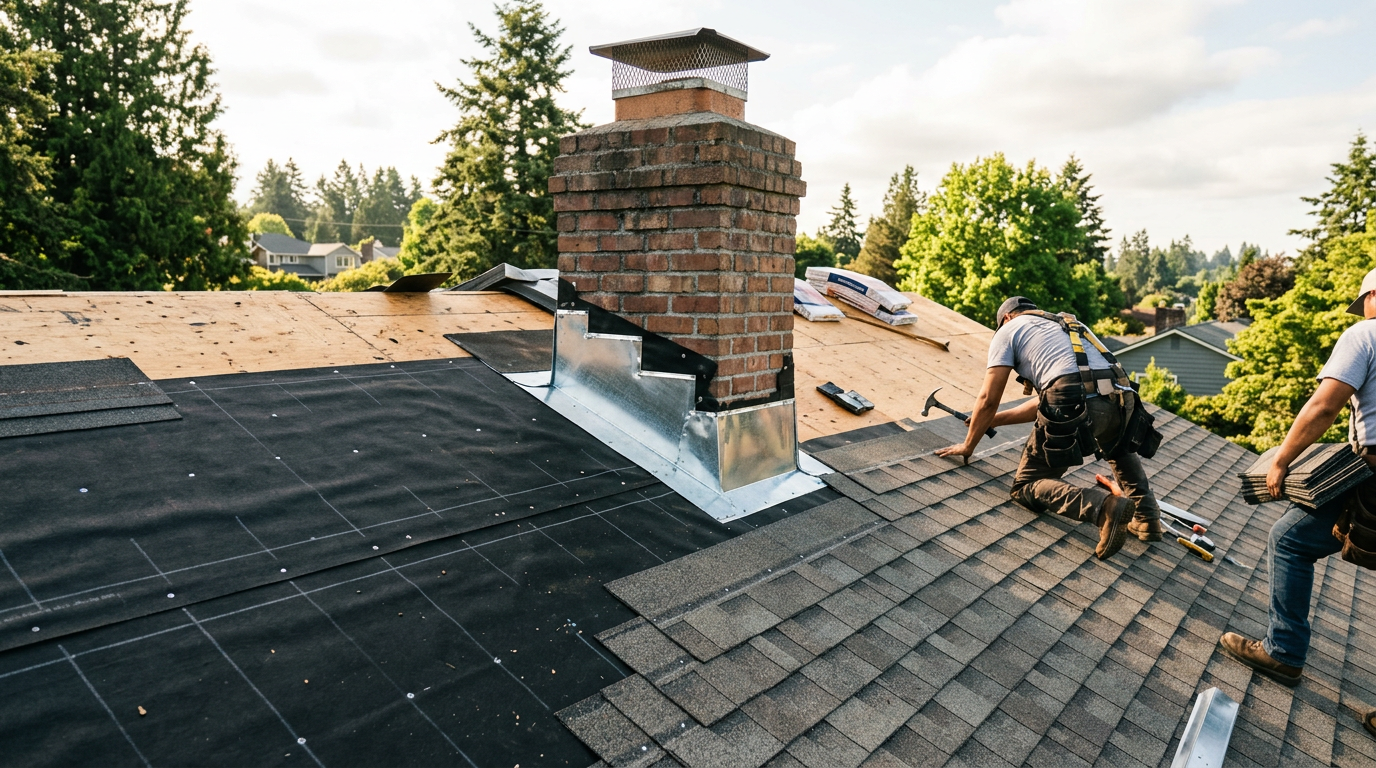
- Around penetrations: Such as chimneys, skylights, and vent pipes, where water is most likely to pool or divert.
2. Synthetic Underlayment: The Whole-Deck Shield
Across the rest of the roof deck, installers roll out a secondary barrier called underlayment. For decades, the industry standard was asphalt-saturated felt paper (often called 15-pound or 30-pound felt). Today, high-quality residential roofing relies almost exclusively on synthetic underlayment.
Synthetic underlayment is made from woven or spun polymers (like polypropylene or polyethylene). While it carries a slightly higher material cost, the performance advantages over old-school felt are substantial:
| Feature | Traditional Asphalt Felt | Modern Synthetic Underlayment |
|---|---|---|
| Tear Strength | Low; tears easily in high winds or when walked on. | High; virtually impossible to tear by hand. |
| Weight | Heavy and bulky to transport to the roof. | Lightweight; easier and safer to install. |
| Moisture Resistance | Absorbs water, wrinkles, and bubbles when wet. | Impervious to water; stays perfectly flat. |
| UV Exposure | Degrades quickly if left exposed to the sun. | Can withstand UV exposure for months without degrading. |
3. Drip Edge: Protecting the Edges
Water likes to cling to surfaces and run backward due to surface tension. To prevent water from curling under the edge of the shingles and rotting the wooden fascia boards or the edge of the roof deck, installers nail a metal drip edge along the eaves (bottom edges) and rakes (slanted side edges) of the roof. This L-shaped metal flashing forces water to drip cleanly off the edge of the roof and directly into your gutters.
The Critical Intersection: Flashing and Penetrations
Ask any experienced roofer where leaks happen, and they will tell you the same thing: it is rarely in the middle of a flat section of shingles. Nearly all roof leaks occur at transitions, valleys, and where the roof meets a vertical wall or pipe. These areas require specialized metal or rubber flashing to redirect water.
Step Flashing vs. Counter Flashing
Where your roof slope meets a vertical wall (like a dormer or a second story), water wants to seep into the seam. To prevent this, we use step flashing. These are individual, L-shaped pieces of metal woven into the shingles as they are laid up the roof. Each piece channels water back out onto the shingle below it.
For brick or stone chimneys, step flashing alone is not enough because mortar joints can crack and let water behind the metal. Here, we use counter flashing. The step flashing goes under the shingles and up the side of the chimney, and then a second layer of metal (the counter flashing) is saw-kerfed directly into the mortar joints of the brick and draped over the step flashing. This dual-layer system ensures that water running down the brick face cannot slip behind the roof deck protection.
Pipe Boots and Roof Jacks
Your roof is punctured by several plumbing stacks (pipes that vent sewer gases) and exhaust vents. To seal these round pipes, we use pipe boots—typically a metal or plastic base plate fitted with a flexible rubber collar that stretches tightly around the pipe. For larger square or rectangular exhaust vents, roof jacks (metal or heavy-duty plastic housings with wide flanges) are woven into the shingles to shed water around the opening.
Because the rubber collars on pipe boots are exposed to intense UV rays and temperature swings, they eventually degrade, crack, and rot. Replacing worn pipe boots is one of the most common mid-life maintenance tasks for any roof.
+-------------------------------------------------------------+
|                      SHINGLE LAYER                          |
|             (UV Shield / Sheds Bulk Water)                  |
+-------------------------------------------------------------+
                              |
+-------------------------------------------------------------+
|                  SYNTHETIC UNDERLAYMENT                    |
|             (Secondary Water-Resistant Shield)              |
+-------------------------------------------------------------+
                              |
+-------------------------------------------------------------+
|                ICE & WATER SHIELD (Eaves/Valleys)          |
|             (Self-Sealing Waterproof Membrane)              |
+-------------------------------------------------------------+
                              |
+-------------------------------------------------------------+
|                        WOOD DECK                            |
|                  (OSB or Plywood Substrate)                 |
+-------------------------------------------------------------+
What Do Shingles Actually Do?
If the underlayment, ice and water shield, and metal flashing do the heavy lifting of waterproofing, what is the purpose of the shingles?
Think of shingles as a protective coat of armor. They are a weather and UV shield, not a waterproof membrane. Shingles are designed to shed bulk water—getting 95% of it down to the gutters as fast as possible—while taking the brunt of the sun's harsh ultraviolet rays, wind-blown debris, and hail impacts.
Asphalt shingles are covered in ceramic granules. These granules act as sunscreen for the underlying asphalt. Without them, the oils in the asphalt would bake out in the sun, leading to brittle, cracked, and useless shingles in a matter of years. When shingles lose their granules or blow off in a storm, they expose the vulnerable underlayers underneath to direct sunlight and physical damage, which eventually leads to system-wide failures.
The Role of Attic Ventilation in Keeping Your Roof Dry
Water does not just threaten your roof from the outside. Quite often, the most damaging moisture comes from inside your home.
Daily activities like showering, cooking, and doing laundry release gallons of moisture vapor into the air. This warm, humid air naturally rises into the attic. If your attic lacks proper ventilation, this moisture gets trapped. During cold weather, it condenses on the underside of your cold roof deck, leading to wood rot, mold growth, and rusted nails.
A properly balanced attic ventilation system relies on two continuous components:
- Soffit Intake Vents: Located under the eaves, these vents draw cool, fresh air into the lower part of the attic.
- Ridge Exhaust Vents: Located at the very peak of the roof, these vents allow hot, humid air to escape naturally.
Preventing Ice Dams
Active airflow keeps the attic temperature close to the outdoor temperature. This is essential for preventing ice dams.
If your attic gets too warm because of poor ventilation or poor insulation, it heats the roof deck and melts the snow sitting on top of the shingles. That melted water runs down to the colder, uninsulated eaves, where it instantly refreezes. As this ice builds up, it creates a dam that traps subsequent runoff. The standing water backtracks under the shingles, looking for any gap to enter your home. Adequate ventilation keeps the entire roof deck cold, preventing this melt-and-freeze cycle from starting in the first place.
Protecting Your Long-Term Investment
A reliable roof is not just a collection of quality shingles; it is a carefully assembled system of layers designed to work together under extreme conditions. Skipping steps on underlayment quality, flashing details, or attic ventilation will inevitably lead to premature roof failure, regardless of how expensive your shingles are.
If you suspect your roof is showing signs of age, or if you want to ensure your home's waterproofing system is performing exactly as it should, we can help. Reach out to Modern Builders of America today to schedule a free, comprehensive in-home estimate with one of our experienced roofing specialists by visiting our contact page and we will help you keep your home dry for decades to come.