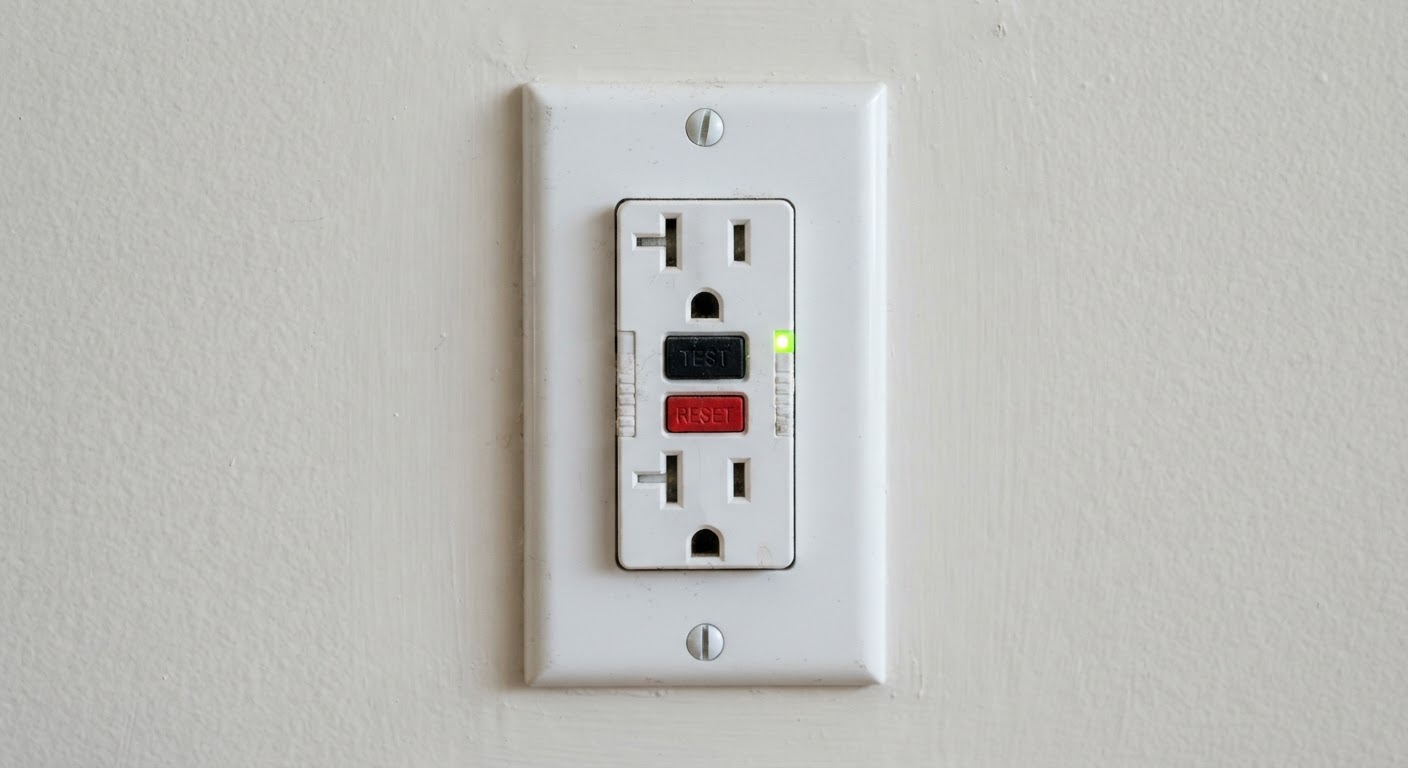
A GFCI — Ground Fault Circuit Interrupter — is an outlet or breaker that monitors the current going out on the hot wire and returning on the neutral. If it detects a mismatch of even 4–6 milliamps (electricity leaking to ground, e.g., through a person), it cuts power in about 25 milliseconds. That's fast enough to prevent electrocution.
Regular outlets have no such protection. If a hairdryer falls in a sink, a normal outlet will happily keep delivering 15 amps.
Where code requires GFCI protection
Per NEC (2023 edition, most jurisdictions follow within a cycle):
- All bathroom receptacles — every outlet in every bathroom
- All kitchen receptacles serving countertops
- Kitchen dishwasher and disposal circuits
- Laundry room receptacles
- Garage receptacles
- Outdoor receptacles
- Basement receptacles (unfinished and finished)
- Crawl space receptacles
- Within 6 feet of any sink anywhere in the house
- Pool, spa, hot tub equipment
- HVAC equipment on many jurisdictions
GFCI vs. AFCI vs. dual-function
- GFCI — protects people from shock (ground faults)
- AFCI (Arc Fault Circuit Interrupter) — protects the house from arc-fault fires (loose connections, damaged wire). Required on most bedroom, living area, and hallway circuits.
- Dual-function (DFCI) breakers/outlets do both. On new work in bedrooms with adjacent bath outlets, this is often the cleanest install.
Outlet vs. breaker — where to put the protection
- GFCI outlet at the first outlet protects everything downstream on that circuit. Cheapest option; test button is accessible.
- GFCI breaker at the panel protects the entire circuit. Cleaner if you're finishing a bathroom with tile and don't want a bulky GFCI in the tile field. More expensive.
Where cheap remodels skip GFCIs
- Kitchen backsplash outlets fed off the old (non-GFCI) circuit because "the rest of the wiring is fine"
- Bathroom vanity outlets left as regular outlets after a "cosmetic" remodel
- Outdoor outlets on the back of the house untouched during a repaint
- Garage outlets after a garage-to-ADU conversion
Any of the above is a failed inspection and, more importantly, a real safety risk.
What we always do
Every kitchen, bath, ADU, whole-home, and outdoor remodel gets GFCI protection on every required outlet, verified with a plug-in tester before we call the electrical inspection. On new circuits we default to dual-function breakers so both ground-fault and arc-fault protection live at the panel.
Have older receptacles in your kitchen or bath? Reach out — we can quote GFCI retrofits standalone or as part of a bigger remodel.