Driveway & Walkway
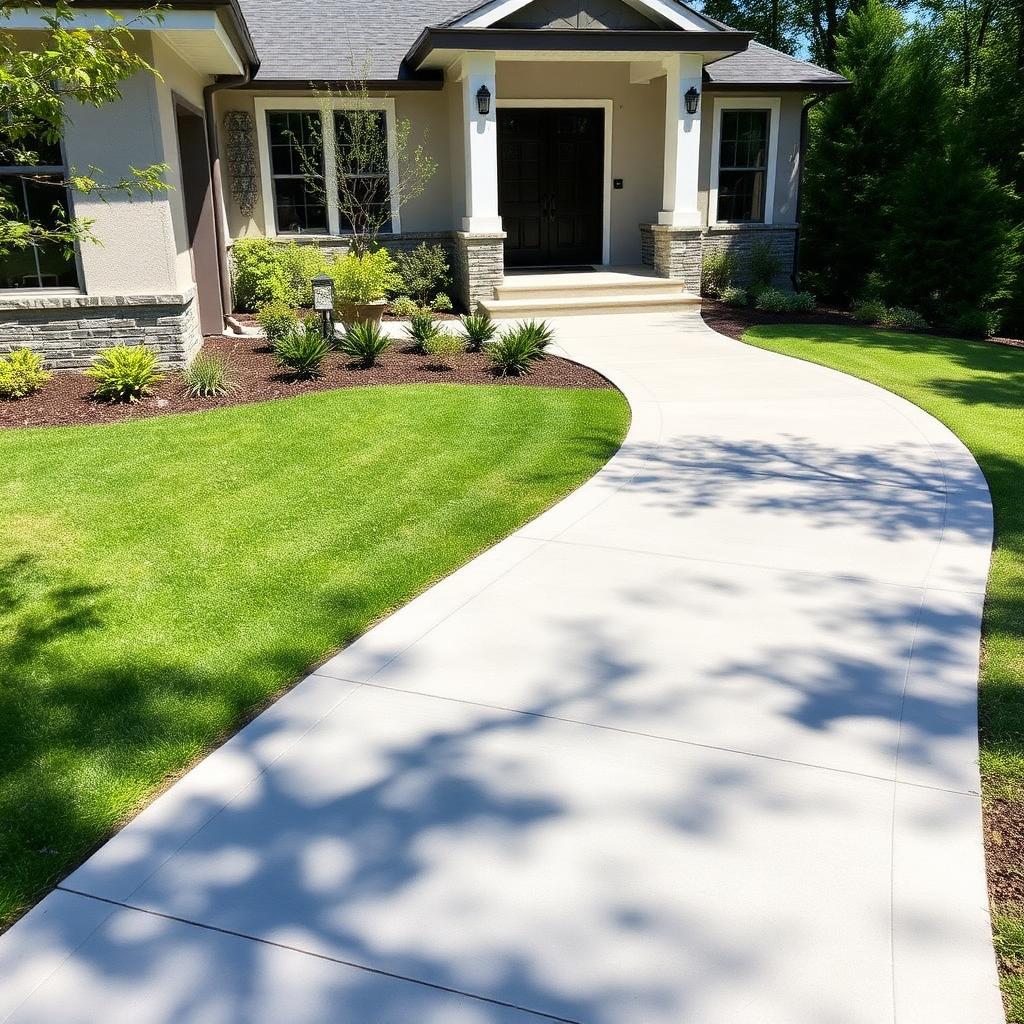
Concrete, paver, and stamped driveways and walkways engineered for Houston clay soil.
Materials
What we install vs. what corner-cutters use.
Sub-base
4" compacted crushed stone in tested lifts.
Dumped fill dirt, no compaction.
Why it matters: Uncompacted base is why driveways settle and crack.
Reinforcement
#4 rebar on chairs plus fiber-mesh concrete.
Wire mesh laid on the dirt (ends up in the bottom of the slab where it does nothing).
Why it matters: Rebar in the middle of the slab is what holds cracks tight.
Paver edging
Steel or aluminum spiked every 12".
Plastic edging with 24" spikes.
Why it matters: Plastic edging pops out; pavers spread within a season.
Process
A predictable path — with real durations.
Demo & excavation
2 daysRemove old drive, excavate to sub-grade, haul-off.
Base prep
1–2 daysImport and compact crushed stone in 2" lifts, plate-compact each lift.
Forms & steel
1 daySet forms, tie #4 rebar grid on chairs, install control-joint materials.
Pour & finish
1 dayPour, screed, float, broom-finish, saw-cut control joints within 24 hrs.
Cure & seal
7 daysWater cure for 7 days; optional siloxane sealer at day 28.
Customer projects across Houston
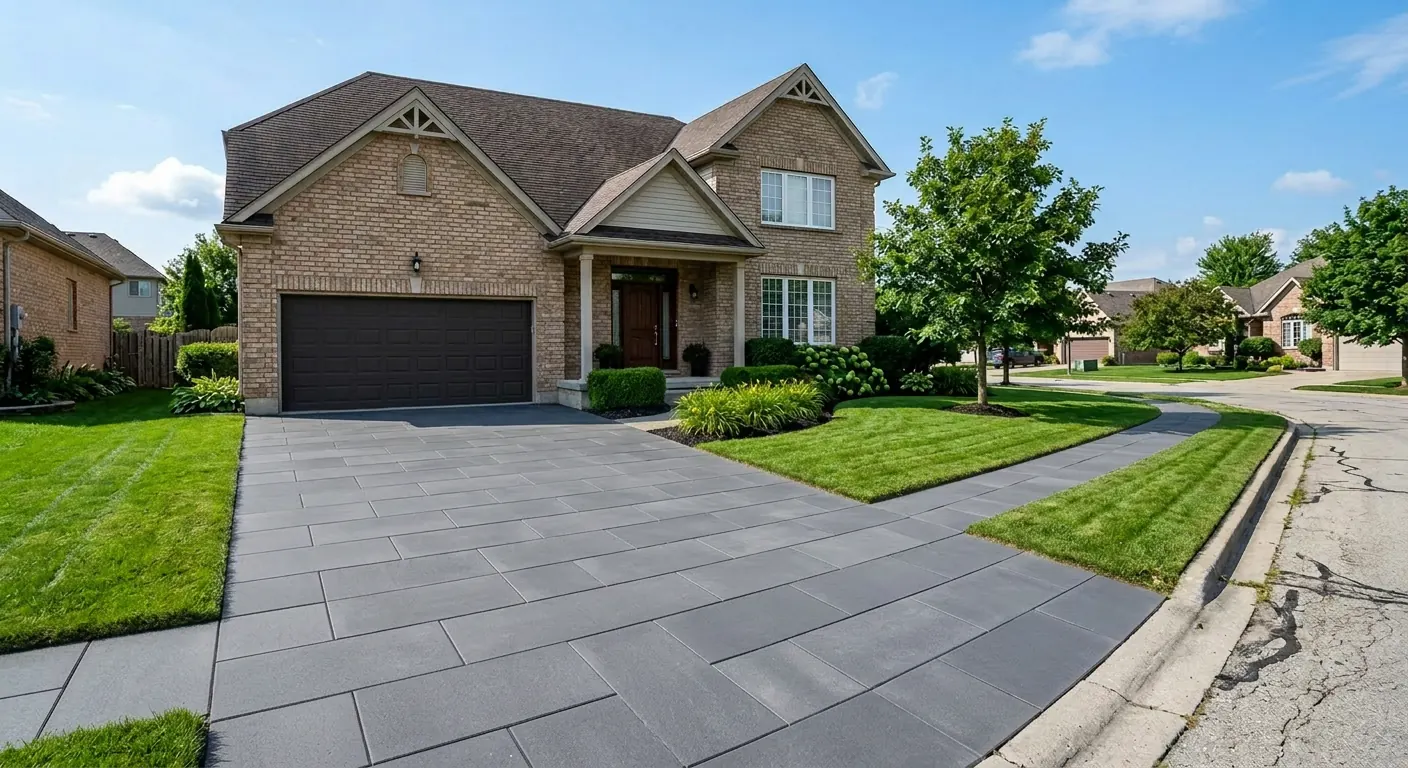
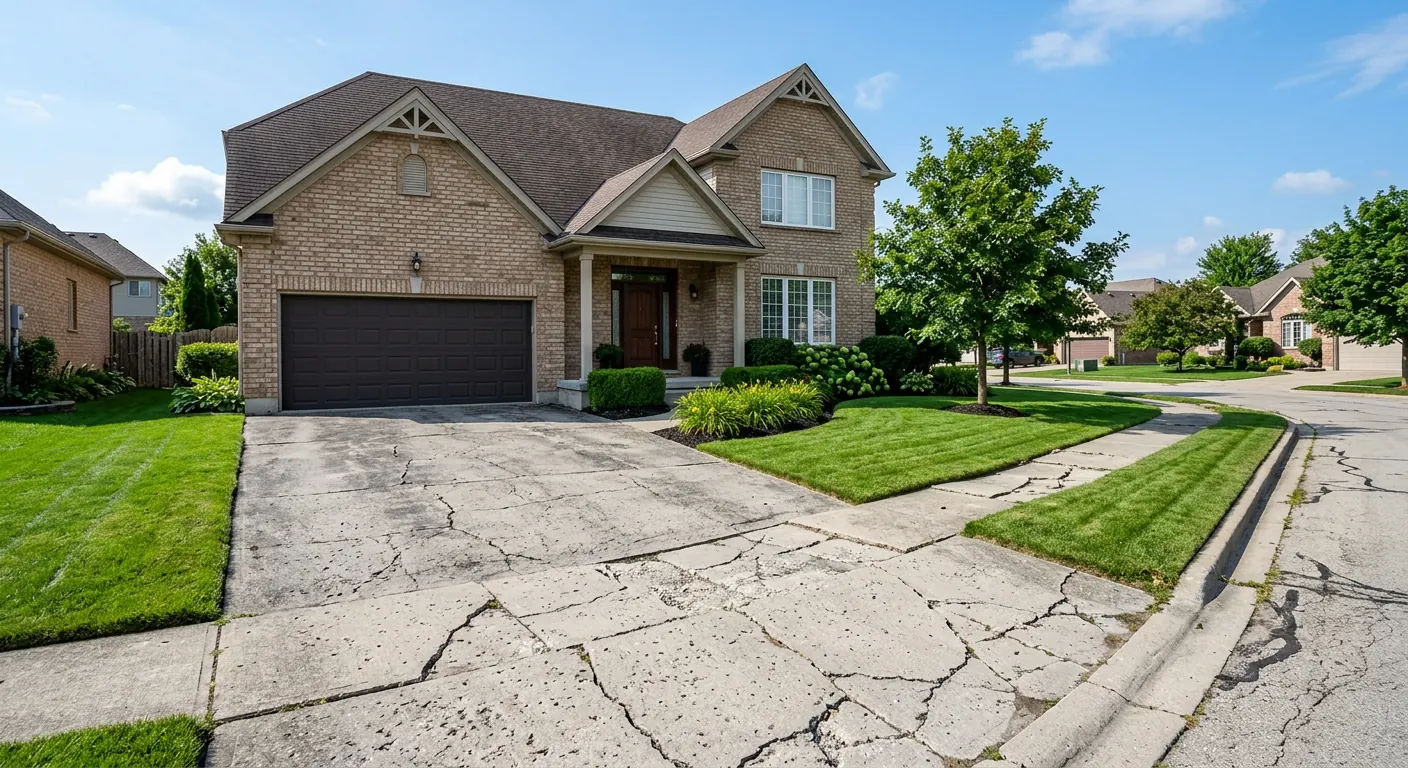
Drag to reveal the driveway & walkway transformation.
Recent driveway & walkway projects from neighborhoods across the Houston area. Drag the slider on each image to see the before and after.
Why us
Why homeowners pick Modern Builders for driveway & walkway.
The reason your neighbor's driveway looks like a puzzle after two summers is base prep. We compact in lifts, we test with a plate compactor, and we don't pour concrete on mud. Our concrete gets fiber mesh AND rebar — belt and suspenders. Control joints are saw-cut at proper spacing within 24 hours of the pour so the slab cracks where you want it to, not where it wants to. Pavers get an aluminum or steel edge restraint (never plastic) spiked every 12 inches. That's the difference between pavers that stay tight and pavers that spread and heave.
FAQs
Answers before you ask.
How thick should my driveway be?+
4" minimum for cars, 5–6" if you park trucks or RVs. We'll recommend based on your vehicles.
Concrete or pavers?+
Concrete is less durable up-front and lower maintenance. Pavers look better, add resale value, and let you lift and re-set individual units instead of ripping out a slab.
How long before I can drive on it?+
24 hrs for foot traffic, 7 days for cars, 14 days for heavy trucks.
Do you handle drainage?+
Yes — every slab gets a minimum 1/4" per foot slope away from the house, plus channel drains where needed.
Related reading
Go deeper before you decide.
Get a quote — we do it right.
Fixed-price proposals, real timelines, no corners cut. Tell us about your driveway & walkway project.
Request your quote